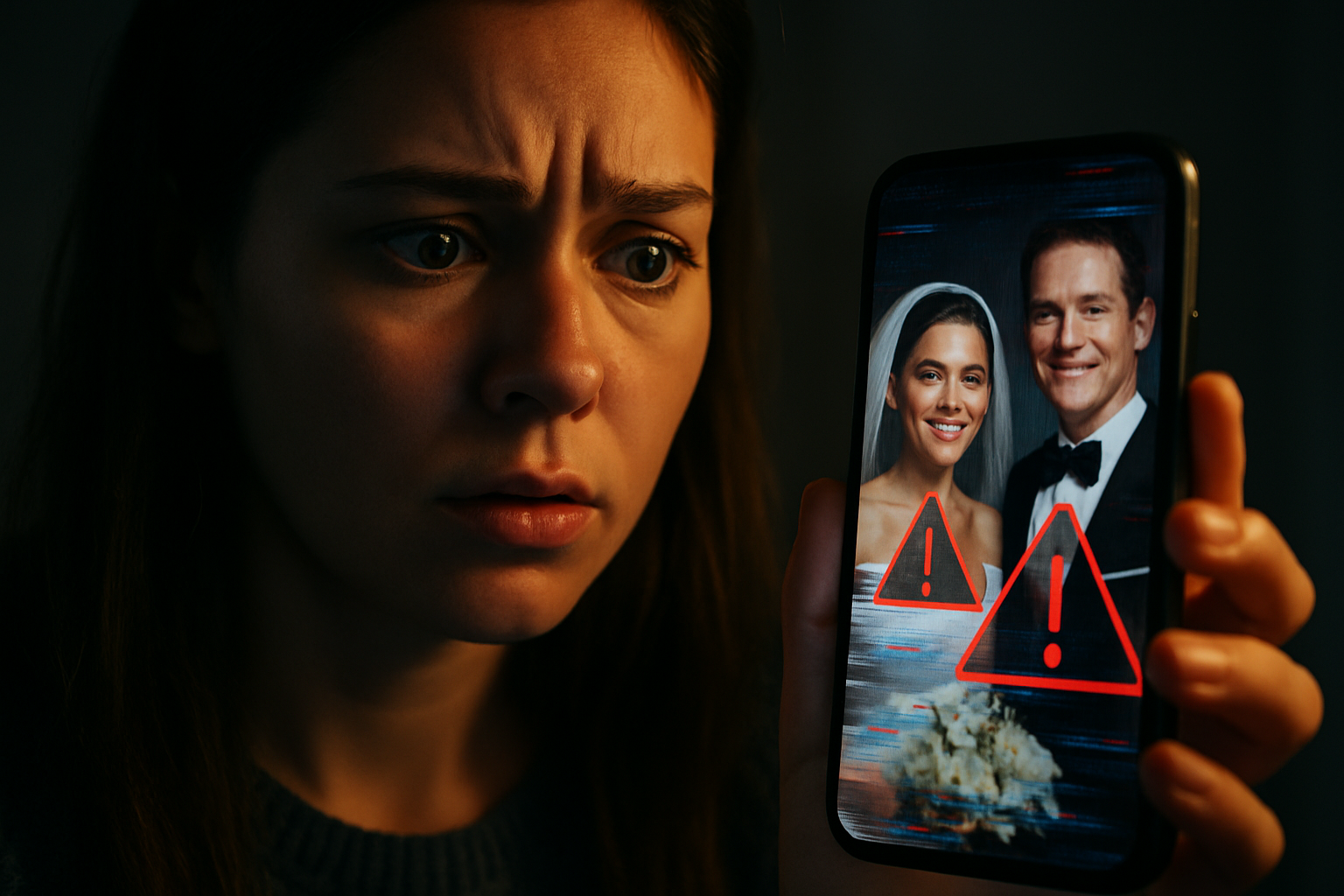
Fabricated wedding photographs of South Korean celebrity Tiffany Young, created using artificial intelligence, spread across social media platforms within hours of the star's marriage announcement, demonstrating the alarming sophistication of AI-generated misinformation and its capacity to deceive global audiences.
The incident unfolded shortly after Young, a former member of the internationally successful K-pop group Girls' Generation, and actor Byun Yo-han announced their marriage registration. Almost immediately, what appeared to be professional wedding photographs depicting the couple began circulating online under titles like "Tiffany-Byun Yo-han wedding photos."
The images showed Young wearing an elegant pink-toned wedding dress, with the couple posed in what appeared to be a high-end photoshoot setting. The photographs were so convincing that they fooled thousands of fans and media outlets before being confirmed as AI-generated fabrications.
The Speed of AI Deception
According to reports from the South China Morning Post, the fake images spread rapidly across social media platforms and online communities before verification efforts could catch up. The incident highlights a critical vulnerability in our information ecosystem: the gap between AI's ability to create convincing false content and society's capacity to detect and debunk it.
This represents a concerning evolution in AI capabilities. Where deepfake technology once required significant technical expertise and processing time, modern AI tools can now generate hyperrealistic images in minutes, making real-time fact-checking increasingly challenging.
International Recognition of AI Misinformation Threats
The celebrity wedding photo incident occurs against a backdrop of growing international concern about AI-generated misinformation. Recent investigations by Planet News have documented a global pattern of sophisticated AI-enhanced fraud and deception campaigns.
In Ecuador, news agency EFE has reported that algorithmic errors are undermining the credibility of rigorous, verified journalism. The agency specifically highlighted concerns about AI systems like Grok generating false information that can be rapidly disseminated through social media channels.
"Algorithmic errors affect the credibility of rigorous and verified journalism,"
— EFE News Agency
This sentiment reflects broader concerns within the journalism industry about maintaining information integrity in an era where AI can produce convincing but entirely fabricated content within seconds.
The Technology Behind Hyperrealistic AI
The sophistication of the fake Tiffany Young wedding photos represents a significant advancement in AI image generation capabilities. Modern AI systems can analyze thousands of existing photographs of public figures to create new, entirely synthetic images that maintain consistency with the subject's appearance, lighting conditions, and even fashion preferences.
These tools have democratized the creation of high-quality fake content, moving beyond the technical skills previously required for manual photo manipulation. The result is a flood of AI-generated content that can be produced by virtually anyone with access to basic AI tools.
Global Context of AI Misinformation
The incident fits into a broader pattern of AI-powered misinformation campaigns that authorities worldwide are struggling to address. Recent investigations by Planet News have revealed:
- European law enforcement agencies coordinating responses to AI-enhanced cybercrime
- Social media platforms grappling with AI-generated false endorsements and fake celebrity content
- News organizations implementing new verification protocols to combat AI-generated misinformation
- Regulatory bodies developing frameworks to address the rapid evolution of AI capabilities
Industry Response and Detection Challenges
The entertainment industry faces particular vulnerability to AI-generated misinformation, as celebrities' public profiles provide extensive source material for AI training. The volume of existing photographs, video content, and media coverage creates rich datasets that AI systems can exploit to generate convincing fake content.
Detection of AI-generated content remains inconsistent and resource-intensive. While some platforms have implemented AI detection tools, these systems often lag behind the capabilities of content generation AI, creating a technological arms race between creators and detectors of synthetic media.
Implications for Information Integrity
The rapid spread of fake celebrity wedding photos demonstrates how AI-generated misinformation can exploit human psychology and social media algorithms. The combination of celebrity interest, breaking news timing, and visually compelling content created perfect conditions for viral misinformation spread.
This incident serves as a microcosm of larger challenges facing democratic societies in maintaining shared factual understanding. When sophisticated fake content can be created and distributed faster than verification systems can respond, the foundation of informed public discourse faces significant threats.
Regulatory and Social Responses
Governments and technology companies are beginning to recognize the urgency of addressing AI misinformation. Recent developments include enhanced content moderation systems, improved detection technologies, and regulatory frameworks requiring disclosure of AI-generated content.
However, the pace of technological advancement continues to outstrip regulatory responses. The Tiffany Young incident demonstrates that current safeguards remain insufficient to prevent the rapid spread of convincing AI-generated misinformation.
Looking Ahead: The Need for Coordinated Action
Industry experts emphasize that addressing AI misinformation requires coordinated efforts across multiple sectors. This includes technology companies developing better detection tools, news organizations implementing robust verification protocols, educational institutions teaching media literacy, and policymakers creating appropriate regulatory frameworks.
The fake celebrity wedding photos serve as a wake-up call about the need for proactive measures to maintain information integrity in an age of increasingly sophisticated AI capabilities. Without coordinated action, similar incidents will likely become more frequent and potentially more damaging to public trust in authentic information.
As AI technology continues advancing, society faces a critical choice: develop effective safeguards against misinformation while preserving the beneficial applications of AI, or risk an information environment where distinguishing truth from fabrication becomes increasingly difficult for ordinary citizens.