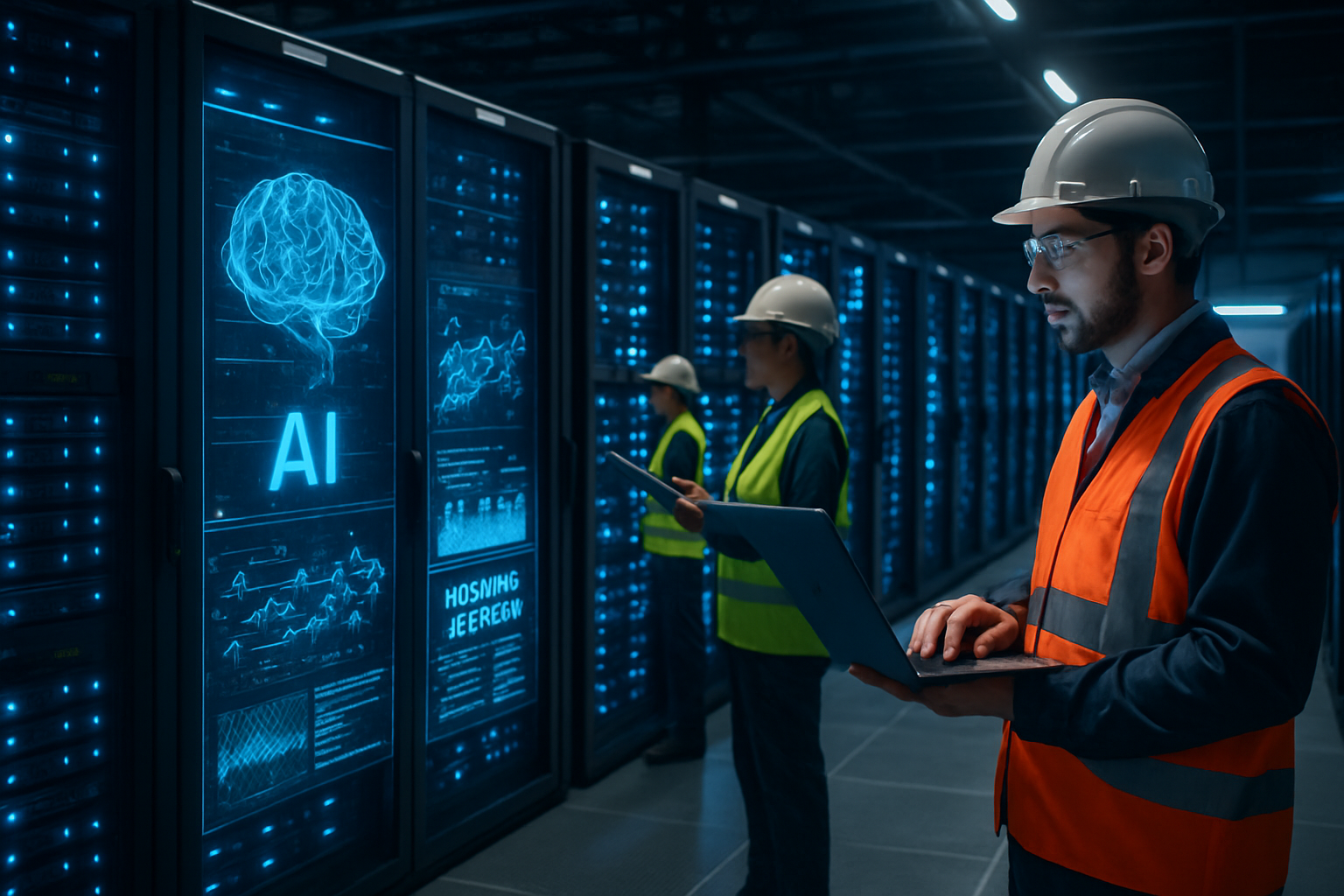
Artificial intelligence development has reached a critical inflection point in April 2026, with companies worldwide accelerating AI-driven workplace restructuring while grappling with mounting ethical concerns and employment displacement challenges across multiple industries.
Corporate Restructuring Accelerates
ASX-listed Life360 became the latest global technology company to implement significant job cuts in favor of AI adoption, with CEO Lauren Antonoff acknowledging that "the roles people play are shifting." The company announced a comprehensive restructure toward an "AI-native model," reallocating investment toward new capabilities while eliminating traditional positions.
"This shift requires difficult tradeoffs that impact good people," Antonoff stated in a LinkedIn announcement, reflecting the challenging balance companies face between technological advancement and workforce impact.
"The roles people play are shifting as we transition to an AI-native operating model."
— Lauren Antonoff, CEO Life360
Experimental AI Applications Raise Safety Concerns
The rapid deployment of AI systems has sparked significant safety debates, particularly surrounding Anthropic's latest AI model, which the company considers too powerful for immediate market release. The development has prompted emergency meetings between US financial regulators and central bank officials to address emerging cybersecurity risks in the financial sector.
Meanwhile, concerns over AI chatbot reliability persist, with reports of fundamental computational errors affecting popular shopping platforms. Amazon's Rufus and Gurkert's Maia systems have demonstrated failures in basic mathematical operations, highlighting the "Garbage In, Garbage Out" principle affecting consumer-facing AI applications.
European Research and Development Advances
Austria's IT University (IT:U) established the first "wet lab" for AI-supported environmental and circular economy research, where digital technologies merge with real-world experiments to explore sustainability solutions. The initiative represents a sophisticated approach to applying artificial intelligence to pressing environmental challenges.
The facility demonstrates how AI can accelerate environmental research by analyzing complex data patterns and optimizing experimental processes for circular economy applications, positioning Austria at the forefront of sustainable technology development.
Global Employment Market Transformation
Serbia's job market offers a contrasting perspective on AI's employment impact, with demand for AI specialists doubling over the past year according to HelloWorld platform data. This growth challenges widespread predictions about AI-driven job displacement, suggesting instead a transformation toward specialized technical roles.
The Serbian market demonstrates how regions investing in AI education and technical training can capitalize on the technology revolution rather than simply experiencing displacement. Local universities and technical institutes have expanded AI-focused curricula to meet growing industry demand.
Military and Civilian AI Applications
French analysis reveals Palantir Technologies' extensive deployment of AI systems across military and civilian applications. The American technology company supplies AI-powered data analysis systems to armed forces including American, Ukrainian, and Israeli militaries, while also equipping major corporations from Airbus to Société Générale.
This dual-use approach highlights the increasingly blurred lines between military and commercial AI applications, raising questions about the concentration of AI capabilities in the hands of a few major technology providers.
Market Investment Despite Infrastructure Challenges
Chinese technology companies continue expanding AI investments, with Alibaba focusing on "world models" - advanced AI systems capable of understanding and predicting complex real-world scenarios. Amazon has also announced significant progress in AI development initiatives, despite ongoing global semiconductor supply constraints.
The persistent memory chip shortage, affecting major manufacturers including Samsung, SK Hynix, and Micron, has created supply bottlenecks expected to continue through 2027. However, this has paradoxically driven innovation in memory-efficient algorithms and sustainable deployment strategies.
Regulatory Frameworks Evolve
International regulatory responses to AI development have intensified, with Spain implementing the world's first criminal executive liability framework for technology platforms, creating potential imprisonment risks for executives. France has conducted AI-focused cybercrime raids, while the United Nations established an Independent Scientific Panel with 40 global experts to assess AI's societal impact.
These coordinated regulatory efforts represent the most sophisticated global technology governance framework since internet commercialization, aimed at preventing jurisdictional shopping while ensuring responsible AI development.
Human-Centered AI Success Models
Despite automation concerns, successful AI implementation models emphasize human-AI collaboration rather than replacement. Canadian universities have deployed AI teaching assistants that maintain critical thinking standards, while Malaysia operates the world's first AI-integrated Islamic school, combining technology with traditional learning approaches.
Singapore's WonderBot 2.0 heritage education system demonstrates how AI can preserve cultural knowledge while leveraging advanced technology, providing templates for human-centered AI approaches that enhance rather than replace essential human capabilities.
Infrastructure Investment Continues
Major technology companies maintain aggressive AI infrastructure investments despite supply chain constraints. Alphabet has committed $185 billion to AI infrastructure in 2026 - the largest single-year corporate technology investment in history - while Amazon has announced plans exceeding $1 trillion over the coming decade.
The World Bank projects AI water demand could reach 4.2-6.6 billion cubic meters by 2027 for data center cooling alone, equivalent to 4-6 times Denmark's annual water withdrawal, highlighting the environmental implications of AI expansion.
Future Trajectory Uncertain
Industry experts characterize April 2026 as a "civilizational choice point" - a critical juncture determining whether AI development serves human flourishing or becomes an exploitation tool beyond democratic accountability. Success requires unprecedented coordination between governments, technology companies, educational institutions, and civil society.
The challenge involves balancing innovation acceleration with responsible governance, commercial interests with human welfare, and national competitiveness with international cooperation. The decisions made in 2026 will likely establish human-AI relationship patterns for decades to come.
"We are at a critical moment where our choices about AI development will determine whether technology serves humanity's highest aspirations or becomes a source of division and displacement."
— Technology Policy Expert
As artificial intelligence transitions from experimental applications to essential infrastructure, the global community faces the complex task of harnessing AI's transformative potential while preserving the distinctly human qualities - creativity, empathy, cultural understanding, and ethical reasoning - that define meaningful human experience and democratic society.