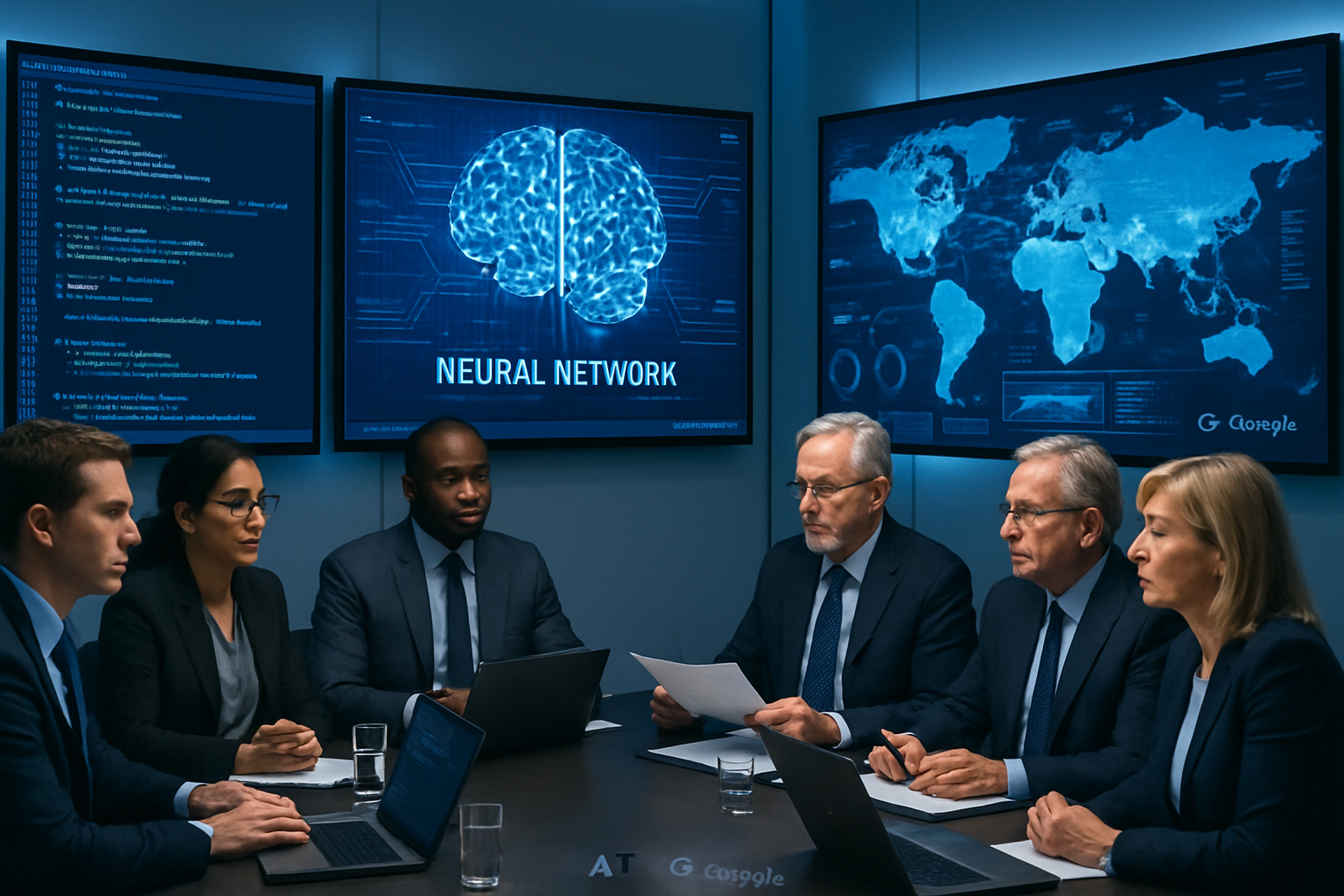
February 2026 marks a critical inflection point in artificial intelligence development, with major breakthroughs in China's AI strategy, emerging safety concerns around leading AI platforms, and innovative consumer applications creating unprecedented opportunities and challenges across the global technology landscape.
The month has witnessed a convergence of strategic developments that could fundamentally reshape the AI industry for years to come. From China's bold moves to establish AI dominance through diversified pathways to safety controversies surrounding established platforms like ChatGPT, the stakes have never been higher in the race for AI supremacy.
China's Strategic AI Crossroads: Three Divergent Paths
At the heart of February's developments lies China's ambitious approach to AI dominance, as revealed through Tencent's internal strategy discussions. The Chinese tech giant, with its 115,000 employees, is pursuing what industry analysts describe as "three divergent paths" in the race for AI supremacy.
Tencent's co-founder and CEO Pony Ma Huateng outlined this multi-pronged strategy during the company's annual New Year address at Shenzhen Bay Sports Centre. The approach reflects a sophisticated understanding that AI leadership cannot be achieved through a single technological breakthrough but requires a comprehensive ecosystem approach spanning hardware, software, and strategic partnerships.
This strategic vision comes at a crucial time when global AI competition has intensified dramatically. The approach suggests China is moving beyond simply competing with Western AI models to creating entirely new frameworks for AI development and deployment. Industry sources indicate this strategy could significantly impact global AI supply chains and development patterns.
ChatGPT Safety Concerns and Industry Response
Simultaneously, the AI industry faces mounting questions about safety and responsible development following a series of concerning incidents involving established AI platforms. Reports from multiple jurisdictions indicate that automated safety systems may not be adequately identifying potentially dangerous content patterns.
The concerns have particular relevance given ChatGPT's massive user base of over 800 million weekly users experiencing 10% monthly growth, according to recent industry data. With such unprecedented scale, even small safety gaps could have significant societal implications.
Former Anthropic safety researchers have raised alarms about the industry's rapid commercialization potentially outpacing safety considerations. Their warnings about "the world in peril" due to AI development racing ahead of safety measures have resonated throughout the technology community, highlighting fundamental tensions between commercial pressures and responsible development.
"The industry is at a critical juncture where decisions made in the coming months will determine whether AI serves humanity's best interests or becomes a tool for exploitation beyond democratic control."
— Senior AI Safety Researcher
Meta's AI-Powered Smartwatch Revolution
Adding to the innovation landscape, Meta has announced plans to launch its first smartwatch featuring integrated AI capabilities and health monitoring features. According to reports from The Information, the device represents a significant expansion of Meta's hardware ambitions beyond virtual and augmented reality.
The smartwatch is expected to incorporate advanced artificial intelligence features for health monitoring, potentially challenging established players like Apple and Samsung in the wearable technology market. Industry analysts suggest this move could signal Meta's broader strategy to integrate AI across all consumer touchpoints.
This development occurs as Meta faces increasing regulatory scrutiny globally for its social media platforms' impact on youth mental health. The company's expansion into health-focused wearables could provide a more positive narrative around technology's role in user wellbeing.
ByteDance AI Video Innovation Creates Hollywood Concerns
The competitive landscape has been further disrupted by ByteDance's Seedance 2.0 AI video generation system, which can create realistic video content with integrated sound and visuals from simple text prompts. The technology has already produced viral content that demonstrates unprecedented sophistication in AI-generated media.
Hollywood studios have responded with intellectual property violation warnings to ByteDance, highlighting growing tensions between traditional content creation and AI-generated alternatives. The Motion Picture Association has expressed serious concerns about unauthorized use of copyrighted material in training AI systems.
This development exemplifies the broader challenge facing creative industries as AI systems become capable of producing professional-quality content. The legal and economic implications could reshape entertainment industry business models fundamentally.
Global Infrastructure and Supply Chain Challenges
Despite rapid innovation, the AI industry continues to grapple with significant infrastructure constraints. The global memory semiconductor crisis has driven prices up sixfold, affecting major manufacturers including Samsung, SK Hynix, and Micron. These shortages are expected to persist until new fabrication facilities come online in 2027.
The infrastructure crisis has created a "SaaSpocalypse" in traditional software markets, with hundreds of billions in market capitalization eliminated as AI systems replace conventional software solutions. This disruption affects not only technology companies but also the broader economic ecosystem dependent on traditional software business models.
Simultaneously, the World Bank projects that AI systems will require 4.2-6.6 billion cubic meters of water by 2027 for data center cooling—equivalent to 4-6 times Denmark's annual water consumption. These environmental and resource challenges add complexity to AI deployment at scale.
International Regulatory Coordination Intensifies
The regulatory landscape has witnessed unprecedented coordination among democratic nations seeking to balance AI innovation with public safety. Spain has implemented the world's first criminal executive liability framework for social media platforms, creating personal legal risks for technology executives beyond corporate penalties.
The European Union has established comprehensive oversight mechanisms, with France conducting cybercrime raids on AI companies and multiple nations coordinating age restriction policies for social media platforms. These measures represent the most significant challenge to technology industry self-regulation in internet history.
The United Nations has established an Independent International Scientific Panel comprising 40 global experts to provide the first fully independent assessment of AI's societal impact. This body, led by Secretary-General António Guterres, represents unprecedented international cooperation on AI governance.
Military Applications and Civilian Safety Balance
The intersection of AI development and national security has created complex challenges for technology companies. The Pentagon has integrated ChatGPT into military systems while pressuring companies to deploy AI tools in classified networks without standard civilian safety restrictions.
Ukrainian forces have deployed AI-enhanced drone systems with improved low-light vision capabilities, demonstrating real-world military applications of civilian AI technology. However, only one-third of countries have agreed to AI warfare governance frameworks, while major powers like the US and China have abstained from comprehensive commitments.
This military-civilian divide creates particular challenges for AI safety companies like Anthropic, which opposes autonomous weapons development while facing pressure from defense departments seeking unrestricted access to AI capabilities.
Successful Integration Models Emerge
Despite challenges, several successful AI integration models have emerged globally. Canadian universities have implemented AI teaching assistants while maintaining critical thinking standards, demonstrating how AI can enhance rather than replace human capabilities.
Malaysia has launched the world's first AI-integrated Islamic school, successfully combining artificial intelligence with traditional religious and academic learning (naqli and aqli education). This model shows how AI can respect cultural values while advancing educational outcomes.
Singapore's WonderBot 2.0 has achieved success in heritage education, using conversational AI to make cultural learning more engaging and accessible. These examples demonstrate that successful AI integration requires cultural sensitivity, clear pedagogical objectives, and sustained community engagement.
Economic Transformation and Employment Implications
The economic implications of AI advancement are becoming increasingly apparent across sectors. Microsoft's Mustafa Suleyman predicts AI will replace the majority of office workers within two years, with lawyers and auditors potentially displaced within 18 months.
However, successful adaptation models are emerging. Indian IT giants like Infosys, Wipro, and HCL Tech are adapting through worker transition programs to AI-enhanced roles rather than implementing mass layoffs. This approach suggests that countries and companies can manage AI-driven workforce transformation proactively.
The "SaaSpocalypse" market disruption has eliminated hundreds of billions in traditional software market capitalization, but it has also created opportunities for companies developing AI-first solutions and countries positioning themselves as AI development hubs.
Critical Decisions Shape the Future
February 2026 represents what experts describe as the most critical juncture in AI development since the technology boom began. The decisions made by governments, technology companies, and international organizations in the coming months will determine whether AI fulfills its transformative promise or creates systemic risks requiring dramatic corrections.
Success requires unprecedented coordination between innovation acceleration and safety governance, commercial interests and human welfare, national competitiveness and international cooperation. The stakes extend far beyond the technology sector to encompass fundamental questions about democratic governance, childhood development, and human agency in the digital age.
As China pursues its three-path strategy, Western democracies coordinate regulatory responses, and innovative applications emerge globally, the AI landscape is becoming increasingly multipolar. This distribution of capabilities and approaches may ultimately benefit global development by preventing any single entity from controlling AI's trajectory.
The convergence of technological breakthroughs, safety concerns, regulatory innovations, and economic disruptions in February 2026 suggests that the AI revolution is transitioning from experimental applications to essential infrastructure across society. How successfully the global community manages this transition will determine whether AI becomes a tool for human flourishing or a source of unprecedented challenges requiring fundamental corrections to current development approaches.