The global artificial intelligence landscape underwent dramatic shifts this week as major conferences showcased breakthrough technologies, while significant developments in AI banking integration and corporate governance sparked intense industry debate.
eMerge Americas 2026 Positions AI at Center Stage
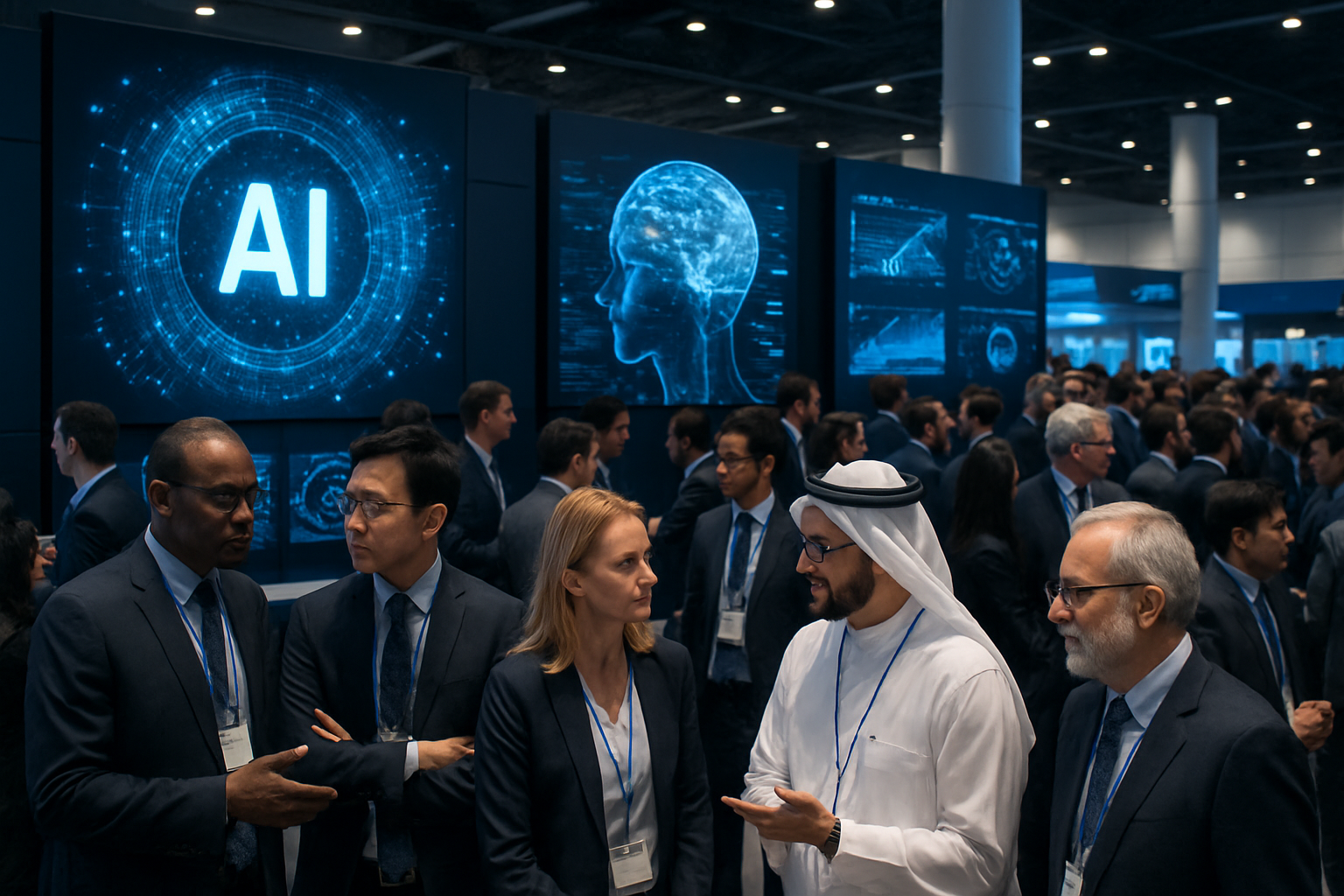
The recently concluded eMerge Americas 2026 conference at Miami Beach Convention Center solidified its position as a critical node for global technological innovation, drawing more than 20,000 attendees from over 60 countries. The three-day event, running from Wednesday through Friday, featured artificial intelligence as the dominant theme across all major sessions.
The conference brought together over 250 distinguished speakers and 300 exhibitors, including Fortune 500 giants and emerging startups. Notable personalities included former NFL player Tim Tebow, pharmaceutical executive Alex Oshmyansky, and retired Colonel Nicole Malachowski, all addressing how AI intersects with their respective sectors.
The debut of the eMerge Deep Tech Summit marked a significant milestone, offering practical workshops on quantum computing and artificial intelligence implementation. Meanwhile, the eMerge Global Startup Accelerator showcased more than 100 carefully selected startups competing for recognition and investment opportunities.
International pavilions representing Latin America, Europe, and Asia demonstrated the truly global nature of AI development, with particular emphasis on applications in healthcare, fintech, and national security—themes that continue to dominate the 2026 AI discourse.
Anthropic Expands Mythos AI Access to European Banks
In a development that could reshape global financial services, sources familiar with the matter revealed that Anthropic plans to provide access to its advanced Mythos AI model to European banks in the coming weeks. This expansion follows initial deployment to select U.S. financial institutions and represents a significant escalation in AI adoption within the banking sector.
The Mythos model is viewed by industry analysts as presenting substantial challenges to traditional banking technology systems and legacy infrastructure. The announcement prompted warnings from regulators and policymakers during last week's International Monetary Fund spring meeting in Washington, highlighting concerns about rapid technological integration without adequate safeguards.
According to industry sources, the rollout process involves comprehensive security checks to ensure safe deployment. One person familiar with the expansion told Reuters that European and UK banks, among other organizations, could receive access pending successful completion of these security protocols.
The development occurs against the backdrop of a global "SaaSpocalypse"—the elimination of hundreds of billions in traditional software market capitalization as AI systems demonstrate direct replacement capabilities for conventional business solutions.
Palantir's Controversial Technological Manifesto
Meanwhile, surveillance technology company Palantir sparked intense debate with its public release of a 22-point summary from the book "The Technological Republic: Hard Power, Soft Belief, and the Future of the West," written by CEO Alex Karp and corporate affairs head Nicholas Zamiska.
The manifesto-style document, shared on social media platform X, has been characterized by technology policy analysts as a recruiting tool that explicitly outlines the company's vision for technology's role in geopolitical competition. Critics have noted that the post attempts to make explicit what many consider the more concerning aspects of current technological development.
Palantir's approach represents a stark contrast to companies like Anthropic, which have maintained stronger ethical positions regarding AI deployment, particularly in military and surveillance applications. The company's technology already serves both private corporations and government entities, providing AI systems for surveillance and data analysis across multiple sectors.
Regulatory Pressure and Institutional Responses
The rapid pace of AI development has prompted unprecedented regulatory responses across multiple jurisdictions. Spain has implemented the world's first criminal executive liability framework for technology platforms, creating potential imprisonment risks for executives whose platforms cause harm. France has escalated enforcement through cybercrime raids on AI companies, while the European Union continues investigations into Digital Services Act violations that could result in billions in penalties.
The United Nations has established an Independent Scientific Panel comprising 40 global experts under Secretary-General António Guterres, representing the first fully independent international AI assessment body. This initiative represents the most sophisticated global technology governance framework since the commercialization of the internet.
Industry analysts note that this coordinated regulatory response prevents the kind of "jurisdictional shopping" that has allowed technology companies to avoid accountability by moving operations to more permissive legal environments.
Infrastructure Constraints Drive Innovation
Despite significant challenges, including a global semiconductor crisis that has driven memory chip prices up sixfold and created shortages expected to last until 2027, major technology companies continue massive investments in AI infrastructure. Alphabet has committed $185 billion to AI development in 2026, representing the largest single-year corporate technology investment in history, while Amazon has announced trillion-dollar AI development plans for the coming decade.
Paradoxically, these infrastructure constraints have accelerated innovation in memory-efficient algorithms and sustainable deployment strategies. The limitations have forced companies to develop more efficient approaches that potentially democratize advanced AI access by reducing computational requirements.
Human-AI Collaboration Models Show Promise
Amid concerns about AI replacing human workers, several successful integration models demonstrate the potential for enhancement rather than replacement. Canadian universities have implemented AI teaching assistants that maintain critical thinking standards while providing personalized student support. Malaysia operates the world's first AI-integrated Islamic school, successfully combining artificial intelligence with traditional religious and academic learning.
Singapore's WonderBot 2.0 heritage education system preserves cultural knowledge while leveraging advanced technology, demonstrating how AI can amplify rather than diminish human capabilities. These models share common characteristics: treating AI as amplification tools serving human goals, maintaining sustained commitment to human development, and ensuring comprehensive stakeholder engagement.
April 2026: A Civilizational Choice Point
Industry experts increasingly characterize April 2026 as a critical "civilizational choice point" in artificial intelligence development. The convergence of advancing capabilities, regulatory pressures, massive corporate investments, and international cooperation requirements creates unprecedented coordination challenges.
The decisions made during this period will establish decades-long patterns for human-AI relationships across society. Success requires balancing innovation acceleration with safety governance, commercial interests with human welfare, and national competitiveness with international cooperation.
As the window for coordinated international action narrows, the most promising path forward involves sophisticated human-AI collaboration that amplifies human capabilities while preserving the creativity, cultural understanding, and ethical reasoning that define human potential.
The technology transformation of 2026 represents a fundamental reimagining of human-technology relationships that will shape civilization for generations to come. The challenge lies in ensuring that technological advancement serves humanity's highest aspirations while maintaining the distinctly human qualities that artificial intelligence cannot replicate—wisdom, empathy, and cultural understanding that provide meaning to the human experience.