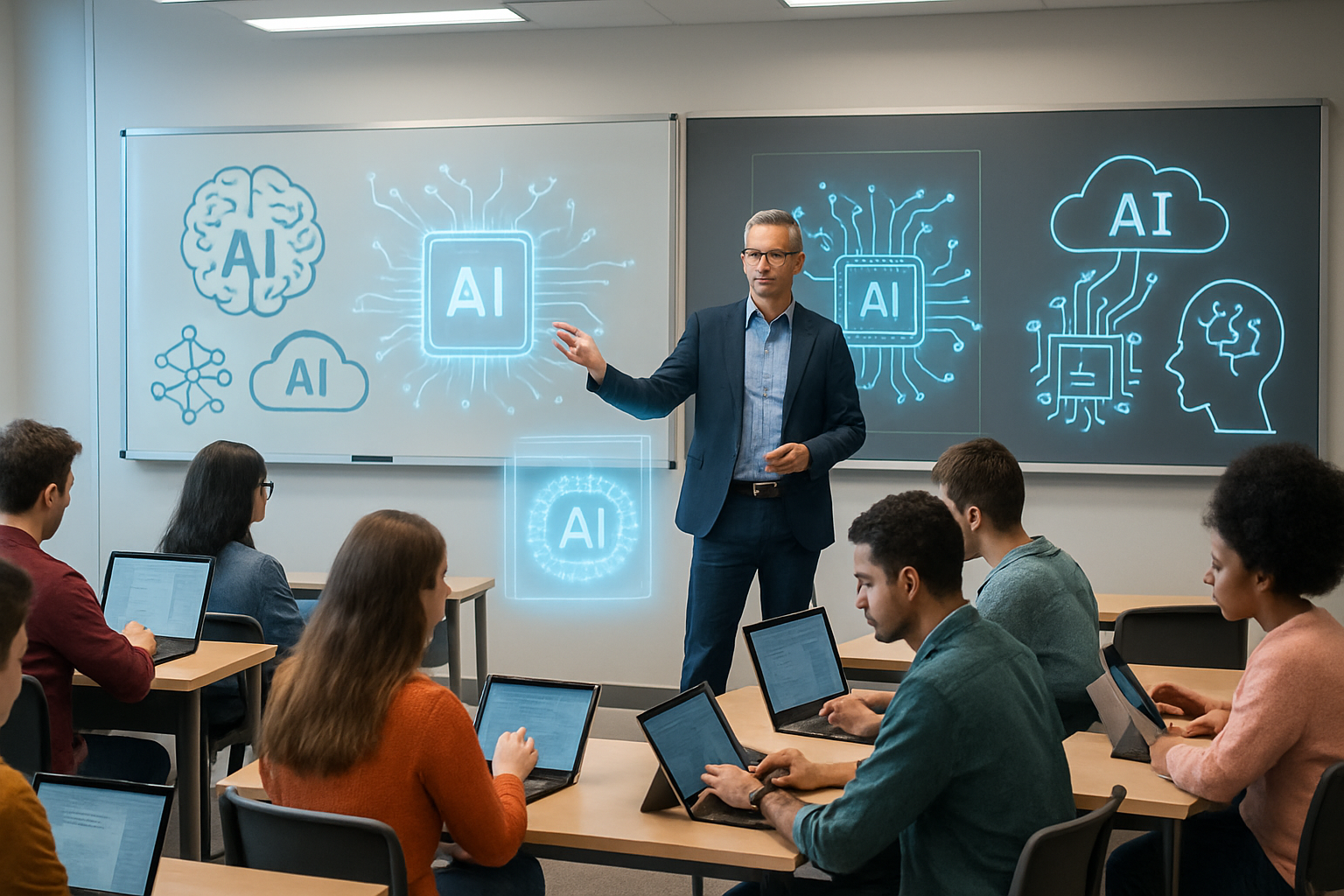
Universities worldwide are navigating an unprecedented transformation as artificial intelligence becomes both a powerful educational tool and a sophisticated threat to academic integrity, fundamentally reshaping how institutions approach teaching, learning, and assessment.
Recent developments in Australia and Greece highlight this dual nature of AI in higher education, where institutions must balance embracing transformative technology with maintaining rigorous academic standards. As AI tools become increasingly sophisticated and accessible, educational leaders are implementing comprehensive strategies that harness AI's potential while developing robust systems to detect and prevent AI-powered cheating.
The Evolution of Academic Dishonesty
The landscape of academic cheating has undergone a dramatic shift since the introduction of advanced AI systems. Traditional "contract cheating" - where students hired external parties to complete assignments - has been largely supplanted by AI-generated content that can be produced instantly and privately. This transformation has forced universities to reconsider their entire approach to academic integrity.
According to educational experts monitoring these trends, the ease and accessibility of AI tools like ChatGPT have democratized cheating capabilities while making detection increasingly challenging. Unlike previous forms of academic dishonesty that often required coordination with external parties, AI-powered cheating can be conducted in complete isolation, making it harder to identify patterns or suspicious behavior.
Institutional Response and Adaptation
Universities are responding with multifaceted approaches that recognize AI as both challenge and opportunity. Rather than attempting to ban AI entirely - an approach many institutions have found impractical - educational leaders are developing policies that distinguish between appropriate and inappropriate AI use while teaching students digital literacy skills essential for their future careers.
The shift represents a fundamental change in educational philosophy, moving from AI prohibition to AI integration with clear ethical guidelines. Institutions are recognizing that students will inevitably encounter AI in their professional lives, making education about proper AI use more valuable than attempted prohibition.
Global Implementation Strategies
Canada has emerged as a leader in responsible AI integration, with universities like UQAM, Concordia, University of Toronto, and University of Lethbridge implementing AI-powered teaching assistants while maintaining critical thinking standards. These institutions have successfully demonstrated that AI can enhance rather than replace human instruction when properly implemented.
"The key is maintaining the human element in education while leveraging AI's capabilities to personalize learning and improve accessibility,"
— Educational Technology Expert, Canadian University System
Malaysia has taken an innovative approach with the world's first AI-integrated Islamic school, combining artificial intelligence with traditional religious and academic learning. This groundbreaking institution demonstrates how AI can be integrated while preserving cultural values and educational traditions.
Singapore's WonderBot 2.0 represents another successful model, using conversational AI specifically designed for heritage education through partnerships between government agencies and technology companies. This system provides personalized learning experiences while maintaining educational rigor and cultural authenticity.
Detection and Prevention Technologies
Universities are investing heavily in sophisticated detection systems capable of identifying AI-generated content. These systems use advanced algorithms to analyze writing patterns, consistency, and stylistic elements that may indicate artificial generation. However, the arms race between AI generation and detection continues to evolve rapidly.
The challenge extends beyond simple detection to fundamental questions about assessment methodology. Institutions are redesigning evaluations to focus on critical thinking, analysis, and application rather than information regurgitation - areas where human insight remains superior to current AI capabilities.
Professional Development and Training
Faculty development has become crucial as educators must understand AI capabilities to effectively integrate these tools into their teaching while maintaining academic standards. Professional development programs are helping instructors design AI-aware curricula that prepare students for AI-integrated workplaces while preserving essential human skills.
Training programs emphasize the importance of teaching students not just about AI capabilities, but about the ethical implications of AI use, the value of original thinking, and the importance of intellectual integrity in academic and professional contexts.
Student Perspectives and Adaptation
Student attitudes toward AI in education vary significantly, with many embracing AI tools as legitimate study aids while others struggle with questions about appropriate use. Educational institutions are working to establish clear guidelines that help students understand when AI use enhances learning versus when it undermines educational objectives.
The development of "AI literacy" has become as important as traditional digital literacy, with students learning to use AI tools effectively while understanding their limitations and ethical implications. This education includes understanding bias in AI systems, recognizing when human judgment is essential, and developing skills that complement rather than compete with AI capabilities.
Economic and Infrastructure Challenges
The global AI infrastructure crisis, including a sixfold increase in semiconductor prices affecting major manufacturers, has created significant challenges for educational institutions seeking to implement AI systems. Universities must balance ambitious technological goals with practical resource constraints and budget limitations.
Despite these challenges, institutional investment in AI education infrastructure continues to grow, driven by recognition that AI literacy will be essential for student success in future job markets. The economic argument for AI integration extends beyond immediate educational benefits to long-term competitiveness in the global knowledge economy.
Regulatory and Policy Developments
Government agencies worldwide are developing frameworks for AI use in education that balance innovation with protection of educational integrity. These policies address data privacy, algorithmic bias, and the need for transparency in AI-assisted decision-making within educational contexts.
International cooperation on AI education standards is increasing, with organizations sharing best practices and developing common frameworks for ethical AI use in educational settings. This collaboration helps ensure that students receive consistent preparation for an AI-integrated global workforce.
Future Implications and Outlook
The transformation of higher education through AI represents one of the most significant changes in educational methodology since the introduction of digital technology. Success will depend on institutions' ability to maintain educational quality and integrity while preparing students for an AI-integrated future.
Educational leaders emphasize that the goal is not to replace human intelligence with artificial intelligence, but to develop complementary relationships that enhance human capabilities while maintaining the critical thinking, creativity, and ethical reasoning that define quality education.
As AI technology continues to advance, universities must remain agile in their policies and approaches, continuously adapting their strategies while maintaining their fundamental educational mission. The institutions that successfully navigate this transformation will likely emerge as leaders in preparing students for the rapidly evolving demands of the 21st-century workforce.
The ongoing evolution of AI in education represents both unprecedented opportunity and significant responsibility. Universities that embrace this challenge while maintaining rigorous academic standards will play a crucial role in shaping how society integrates artificial intelligence in ways that enhance rather than replace human potential.