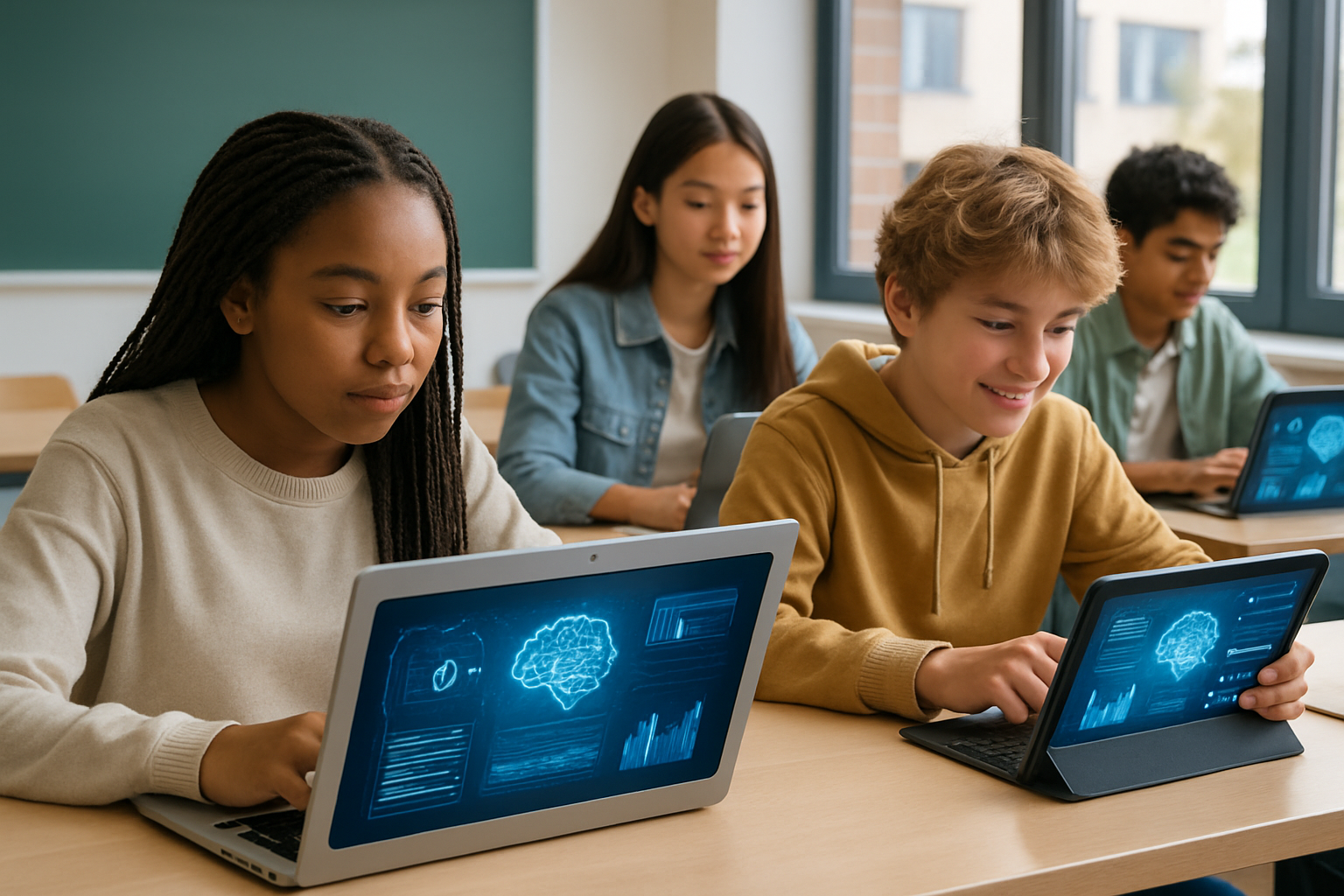
A groundbreaking new study by the Pew Research Center has revealed that more than half of teenagers worldwide now regularly use artificial intelligence tools to complete their homework assignments, marking a seismic shift in how young people approach education and raising fundamental questions about academic integrity, learning effectiveness, and the future of traditional pedagogy.
The comprehensive analysis, which forms part of a broader investigation into AI's penetration into educational systems globally, demonstrates how artificial intelligence has moved from an experimental curiosity to an essential component of teenage academic life. This transformation is occurring at unprecedented speed, forcing educators, policymakers, and parents to grapple with implications that extend far beyond the classroom.
The Global Scale of AI Integration in Student Life
According to the Pew Research Center's findings, the adoption of AI tools among teenagers has reached a tipping point that few educational experts anticipated. The study reveals that over 50% of students aged 13-18 are now incorporating artificial intelligence into their homework routines, with usage patterns varying significantly across different subjects and geographic regions.
This development comes amid what researchers are calling the "2026 Educational Technology Renaissance" – a coordinated global phenomenon characterized by thoughtful digital tool integration with traditional educational values. The movement represents a fundamental shift from simple content digitization to comprehensive learning reimagination through AI personalization, immersive experiences, and adaptive assessment.
The widespread adoption of AI homework tools reflects broader technological integration patterns observed across multiple countries. Malaysia has pioneered the world's first AI-integrated Islamic school, combining artificial intelligence with traditional religious and academic learning. Singapore's WonderBot 2.0 has achieved remarkable success in heritage education, while Canadian universities have implemented AI teaching assistants while maintaining critical thinking standards.
Educational Systems Struggling to Adapt
Educational institutions worldwide are finding themselves caught between embracing technological advancement and preserving educational integrity. The challenge is particularly acute given the sophisticated nature of current AI tools, which can produce work that is increasingly difficult to distinguish from human-created content.
In the Philippines, the Department of Education has partnered with the National Artificial Intelligence Center for Research and Innovation (NAICRI) to develop comprehensive approaches for preparing Filipino students for an AI future while ensuring "safe, fair, responsible" usage. Education Secretary Sonny Angara has emphasized the need for systematic national AI education strategies that emphasize governance and cultural sensitivity rather than unrestricted adoption.
Similarly, countries across multiple continents are implementing various approaches to AI integration. Kazakhstan has launched comprehensive digitalization initiatives, while Ghana has developed extensive work readiness programs for over 150,000 graduates annually, recognizing that the future workforce will require hybrid technical skills that combine human creativity with AI collaboration capabilities.
The Double-Edged Impact on Learning Outcomes
The surge in AI homework usage has created a complex paradox in educational outcomes. While students report increased efficiency in completing assignments and accessing information, educators are raising concerns about the long-term impact on critical thinking development, creative problem-solving skills, and genuine understanding of academic material.
Research from multiple educational institutions suggests that the relationship between AI usage and learning effectiveness is more nuanced than initially anticipated. German research by Dr. Frank Bäumer has documented what researchers term the "productivity paradox" – where AI implementation often creates "more work and declining efficiency" rather than promised productivity gains. Students frequently experience a "double workload" effect, performing their original responsibilities while also supervising and correcting AI outputs.
This phenomenon has prompted educational leaders to advocate for more sophisticated approaches to AI integration. Countries implementing successful models emphasize technology serving educational goals rather than replacing fundamental teacher-student relationships. Malaysian officials report a 97.82% teacher placement rate alongside their AI-integrated educational initiatives, demonstrating that human-centered approaches can coexist with technological advancement.
Geographic and Cultural Variations in AI Adoption
The Pew Research Center study reveals significant variations in AI homework usage across different regions and cultural contexts. These differences reflect broader patterns in educational technology adoption, infrastructure availability, and cultural attitudes toward technological integration in learning environments.
Nordic countries, including Finland, have demonstrated particularly sophisticated approaches to balancing AI integration with educational wellness. Finnish educational reforms emphasize student wellbeing alongside technological competency, addressing concerns that academic pressure combined with digital tool reliance could contribute to long-term psychological impacts.
In contrast, East Asian educational systems, particularly in countries like Japan and South Korea, are grappling with higher rates of AI dependency among students, with some experts warning about potential negative consequences including disrupted sleep schedules and decreased face-to-face social interaction skills.
Developing nations are approaching AI educational integration with different priorities and constraints. African countries like Sierra Leone are leveraging AI and robotics programs to prepare young innovators for global competitions, while simultaneously addressing fundamental infrastructure challenges. These nations often view AI educational tools as opportunities to leapfrog traditional educational limitations rather than simply supplementing existing systems.
Concerns About Academic Integrity and Authentic Learning
The widespread adoption of AI homework tools has intensified long-standing debates about academic integrity and authentic learning. Educational institutions are struggling to develop policies that appropriately address AI usage while preserving the educational value of assignments and assessments.
Recent incidents have highlighted the complexity of these challenges. German broadcaster ZDF recalled a correspondent over AI-generated images in news reporting, demonstrating how authenticity concerns extend beyond educational contexts into professional environments. Similarly, creative industries worldwide are grappling with AI-generated content that can be indistinguishable from human-created material.
Educational experts emphasize that successful AI integration requires clear guidelines, comprehensive teacher training, and sophisticated understanding of when AI enhances learning versus when it substitutes for essential cognitive development. The goal, according to international educational policy researchers, should be creating "human-AI collaboration" rather than replacement scenarios.
Infrastructure Challenges and Digital Equity
The global adoption of AI educational tools is occurring against a backdrop of significant infrastructure challenges. The ongoing global memory crisis, with semiconductor prices surging sixfold affecting major manufacturers including Samsung, SK Hynix, and Micron, is creating bottlenecks that may persist until 2027 when new manufacturing facilities come online.
These constraints are forcing educational systems to develop more efficient and selective approaches to AI implementation. Rather than comprehensive automation, many institutions are adopting hybrid approaches that combine digital tools with traditional methods, inadvertently providing time for more thoughtful integration strategies.
Digital equity remains a critical concern, particularly in regions where internet connectivity and device access are limited. Countries like Bolivia are implementing innovative solutions, including compact antenna devices for rural school internet connectivity, while Nicaragua has launched comprehensive digital safety campaigns reaching over 30,000 students to ensure responsible technology usage.
International Policy Responses and Regulatory Frameworks
The rapid adoption of AI in education has prompted unprecedented international cooperation and regulatory development. The United Nations has established an Independent International Scientific Panel on Artificial Intelligence with 40 global experts, representing the first fully independent global AI impact assessment body.
European nations are leading regulatory initiatives, with Spain implementing the world's first criminal executive liability framework for social media platforms and France conducting cybercrime raids on AI companies. These measures reflect growing recognition that AI development pace is outstripping societal adaptation capacity.
Educational policymakers are emphasizing the need for frameworks that protect students while enabling beneficial AI applications. The focus is shifting toward "safety-by-design" approaches that build protective measures into AI educational tools rather than relying solely on usage restrictions.
The Economics of AI Educational Transformation
The economic implications of AI integration in education extend far beyond immediate technology costs. Countries implementing comprehensive, prevention-focused educational approaches are demonstrating superior economic outcomes through reduced crisis intervention costs, decreased unemployment, and improved workforce productivity.
Educational investments in AI literacy and human-AI collaboration skills are generating measurable returns through enhanced international competitiveness and innovation capacity. Nations positioning themselves as leaders in responsible AI education integration are attracting international investment and partnership opportunities.
The transformation is also creating new categories of employment and skill requirements. Future workforce demands will emphasize hybrid competencies that span technical proficiency with AI tools and uniquely human capabilities including emotional intelligence, creative problem-solving, and cultural competency.
Looking Forward: The Future of AI in Education
As the Pew Research Center study demonstrates, the integration of AI tools in teenage homework completion represents just the beginning of a fundamental transformation in educational approaches. The challenge facing educational systems worldwide is ensuring that this transformation enhances rather than diminishes human learning capacity.
Successful models emerging from various countries suggest that the future lies in sophisticated human-AI collaboration rather than simple replacement scenarios. Educational institutions that treat AI as a powerful amplification tool while preserving uniquely human elements – imagination, cultural understanding, emotional depth, and authentic expression – are achieving the most promising outcomes.
The evidence suggests that February 2026 represents a critical inflection point in global educational policy development. Success or failure of current reform initiatives will likely determine educational trajectories for the coming decade, affecting global capacity to address climate change, technological disruption, and social cohesion through quality educational systems that serve as strategic infrastructure for 21st-century prosperity.
The window for effective action requires immediate, coordinated responses that balance innovation with educational wisdom, ensuring AI serves human flourishing while preserving the creativity, empathy, and wisdom that define human potential. As the Pew Research Center study makes clear, the AI educational revolution is not coming – it has already arrived, and how we respond will shape the intellectual development of an entire generation.