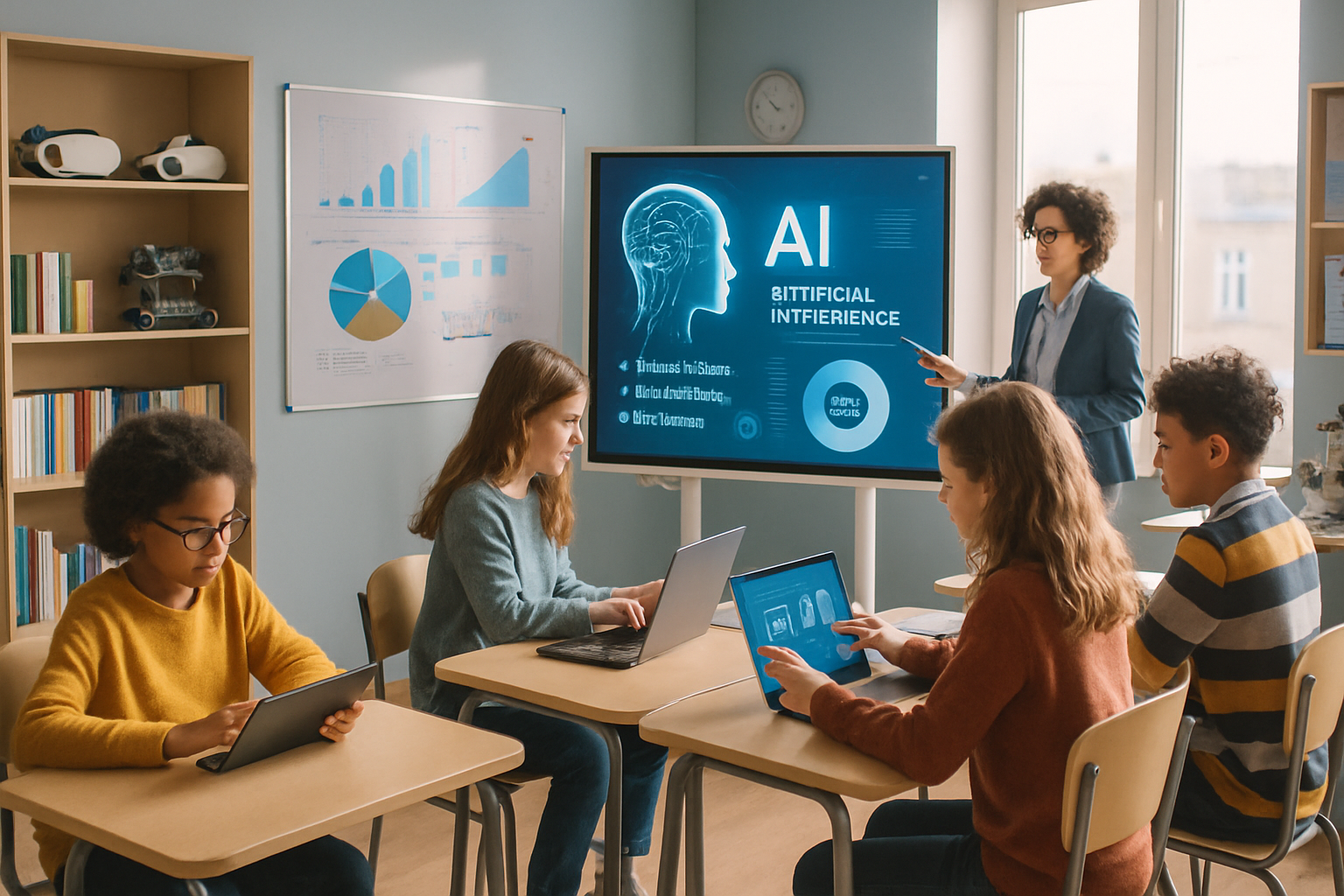
As artificial intelligence and digital technologies transform every sector of society, education stands at the epicenter of a global revolution. From Costa Rica's visionary approach to AI integration in higher education to New Zealand's groundbreaking medical applications and the Philippines' critical stance on digital platform safety, 2026 has emerged as a pivotal year in what experts are calling the "Educational Technology Renaissance."
This comprehensive investigation across multiple nations reveals how educational institutions worldwide are navigating the complex intersection of traditional pedagogy and cutting-edge technology, raising fundamental questions about the future of learning, teaching, and human development in an AI-integrated world.
Costa Rica: Leading the AI-Human Collaboration Model
At Universidad Fidélitas in Costa Rica, a groundbreaking conversation about the future of education is taking place. Aldo Coghi, CEO of Rocket Innovation—a company specializing in disruptive innovation and artificial intelligence—recently delivered a presentation that encapsulates the global educational zeitgeist: "Artificial intelligence is not here to drive teachers out of the classroom, but to redefine their role."
This perspective represents a crucial departure from apocalyptic narratives about AI replacing human educators. Instead, Costa Rica is pioneering what researchers call the "enhancement model"—using AI to amplify human capabilities rather than replace them. According to Coghi's analysis, the education system is experiencing a transformation comparable to previous industrial revolutions, but with a distinctly human-centered approach.
"Training entrepreneurs and creators will be the new mission of universities, focusing on human skills that AI cannot replace."
— Aldo Coghi, CEO of Rocket Innovation
The Costa Rican model emphasizes developing uniquely human competencies—creativity, emotional intelligence, cultural understanding, and ethical reasoning—while leveraging AI for computational tasks, data analysis, and personalized learning pathways. This approach aligns with global best practices documented across dozens of countries throughout 2026.
New Zealand: Healthcare AI Innovations and Safety Concerns
New Zealand's experience illustrates both the transformative potential and critical risks of AI implementation in essential services. The country has made significant strides in healthcare AI applications, with emergency departments nationwide deploying AI scribe tools that enable medical professionals to see more patients through automated documentation, freeing valuable time for direct patient care.
However, New Zealand's journey also highlights the importance of rigorous testing and safety protocols. During "jailbreak" testing of AI systems used in hospitals, researchers discovered concerning vulnerabilities—AI systems providing inappropriate content, including guides for illegal activities and privacy breaches, demonstrating the critical need for comprehensive security measures in educational and healthcare AI deployment.
These findings underscore a global challenge: as AI becomes more sophisticated and accessible, institutions must balance innovation with robust safety protocols. New Zealand's experience serves as a cautionary tale for educational institutions worldwide about the importance of comprehensive AI governance frameworks.
Philippines: Digital Platform Safety and Educational Responsibility
The Philippines' approach to digital platform regulation provides crucial insights for educational technology policy. The government's scrutiny of Roblox—a platform popular among students—reflects growing international concerns about child safety in digital learning environments.
The Department of Information and Communications Technology (DICT) and the Cybercrime Investigation and Coordinating Center (CICC) have urged Roblox to explain why it should not be restricted in the Philippines, citing concerns about potential sexual exploitation and radicalization via the platform. This regulatory action has implications far beyond gaming, as many educational platforms share similar community features and user-generated content systems.
The Philippines' stance represents a broader global trend toward enhanced digital protection for students, particularly as educational technology increasingly incorporates social features, AI-powered interactions, and user-generated content. Educational institutions worldwide are taking note of these developments as they develop their own digital safety policies.
United States: High-Profile AI Integration in Education
The United States continues to lead in high-profile demonstrations of educational technology integration. Recent events have showcased AI and robotics in educational settings, including notable appearances of advanced robotic systems at educational technology summits.
These demonstrations, while symbolic, reflect substantial ongoing investment in educational AI infrastructure. American universities and research institutions are implementing AI teaching assistants that maintain critical thinking standards while providing personalized learning support—a model that has gained international attention and adoption.
The American approach emphasizes scalability and technological sophistication while maintaining focus on preserving essential human elements in education. This balance has influenced educational policy discussions worldwide and provided templates for other nations developing their own AI integration strategies.
The Global "2026 Educational Technology Renaissance"
Analysis of educational developments across dozens of countries reveals what experts are calling the "2026 Educational Technology Renaissance"—the most significant transformation in education since the post-World War II expansion of higher education. Unlike previous waves focused primarily on access and infrastructure, this transformation addresses multiple challenges simultaneously: technological integration, teacher development, student welfare, and fiscal sustainability.
Success Patterns Across Nations
Successful educational technology implementations worldwide share several common characteristics:
- Sustained Political Commitment: Programs that survive beyond electoral cycles and maintain long-term funding
- Comprehensive Stakeholder Engagement: Involving educators, students, families, and communities in planning and implementation
- Innovation-Tradition Balance: Enhancing rather than replacing fundamental educational values and human relationships
- Cultural Sensitivity: Adapting technology to serve specific cultural, economic, and social contexts rather than implementing standardized solutions
- Human-Centered Approaches: Treating technology as amplification tools that serve educational goals rather than ends in themselves
Leading Global Models
Several nations have emerged as models for different aspects of educational technology integration:
Malaysia has achieved a remarkable 97.82% teacher placement rate while pioneering the world's first AI-integrated Islamic school, demonstrating how technological advancement can coexist with cultural preservation and religious education.
Singapore has developed WonderBot 2.0, a conversational AI system for heritage education that successfully preserves cultural knowledge while leveraging advanced technology for enhanced learning experiences.
Canada leads in implementing responsible AI teaching assistants at the university level, maintaining critical thinking standards while providing personalized learning support.
Infrastructure Challenges and Innovation Drivers
The global semiconductor crisis has created an unexpected catalyst for innovation in educational technology. With memory chip prices surging sixfold and affecting major manufacturers like Samsung, SK Hynix, and Micron, educational institutions have been forced to develop more efficient and sustainable approaches to technology integration.
This constraint has paradoxically driven innovation toward memory-efficient algorithms, hybrid processing approaches, and cloud-based solutions that maximize AI capabilities while minimizing hardware requirements. The result has been more democratized access to advanced AI tools and a focus on enhancement rather than wholesale replacement of traditional educational methods.
Economic Implications and Strategic Significance
Educational investments in AI and digital technologies are increasingly viewed as strategic infrastructure for 21st-century prosperity rather than cost centers. Countries implementing comprehensive educational reforms report enhanced community resilience, reduced long-term social service demands, and improved public health outcomes that create self-reinforcing cycles of development.
Prevention-first educational approaches demonstrate superior economic outcomes through reduced crisis intervention costs, decreased unemployment, and improved workforce productivity. The multiplier effects extend throughout society, with educational excellence supporting economic development that enables further educational investment.
"Educational systems must prepare students for an AI-integrated global economy while preserving human creativity, critical thinking, and cultural knowledge that define authentic educational excellence."
— Global Education Policy Analysis, 2026
Challenges and Cautionary Tales
The global educational technology transformation is not without significant challenges. Research from multiple countries reveals concerning trends that require careful attention:
The Productivity Paradox
German researcher Dr. Frank Bäumer has documented a "double workload effect" where AI implementation often creates more work and declining efficiency rather than the promised productivity gains. Students and educators frequently find themselves performing original responsibilities plus supervising and correcting AI outputs, highlighting the importance of thoughtful implementation rather than rushed adoption.
Digital Wellness Concerns
Studies show that 96% of children aged 10-15 use social media, with 70% experiencing harmful content exposure. Early smartphone exposure before age 5 has been linked to persistent sleep disorders, cognitive decline, and weight problems extending into adulthood. These findings are informing educational policies worldwide about the need to protect student development while leveraging technology benefits.
The AI "Slop" Problem
Educational institutions are grappling with the proliferation of low-quality AI-generated content that threatens to erode students' ability to recognize authentic, high-quality human-created material. This "subintelligence" problem requires new forms of digital literacy and critical thinking education.
International Cooperation and Knowledge Sharing
The scope of educational transformation has necessitated unprecedented international cooperation. Unlike traditional educational development focused primarily on financial assistance, current cooperation involves comprehensive support including cultural integration, language acquisition, and ongoing development systems.
Regional frameworks are enabling smaller nations to access expertise while contributing innovations to global knowledge bases. Bilateral partnerships and peer-to-peer knowledge sharing networks have proven more resilient than traditional multilateral approaches, allowing for flexible, culturally responsive strategies while maintaining evidence-based standards.
Looking Toward the Future
As 2026 progresses, educational policy experts identify this period as a critical juncture that will determine educational trajectories for the coming decade. The stakes extend beyond individual institutions to encompass global capacity for addressing climate change, technological disruption, and social cohesion through quality educational systems.
The evidence suggests that effective educational modernization in the AI age requires thoughtful adaptation of technological tools to serve specific cultural, economic, and social needs rather than wholesale replacement of human relationships that define authentic education. Success depends on maintaining human creativity, critical thinking, and cultural knowledge while preparing students for an interconnected global economy that demands both technical competence and cultural authenticity.
Key Recommendations for Educational Leaders
Based on global analysis of successful and unsuccessful implementations, several recommendations emerge for educational leaders navigating this transformation:
- Prioritize Human-Centered Design: Ensure technology serves educational goals rather than becoming an end in itself
- Invest in Comprehensive Teacher Training: Prepare educators for new roles that emphasize uniquely human capabilities
- Develop Robust Safety Protocols: Implement comprehensive testing and governance frameworks for AI systems
- Maintain Cultural Authenticity: Adapt global innovations to serve local contexts and preserve cultural values
- Foster International Collaboration: Participate in knowledge sharing networks while respecting educational sovereignty
Conclusion: A Renaissance of Human Potential
The "2026 Educational Technology Renaissance" represents more than technological adoption—it embodies a fundamental reimagining of education's role in human development. From Costa Rica's emphasis on human-AI collaboration to New Zealand's careful approach to safety, from the Philippines' commitment to child protection to innovative implementations worldwide, this transformation demonstrates that technology's greatest value lies not in replacing human educators but in amplifying their capacity to nurture human potential.
The future belongs to educational systems that successfully integrate advanced technologies while preserving the fundamental human relationships, critical thinking skills, and cultural authenticity that define meaningful education. As we move forward, the challenge is not simply keeping pace with technological change but ensuring that educational transformation serves humanity's highest aspirations for learning, growth, and wisdom.
The global educational community stands at a crossroads. The choices made today will determine whether AI and digital technologies become tools for human flourishing or sources of division and inequality. The evidence from 2026 suggests that with thoughtful implementation, international cooperation, and unwavering commitment to human-centered values, we can create an educational future that prepares students not just for economic success but for lives of meaning, creativity, and contribution to the global community.