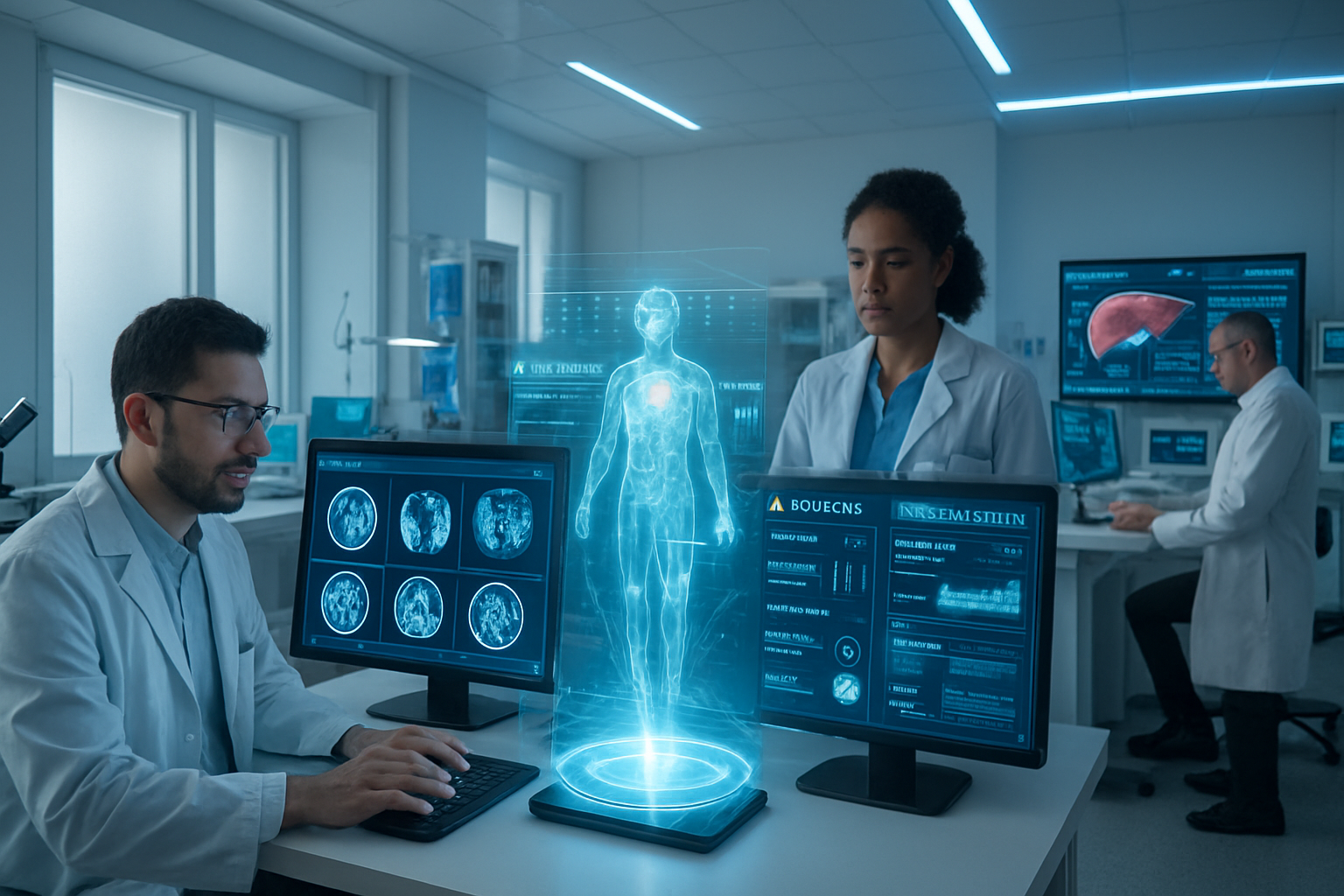
Two revolutionary artificial intelligence tools launched this month represent the most significant advance in preventive healthcare technology in decades, with Australian breast cancer detection AI and Singapore's cardiac risk screening system demonstrating unprecedented capability to identify deadly conditions before symptoms appear.
Australia's landmark BRAIx tool, developed specifically for Australian women, has been trained not only to detect breast cancer in mammogram images but to predict the likelihood of developing the disease within the next four years. This dual capability positions the technology as potentially the most significant breakthrough in breast cancer mortality reduction in over three decades.
"The predictive AI tool provides high precision and enhanced technical capabilities that could revolutionize how we approach breast cancer screening," said health authorities announcing the breakthrough. Currently, mammogram images require review by two radiologists, with a third consulted if findings differ. The BRAIx system is designed to support rather than replace this human expertise.
Singapore's Cardiac Revolution
Simultaneously, Singapore health authorities launched an innovative AI tool capable of predicting patients' risk of developing diabetes and high cholesterol, specifically designed to flag high-risk individuals for enhanced heart screening protocols. The system represents a proactive shift from reactive treatment to prevention-first healthcare strategies.
Doctors will be encouraged to integrate the new technology into routine patient assessments, with the AI system analyzing multiple health indicators to identify individuals who may benefit from early intervention before cardiovascular complications develop.
The Global AI Healthcare Context
These developments occur within what medical experts term the "Therapeutic Revolution of 2026" – a coordinated global transformation emphasizing prevention-first healthcare strategies over traditional reactive treatment models. The timing is particularly significant as healthcare systems worldwide grapple with mounting pressures from aging populations and chronic disease epidemics.
"We are witnessing a fundamental shift from treating disease to preventing it through sophisticated predictive technologies"
— International Healthcare Technology Expert
Recent memory confirms this trend spans multiple continents. Swedish researchers completed the world's first AI trial demonstrating artificial intelligence can identify more breast cancer cases during routine mammography screenings. Hong Kong Polytechnic University developed novel antibody therapies targeting metabolism-related liver cancer. These advances complement existing 2026 breakthroughs including Australia's mRNA brain cancer vaccine trial and Finland's same-day laser brain tumor treatment.
Implementation Challenges and Safety Concerns
However, the rapid deployment of AI diagnostic tools raises critical safety and implementation questions. A recent Oxford University study published in Nature Medicine revealed that AI chatbots perform no better than traditional internet searches across medical scenarios, while a Canadian Medical Association survey found that people using AI healthcare tools are five times more likely to report health harms compared to non-users.
Cyprus has reported increased surgical errors when AI systems are deployed in operating rooms, and Australian research shows only one in three healthcare workers understand their employer's AI policies despite one in five using AI tools daily. These findings underscore the complexity of integrating artificial intelligence into clinical practice safely and effectively.
The global semiconductor shortage, with memory chip prices surging sixfold affecting major manufacturers until 2027, adds another layer of complexity to healthcare AI deployment. Healthcare institutions are investing billions in AI infrastructure while underlying technology faces stability challenges.
The Human-AI Partnership Model
Successful AI healthcare integration appears to require sophisticated human-AI collaboration rather than wholesale replacement of clinical judgment. Estonian hospitals demonstrate AI as an indispensable tool for stroke and radiation therapy treatments, saving doctors hours while improving patient outcomes, but the technology brings challenges including false alarms and data integration complexities.
New Zealand's deployment of AI scribe tools in emergency departments nationwide enables medical professionals to see more patients through automated documentation, freeing time for direct patient care. This represents a strategic approach positioning AI as an amplifier of human capabilities rather than a replacement.
Economic and Social Implications
The economic implications of prevention-first AI approaches are substantial. Countries implementing comprehensive prevention programs report improved community resilience, reduced social service demands, and enhanced international competitiveness through superior health outcomes.
Prevention-focused strategies demonstrate measurable cost reductions through decreased crisis interventions while achieving superior population health outcomes. Initial prevention investments are justified through long-term healthcare savings and enhanced workforce productivity.
International Cooperation and Standards
Despite WHO funding challenges from major contributor withdrawals, bilateral partnerships and regional cooperation continue driving medical AI innovation through peer-to-peer knowledge sharing. The UN has established an Independent Scientific Panel with 40 experts to provide the first global AI impact assessment, while European authorities are intensifying AI healthcare oversight.
Mandatory AI safety protocols, comprehensive workplace policies, enhanced professional training on AI limitations, stricter validation requirements, and regular clinical performance audits are being implemented across multiple healthcare systems.
Looking Forward: The Critical Juncture
March 2026 represents a critical inflection point for healthcare AI development. The convergence of breakthrough technologies like Australia's BRAIx system and Singapore's cardiac screening tools with mounting safety concerns and implementation challenges requires unprecedented coordination between governments, technology companies, educational institutions, and healthcare providers.
Success depends on technological improvements, comprehensive patient education, rigorous professional training, and robust regulatory frameworks that ensure AI enhances rather than replaces professional medical judgment. The goal is technology that serves humanity's health aspirations while preserving the creativity, empathy, and clinical wisdom that define effective healthcare.
"The challenge is not whether AI can transform healthcare, but whether we can implement it wisely to serve human flourishing"
— Global Health Technology Analyst
As these revolutionary tools move from laboratory to clinical practice, their ultimate success will be measured not just in diagnostic accuracy or cost savings, but in their ability to preserve and enhance the fundamental human relationships that remain at the heart of healing. The "Therapeutic Revolution of 2026" thus represents both a technological and profoundly human challenge – one that will shape healthcare delivery for decades to come.