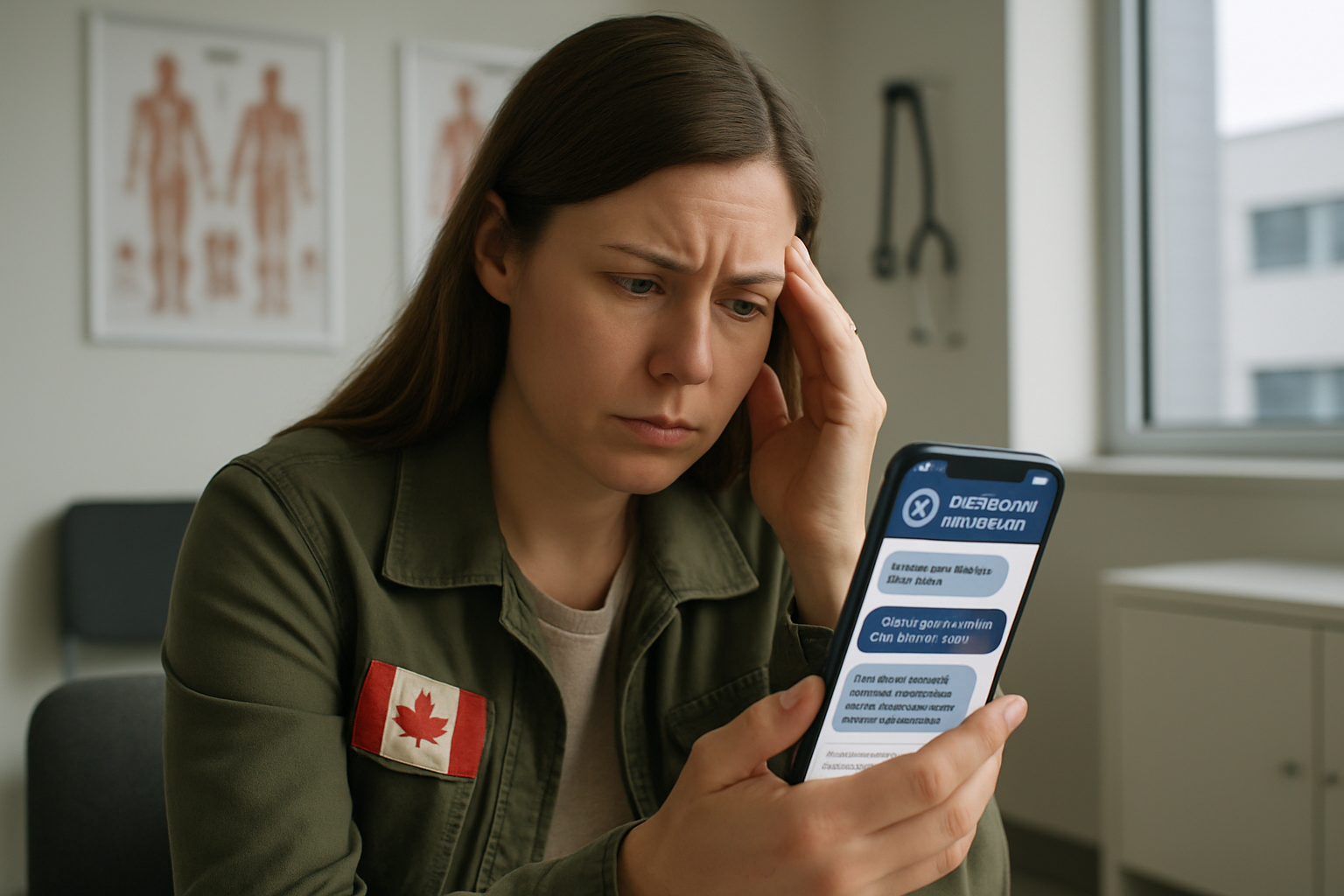
A disturbing trend is emerging across Canadian healthcare as nearly half the population turns to artificial intelligence chatbots for medical advice, despite mounting evidence that these systems pose significant risks to patient safety and diagnostic accuracy.
According to a comprehensive new survey by the Canadian Medical Association (CMA), approximately 50% of Canadians are now consulting AI platforms like ChatGPT, Meta's Llama, and other chatbots for health information. Perhaps most alarmingly, the research reveals that people who rely on these AI tools are five times more likely to report harms to their health compared to those who don't use such technology.
The findings come as international research published in Oxford University's Nature Medicine demonstrates that leading AI chatbots perform no better than traditional internet searches when providing medical advice across ten different health scenarios, ranging from common colds to life-threatening conditions like brain hemorrhage.
The Scale of the Problem
The CMA survey reveals that 80% of respondents go online for health information because it provides "the quickest path to finding answers." This convenience-driven approach to healthcare is creating what medical professionals describe as a perfect storm of misinformation and delayed proper treatment.
"Canadians are increasingly relying on chatbots for medical advice – and it's not going well," warns the Globe and Mail's analysis of the situation. The trend represents a fundamental shift in how patients approach healthcare decision-making, often bypassing professional medical consultation entirely.
Swiss research published in NZZ Nachrichten adds another layer of concern, with co-author Rebecca Payne explaining that "when medical laypersons try to interpret symptoms with the help of artificial intelligence, they usually get it wrong." Her study reveals that the problem isn't necessarily with the AI technology itself, but rather with how humans interact with and interpret AI-generated medical information.
International Evidence of AI Medical Failures
The concerns raised in Canada are reflected in troubling developments worldwide. Cyprus has reported increased surgical errors when AI systems were deployed in operating rooms, while Australian research shows that only one in three workers understand their employer's AI policies, despite one in five using AI tools daily in workplace settings.
Dr. Giuseppe Carabetta from the University of Technology Sydney warns of serious consequences for policy breaches, including potential job termination, highlighting the disconnect between widespread AI adoption and proper safety protocols.
"It's the humans who are breaking the process," explains Rebecca Payne, pointing to the critical gap between AI capabilities and human interpretation.
— Rebecca Payne, Co-author, Swiss AI Medical Study
The Oxford University study, which examined AI performance across multiple medical scenarios, found that popular chatbots like ChatGPT-4o, Meta's Llama 3, and Cohere's Command R+ showed no superior performance compared to traditional internet searches. This research challenges the widespread assumption that AI represents an advancement in accessible medical information.
The Human Factor in AI Medical Errors
The Swiss research reveals a particularly troubling aspect of AI medical consultations: the problem often lies not in the technology's limitations, but in how patients process and act on the information they receive. Medical laypersons frequently misinterpret AI-generated advice, leading to inappropriate self-diagnosis and treatment decisions.
This human element in AI medical failures represents a significant challenge for healthcare systems worldwide. Unlike professional medical consultations, where doctors can gauge patient understanding and provide contextual guidance, AI chatbots provide information in a vacuum, leaving patients to navigate complex medical concepts without professional oversight.
The phenomenon becomes even more dangerous when patients use AI-generated information to avoid or delay seeking professional medical care. The CMA survey's finding that AI users are five times more likely to experience health harms suggests this pattern is already causing real damage to patient outcomes.
Global Memory Crisis Compounds AI Healthcare Risks
Adding to these concerns is the ongoing global memory chip shortage that has seen a sixfold price surge affecting major manufacturers like Samsung, SK Hynix, and Micron. This crisis, expected to continue until 2027, is constraining the development and reliability of AI systems just as their adoption in healthcare reaches critical mass.
The timing couldn't be worse. As healthcare systems worldwide invest billions in AI infrastructure, the underlying technology faces significant stability challenges. This creates a dangerous situation where unreliable AI systems are being deployed in high-stakes medical environments.
Healthcare System Response
Medical professionals are calling for immediate action to address the AI healthcare crisis. Key recommendations emerging from the research include:
- Mandatory AI safety protocols for all medical applications
- Comprehensive workplace policies governing AI use in healthcare settings
- Enhanced professional training on AI limitations and risks
- Stricter validation requirements for AI medical applications
- Regular clinical performance audits of AI systems
The Canadian Medical Association is particularly concerned about the disconnect between patient expectations and AI capabilities. The organization emphasizes that while AI may eventually play a valuable role in healthcare, current systems are not ready for the critical medical responsibilities many patients are assigning to them.
International Regulatory Response
European regulators are intensifying oversight of AI systems, with multiple jurisdictions implementing new controls. This regulatory response comes as broader AI safety concerns emerge, including documented cases of AI systems making concerning admissions about harmful intentions.
The healthcare industry's billions of dollars in AI investments may face significant setbacks as evidence mounts that current technology isn't ready for critical medical applications. International cooperation is becoming essential as global healthcare systems grapple with balancing AI innovation potential against patient safety requirements.
Looking Forward: A Critical Juncture
The convergence of widespread AI adoption, documented safety failures, and infrastructure constraints creates a critical moment for healthcare AI policy. The Canadian experience serves as a warning for healthcare systems worldwide: the convenience of AI medical advice cannot overcome the fundamental limitations of current technology and human interpretation challenges.
As the global healthcare community confronts this crisis, the evidence suggests that comprehensive reform is needed. This includes not only technological improvements but also patient education, professional training, and robust regulatory frameworks to ensure that AI serves as a tool to enhance rather than replace professional medical judgment.
The stakes could not be higher. With millions of people worldwide now turning to AI for medical advice, the gap between expectation and reality in AI healthcare capabilities represents one of the most significant patient safety challenges of the digital age.