Artificial intelligence is revolutionizing healthcare and education systems worldwide, as three nations demonstrate sophisticated approaches to digital transformation that prioritize human welfare while embracing technological advancement.
From New Zealand's emergency departments implementing AI scribe tools to Serbian students winning international AI competitions and Singapore conducting comprehensive studies on AI's educational impact, February 2026 marks a critical juncture in global technology adoption—one characterized by careful implementation rather than wholesale replacement of human expertise.
New Zealand Pioneers Healthcare AI Integration
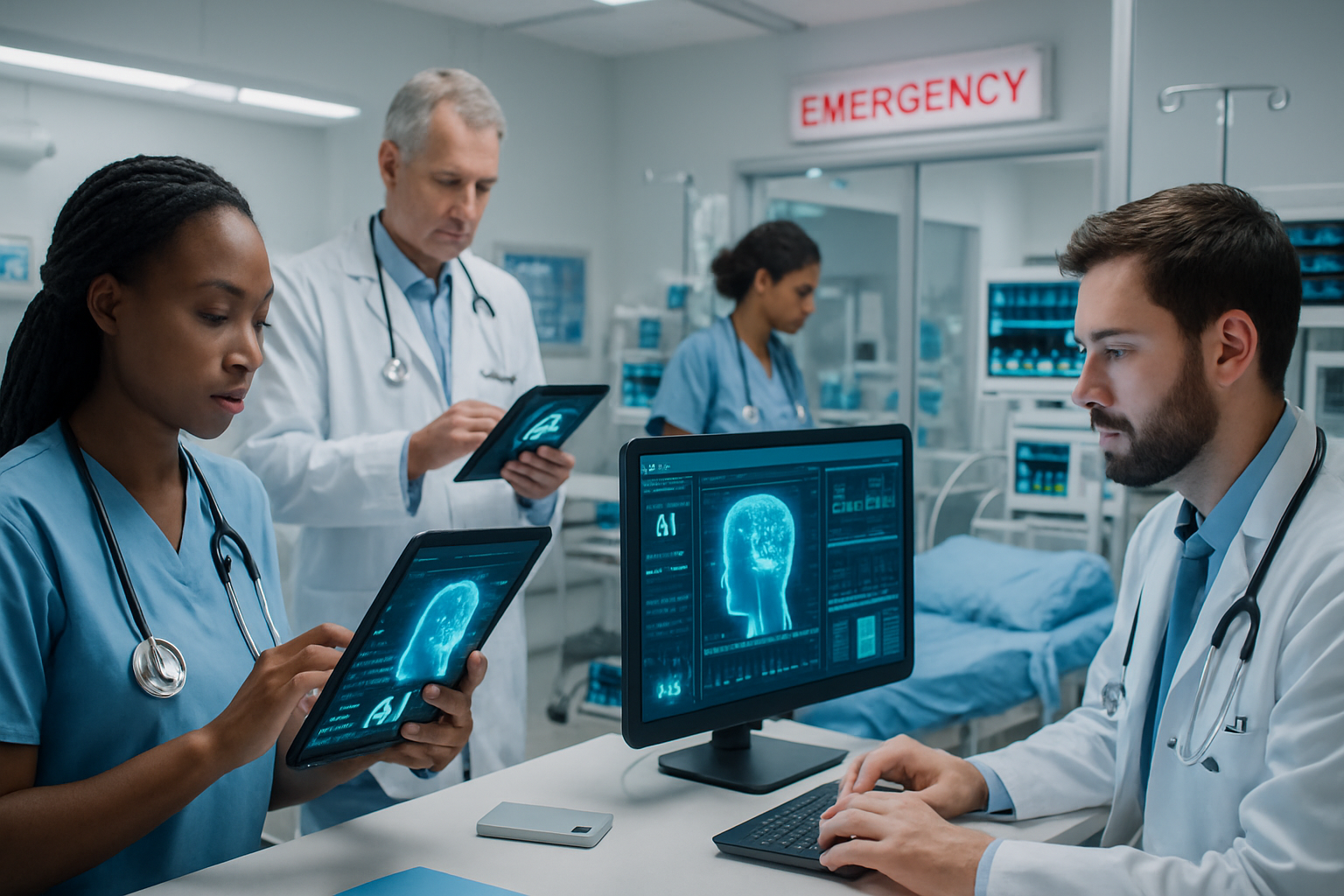
New Zealand's Health Minister Simeon Brown announced that artificial intelligence scribe tools are being deployed in emergency departments across the country, representing a significant step forward in healthcare digitization. The AI systems are designed to enable medical professionals to see more patients by automating routine documentation tasks, freeing up crucial time for direct patient care.
This development aligns with broader global healthcare transformation trends documented throughout 2026, where AI systems are being positioned as amplifiers of human capabilities rather than replacements. The success of similar initiatives, including Swedish breast cancer detection AI and Hong Kong's antibody therapy breakthroughs, suggests that 2026 may be remembered as the year healthcare truly shifted from treating disease to maintaining wellness through technological assistance.
The implementation comes amid mounting pressures on healthcare systems worldwide. New Zealand's approach demonstrates the potential for AI to address workforce shortages while maintaining the human-centered care that defines quality healthcare. Early indicators from similar programs globally show measurable improvements in patient outcomes when technology enhances rather than replaces clinical judgment.
Serbian Students Excel in Global AI Competition
Serbian high school students achieved remarkable success at the International Winter Olympiad in Artificial Intelligence, winning one silver medal and one bronze medal in what has become the world's premier AI competition for young minds. The achievement positions Serbia as an emerging leader in AI education and youth development.
This success reflects the broader "2026 Educational Technology Renaissance"—a coordinated international movement emphasizing thoughtful digital tool integration with traditional educational values. Serbia's achievement joins other notable developments including Malaysia's world-first AI-integrated Islamic school, Singapore's WonderBot 2.0 heritage education program, and Canadian universities' AI teaching assistants that maintain critical thinking standards.
The Serbian students' success demonstrates that effective AI education requires more than just technical training—it demands creativity, critical thinking, and cultural understanding. Their achievement comes during a critical period when nations are determining how to prepare students for an AI-integrated global economy while preserving human creativity and wisdom.
Singapore Leads Educational Impact Research
Singapore's Ministry of Education, under Education Minister Desmond Lee, announced comprehensive studies examining artificial intelligence's impact on student learning—a response to growing concerns about over-reliance on AI tools in educational settings. This research represents one of the most systematic approaches to understanding AI's educational effects globally.
The study addresses what researchers call the "productivity paradox"—documented cases where AI implementation creates "more work and declining efficiency" rather than promised productivity gains. German research by Dr. Frank Bäumer shows students often experience a "double workload" effect, performing original responsibilities plus supervising and correcting AI outputs.
Singapore's evidence-based approach contrasts sharply with rushed AI adoption seen elsewhere. The nation's systematic methodology provides a template for other countries seeking to balance innovation with educational effectiveness. With over 50% of teenagers worldwide now regularly using AI for homework according to Pew Research Center analysis, Singapore's findings will likely influence global educational policy.
Global Context: The 2026 AI Integration Challenge
These three developments occur within what experts are calling the "2026 Educational Technology Renaissance"—a coordinated global phenomenon characterized by thoughtful digital tool integration rather than wholesale technological replacement. The movement represents a maturation in AI adoption, moving beyond the experimental phase toward essential infrastructure deployment.
However, implementation faces significant challenges. The global memory crisis has driven semiconductor prices up sixfold, affecting companies like Samsung, SK Hynix, and Micron, creating infrastructure bottlenecks expected to persist until 2027. This constraint is paradoxically driving more efficient and thoughtful technology deployment.
International cooperation has become essential. The UN's Independent International Scientific Panel on AI, established with 40 global experts, provides the first fully independent global AI impact assessment. Meanwhile, regulatory frameworks are intensifying, with Spain implementing the world's first criminal executive liability for tech platforms and France conducting AI company cybercrime raids.
Success Patterns Emerge
Analysis of successful AI integration across healthcare and education reveals consistent patterns. Sustained political commitment, comprehensive stakeholder engagement, and cultural sensitivity prove essential. Most importantly, successful programs treat AI as an amplification tool serving human goals rather than an end in itself.
The economic implications are substantial. Prevention-first approaches using AI demonstrate superior outcomes through reduced crisis costs, decreased unemployment, and improved workforce productivity. Countries implementing comprehensive AI strategies report enhanced international competitiveness and community resilience.
New Zealand's healthcare AI, Serbian educational excellence, and Singapore's research methodology each represent different aspects of successful technology integration. Healthcare systems worldwide are watching New Zealand's patient outcome data, while educational policymakers study Singapore's systematic evaluation methods and Serbia's student development programs.
Looking Forward: The Human-AI Partnership
The most significant insight emerging from these three case studies is that successful AI integration enhances rather than diminishes human capabilities. New Zealand's doctors can focus more on patient care, Serbian students develop both technical skills and creative thinking, and Singapore ensures technology serves educational goals rather than replacing fundamental relationships.
As Microsoft's Mustafa Suleyman predicts AI replacing majority office workers within two years, these examples provide hope for a different trajectory—one where human-AI collaboration creates new possibilities rather than simple substitution. The key lies in implementation wisdom: ensuring technology serves human flourishing while preserving the creativity, empathy, and cultural understanding that define human potential.
February 2026 represents a critical inflection point. The decisions made now about AI integration in healthcare and education will determine whether artificial intelligence fulfills its transformative promise or creates systemic disruption requiring dramatic corrections. The examples from New Zealand, Serbia, and Singapore suggest that with careful planning and human-centered approaches, AI can indeed enhance rather than replace human expertise.
Success will ultimately depend on unprecedented coordination between governments, technology companies, educational institutions, and civil society—all working together to ensure that AI serves humanity's highest aspirations while addressing our most pressing challenges.