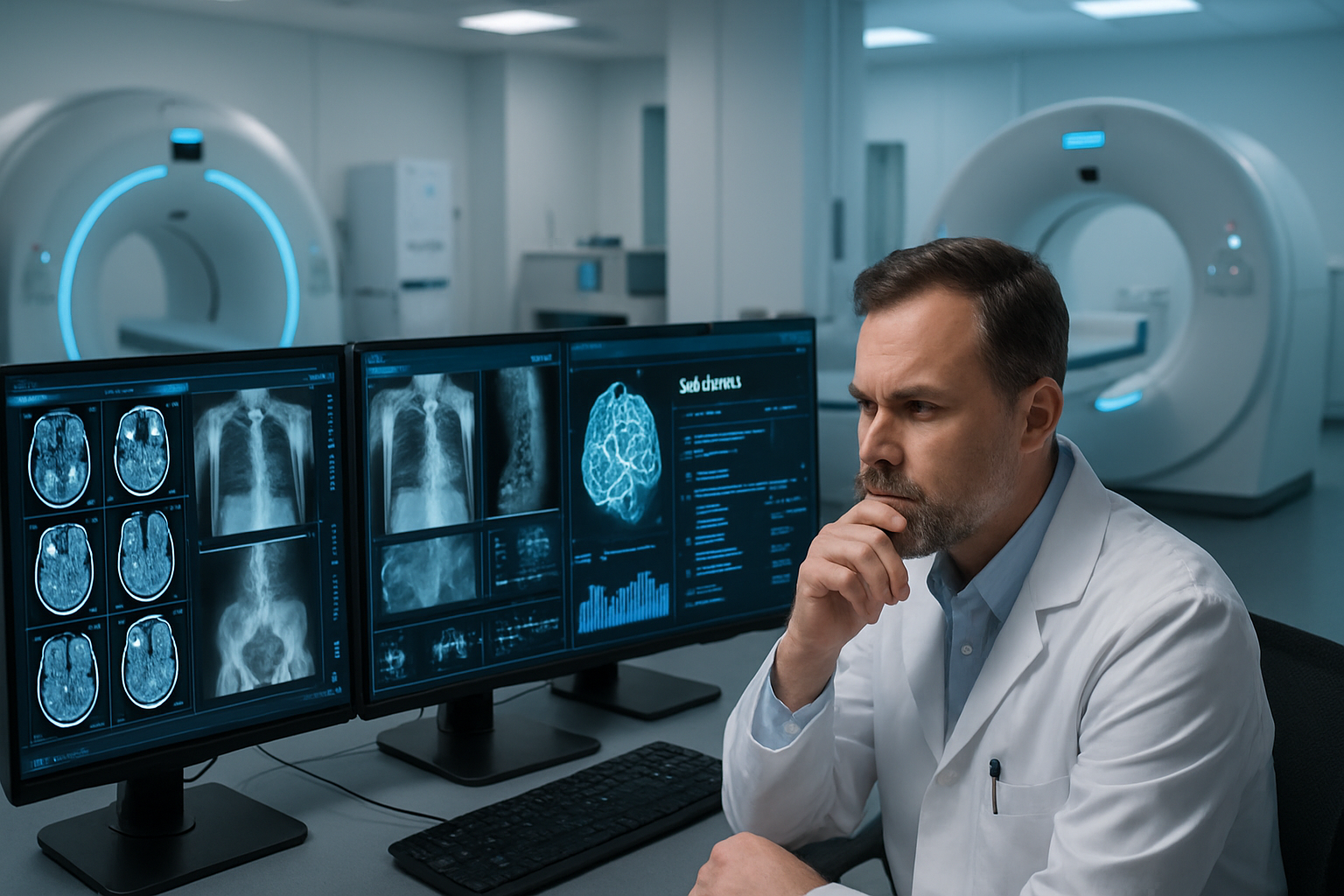
The CEO of America's largest hospital chain has announced ambitious plans to replace radiologists with artificial intelligence systems, igniting fierce debate among medical professionals who accuse the healthcare and AI industries of prioritizing profit over patient care during what experts call the "Therapeutic Revolution of 2026."
The controversial announcement, which has sent shockwaves through the medical community, represents the most significant challenge yet to traditional diagnostic medicine as healthcare systems worldwide grapple with integrating AI technologies while maintaining clinical excellence and patient safety.
Industry Backlash and Accusations of "Money-Making"
Numerous medical specialists are pushing back against what they characterize as reckless profit-seeking by both the AI and healthcare industries. According to reports from Austria, medical professionals are raising serious concerns about studies showing AI's limitations as a "double-edged sword" in medical applications.
The pushback comes as comprehensive research reveals troubling patterns in AI medical deployment. Oxford University's Nature Medicine study demonstrated that AI chatbots perform no better than traditional internet searches across multiple medical scenarios, from common conditions to critical emergencies like brain hemorrhages. Meanwhile, the Canadian Medical Association found that 50% of Canadians now consult AI chatbots for health information, with AI users five times more likely to report health harms compared to non-users.
"It's the humans who are breaking the process," explains Dr. Rebecca Payne, whose Swiss research reveals that medical interpretation errors, not technological limitations, represent the primary challenge in AI medical applications. This finding underscores the continued need for professional medical oversight rather than wholesale replacement of human expertise.
Global Context: The "Wellness Paradox"
This development occurs during what healthcare experts identify as the "Therapeutic Revolution of 2026" – a period characterized by remarkable medical advances in precision medicine, AI diagnostics, and revolutionary surgical techniques occurring alongside fundamental healthcare delivery system failures.
The phenomenon, termed the "wellness paradox," describes the troubling contradiction where sophisticated medical technology coexists with basic healthcare access problems, chronic understaffing, and aging infrastructure operating beyond design capacity. Countries worldwide report patients facing months-long waits for basic services while healthcare workers experience "moral distress" from providing inadequate care.

Successful AI Integration Models
Despite the controversy, several healthcare systems have successfully implemented AI technologies as enhancement rather than replacement tools. New Zealand's "Heidi" AI medical scribe system saves emergency doctors up to 10 minutes per patient encounter through automated documentation, allowing physicians to focus on direct patient care rather than administrative tasks.
Estonian hospitals demonstrate AI as an indispensable tool for stroke and radiation therapy treatments, saving doctors hours while improving patient outcomes. The technology brings challenges including false alarms and data integration complexities, but represents the global trend of technology enhancing rather than replacing clinical judgment.
These success stories share common characteristics: AI serves as sophisticated amplification tools supporting specific human goals rather than wholesale replacement of medical professionals, comprehensive safety protocols include regular audits, and mandatory professional training emphasizes AI limitations alongside capabilities.
International Regulatory Response
The global medical community is responding with unprecedented regulatory coordination. Spain implemented the world's first criminal executive liability framework for tech platforms, creating imprisonment risks for executives whose AI systems cause harm. France has conducted AI company cybercrime raids targeting inadequate safety protocols, while the European Commission investigates Digital Services Act violations potentially worth billions in penalties.
The United Nations established an Independent Scientific Panel of 40 experts under Secretary-General António Guterres, representing the most sophisticated global AI assessment body since internet commercialization. This coordinated international response aims to prevent jurisdictional shopping while ensuring AI serves human welfare rather than purely commercial interests.
"We need comprehensive frameworks addressing transparency, accountability, and societal impact as AI becomes sophisticated and prevalent in healthcare."
— International Healthcare Policy Expert
Infrastructure Challenges and Innovation
The AI healthcare expansion occurs amid a global semiconductor crisis, with memory chip prices surging sixfold affecting Samsung, SK Hynix, and Micron, creating shortages expected until 2027. Paradoxically, these constraints are spurring innovation in memory-efficient algorithms and sustainable deployment strategies that could democratize advanced AI access.
The World Bank projects AI water demand of 4.2-6.6 billion cubic meters annually by 2027 for data center cooling – equivalent to four to six times Denmark's total annual water consumption. This environmental challenge is driving renewable energy investment and efficient computing architectures as healthcare systems invest billions in AI infrastructure.
Prevention-First Healthcare Revolution
The AI healthcare debate occurs within a broader transformation toward prevention-first healthcare strategies. Countries implementing comprehensive prevention programs report 40% cost reductions compared to reactive treatment models through decreased crisis interventions and improved population health outcomes.
Montana's mobile crisis teams achieved an 80% reduction in police mental health calls through proactive community intervention. Finland's educational reforms balance academic achievement with psychological wellbeing, preventing adult depression patterns. These approaches demonstrate measurable benefits including reduced emergency care demands, decreased hospitalization rates, and improved workforce productivity.
Economic and Social Implications
The economic stakes extend far beyond healthcare costs. Prevention-focused AI approaches demonstrate substantial benefits through improved community resilience, reduced social service demands, and enhanced international competitiveness. However, critics warn that profit-driven AI deployment could exacerbate healthcare inequality rather than improving access and outcomes.
Medical tourism potential, cost efficiency improvements, and healthcare reputation enhancement create economic multiplier effects for countries implementing successful AI integration. Conversely, hasty replacement of medical professionals could undermine the human relationships essential for effective medical care, potentially creating long-term costs exceeding short-term savings.
The Path Forward: Human-AI Collaboration
Healthcare experts increasingly advocate for sophisticated human-AI collaboration models that amplify medical capabilities while preserving creativity, cultural understanding, and emotional intelligence that define effective patient care. Successful implementations treat AI as enhancement tools serving specific medical goals rather than wholesale replacement mechanisms.
The critical challenge lies in ensuring AI enhances rather than replaces professional medical judgment. This requires technological improvements, comprehensive patient education, extensive professional training, and robust regulatory frameworks that prioritize patient safety over convenience or cost reduction.
A Civilizational Choice Point
March 2026 represents what industry experts characterize as a "civilizational choice point" – a critical juncture determining whether AI serves human flourishing versus exploitation. The decisions regarding healthcare AI implementation, professional training requirements, and regulatory frameworks will establish decades-long patterns for human-AI relationships in medicine.
Success requires unprecedented coordination between governments, technology companies, healthcare institutions, and civil society. The goal must be balancing innovation with responsible governance, commercial interests with human welfare, and national competitiveness with international cooperation for sustainable AI-integrated healthcare systems.
"The future of healthcare lies in sophisticated human-AI collaboration that amplifies our capabilities while preserving the creativity, empathy, and wisdom that define human potential in healing."
— Dr. Healthcare Innovation Researcher
As the debate continues, the medical community faces a fundamental question: Will AI healthcare transformation serve humanity's highest aspirations for healing and care, or will it become another tool for profit maximization at the expense of the doctor-patient relationship that has defined medicine for millennia? The answer will shape not only healthcare delivery but the very nature of human compassion in an increasingly automated world.