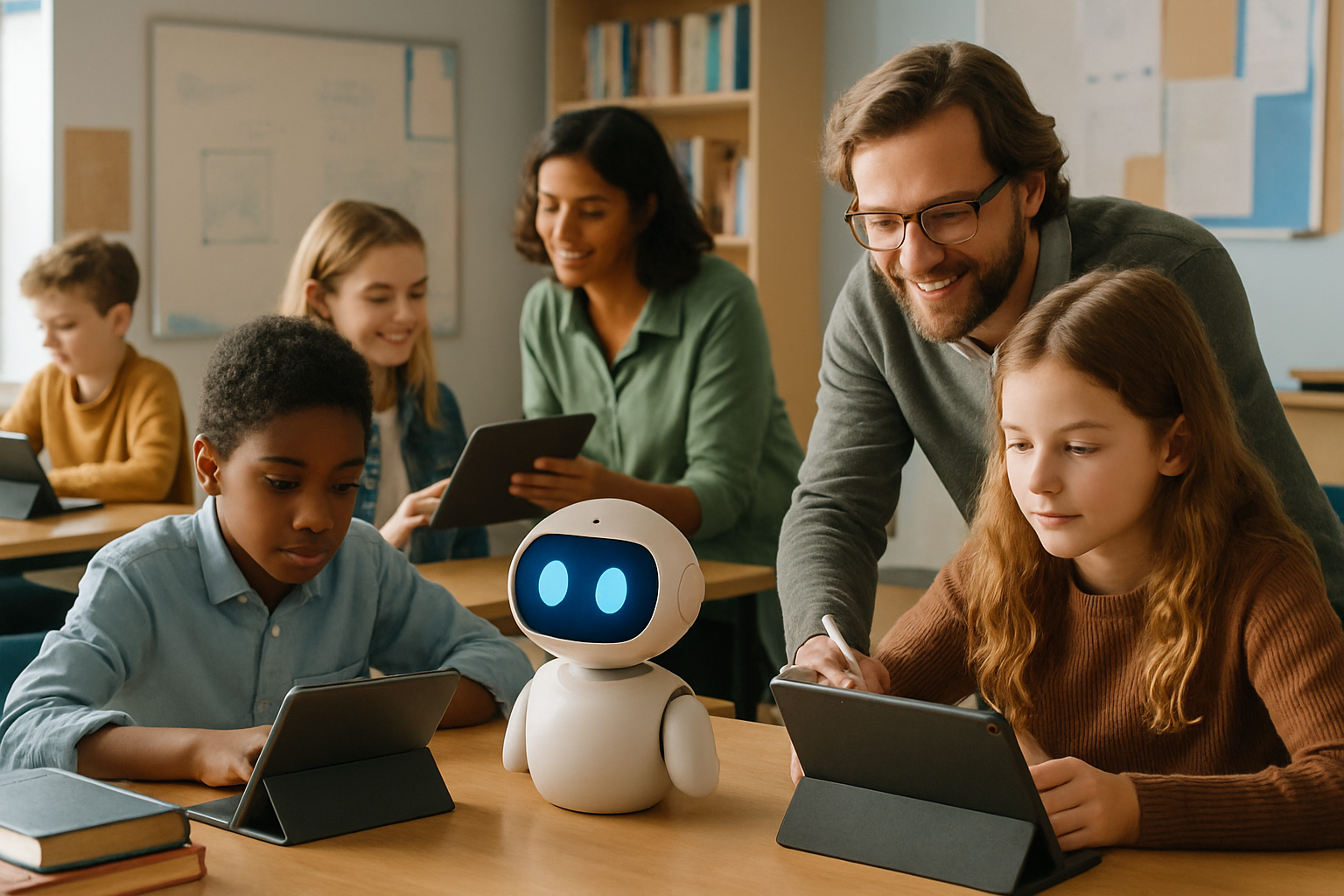
Universities and businesses across the globe are experiencing an unprecedented transformation as artificial intelligence tools become integral to education and workplace operations, fundamentally reshaping how we learn, work, and interact with technology.
From the universities of Beni in the Democratic Republic of Congo to the boardrooms of Cyprus, AI integration is accelerating at a pace that has caught many institutions unprepared. This technological revolution, occurring against the backdrop of what experts term the "2026 Educational Technology Renaissance," represents the most significant shift in learning and work paradigms since the post-World War II expansion of higher education.
The Educational Frontier: AI in the Classroom
In Beni, Democratic Republic of Congo, artificial intelligence has gained significant traction within higher education institutions, facilitating personal research within the LMD (License-Master-Doctorate) system. However, this digital transformation has sparked concerns among educators about declining critical thinking abilities among students who increasingly rely on AI for academic tasks.
The phenomenon extends far beyond Central Africa. According to Pew Research Center findings, over 50% of teenagers worldwide now regularly use AI tools to complete homework assignments, marking a seismic shift in educational approaches. This widespread adoption has raised fundamental questions about academic integrity, learning effectiveness, and traditional pedagogy.
"The problem is not AI adoption; it is authority that was never deliberately defined before AI arrived."
— Petros Nearchou, Director at Obrela Industries, Cyprus
Malaysia has pioneered what may be the most comprehensive integration model with the world's first AI-integrated Islamic school (SMAN) in Sabah, successfully combining artificial intelligence with traditional religious and academic learning. The country achieved a remarkable 97.82% teacher placement rate while implementing sophisticated AI-enhanced curricula that preserve cultural authenticity while embracing technological advancement.
The Workplace Paradigm Shift
In Cyprus, businesses are confronting ethical questions as AI adoption reaches ubiquitous levels in commercial operations. The rapid implementation of AI systems has exposed vulnerabilities that organizations never anticipated, particularly around access rights and security protocols that were informally managed before AI's arrival.
The transformation extends beyond simple task automation. A Latvian startup has developed what it calls an "AI therapist" designed to boost company profits by improving productivity and efficiency among employees using AI in their daily operations. This development represents a new category of AI applications focused on the psychological and operational aspects of human-AI collaboration.
Perhaps most concerning is the emerging "productivity paradox" documented by German researcher Dr. Frank Bäumer, which reveals AI creating a "double workload effect." Workers often find themselves performing their original responsibilities while also supervising and correcting AI outputs, sometimes resulting in declining efficiency rather than the promised productivity gains.
Global Infrastructure Challenges and Innovation
The AI revolution occurs amid significant infrastructure constraints. A global memory semiconductor crisis has driven sixfold price increases affecting major manufacturers including Samsung, SK Hynix, and Micron, with shortages expected to persist until 2027 when new fabrication facilities come online.
Paradoxically, these constraints have spurred innovation in memory-efficient algorithms and sustainable deployment strategies. Organizations are developing hybrid approaches that maximize AI capabilities while minimizing hardware requirements, potentially democratizing advanced AI access across different economic contexts.
Successful Integration Models
Despite challenges, several models demonstrate successful human-AI collaboration. Canadian universities have implemented AI teaching assistants that enhance rather than replace critical thinking education, maintaining the fundamental human relationships that define meaningful learning.
Singapore's WonderBot 2.0 represents another success story, providing conversational AI for heritage education that preserves cultural knowledge while leveraging advanced technology. These implementations share common characteristics: they treat AI as amplification tools serving human goals rather than wholesale replacement mechanisms.
The Youth Perspective: A Generation in Transition
In Switzerland, young people are increasingly turning to AI chatbots not just for academic assistance but for emotional support, creating what researchers describe as "constant companions." This trend raises concerns about attention span, loneliness, and dependency among a generation that, as one young user noted, "cannot remember what life was like without AI."
The phenomenon highlights the comprehensive nature of AI integration, extending beyond functional applications to psychological and social dimensions. Portuguese researchers have documented similar patterns, noting that AI chatbots are becoming integral to young people's social and emotional development.
Regulatory Responses and Ethical Frameworks
Governments worldwide are responding with increasingly sophisticated regulatory frameworks. Spain has implemented the world's first criminal executive liability framework for tech platforms, while France has conducted AI cybercrime raids. The United Nations has established an Independent Scientific Panel with 40 global experts, representing the first fully independent international AI assessment body.
These regulatory efforts reflect recognition that AI governance requires unprecedented coordination between governments, technology companies, educational institutions, and civil society to balance innovation acceleration with responsible development.
The Critical Choice Point
Industry experts characterize March 2026 as a "civilizational choice point" that will determine whether AI serves human flourishing or becomes a tool for exploitation and control. The decisions made during this period will establish decades-long patterns for human-AI relationships across all sectors of society.
The convergence of massive corporate investments (Alphabet's $185 billion in AI infrastructure, Amazon's $1+ trillion development plans), regulatory intensification, infrastructure constraints, and international cooperation requirements creates an unprecedented coordination challenge.
Looking Forward: Human-Centered AI
The most promising path forward involves sophisticated human-AI collaboration that amplifies human capabilities while preserving creativity, cultural understanding, and ethical reasoning that define human potential. Successful implementations consistently emphasize AI as enhancement tools rather than replacement mechanisms.
Countries implementing prevention-first educational approaches are demonstrating superior economic outcomes through reduced crisis intervention costs, decreased unemployment, and improved workforce productivity. Education is increasingly viewed as strategic infrastructure for 21st-century prosperity rather than a cost center.
"We must ensure that technology serves educational goals rather than replacing the fundamental human relationships that define authentic education."
— Educational Technology Expert
The window for proactive adaptation is narrowing rapidly. Success requires maintaining human creativity, critical thinking, and cultural knowledge while preparing students and workers for an AI-integrated global economy that demands both technical competence and cultural authenticity.
As we navigate this transformation, the challenge lies not in choosing between human and artificial intelligence, but in creating synergistic relationships that harness the strengths of both while preserving what makes us distinctly human. The decisions made in 2026 will determine whether this technological revolution serves humanity's highest aspirations or becomes another source of division and displacement.