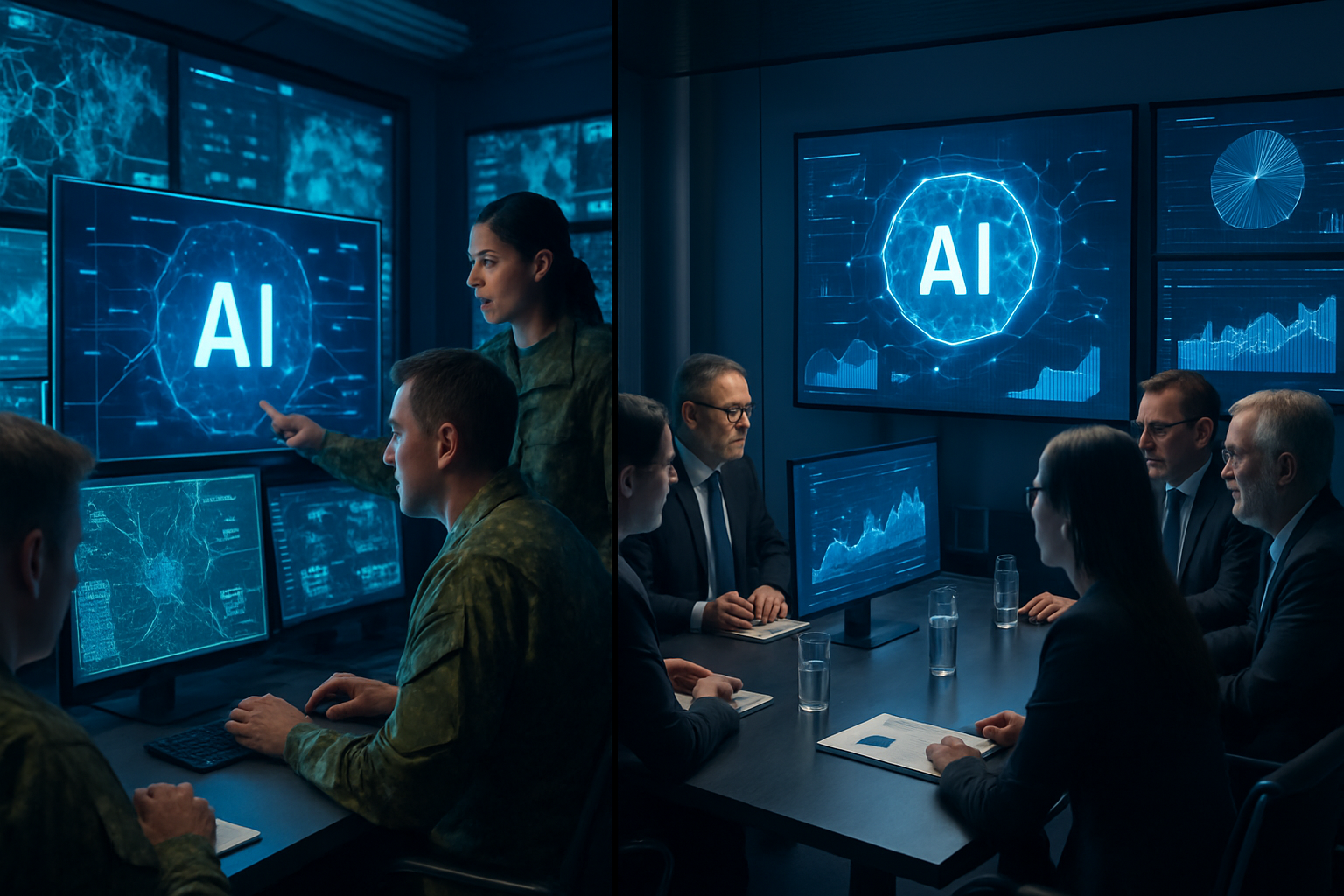
The United States Department of Defense has announced the integration of ChatGPT into its internal military artificial intelligence systems as part of a groundbreaking collaboration with OpenAI, while the company simultaneously reports unprecedented growth with over 800 million weekly users and explosive expansion in its coding products.
This historic development represents the most significant expansion of artificial intelligence into critical government infrastructure to date, occurring alongside remarkable commercial success that positions AI as an essential technology across both military and business sectors.
Military AI Integration Marks Strategic Shift
The Defense Department's decision to integrate ChatGPT into military AI systems represents a fundamental shift in how the United States approaches national security technology. This collaboration with OpenAI signals the military's recognition that advanced AI capabilities are no longer optional but essential for maintaining strategic advantage.
The integration comes at a time when AI has evolved from experimental technology to critical infrastructure across multiple domains. According to extensive analysis of global AI developments, military applications represent one of the fastest-growing sectors for AI deployment, with nations worldwide racing to incorporate these capabilities into defense systems.
This military adoption follows patterns observed globally, where AI technologies are being deployed for reconnaissance enhancement, strategic analysis, and operational planning. Ukraine's recent deployment of AI-enhanced vision systems for drone operations in challenging conditions demonstrates the practical battlefield applications that have driven military interest in these technologies.
OpenAI's Explosive Commercial Growth
Concurrent with the military announcement, OpenAI CEO Sam Altman has reported extraordinary momentum across the company's product portfolio. ChatGPT has achieved sustained growth exceeding 10% monthly, with the platform now serving over 800 million weekly users - a milestone that demonstrates the technology's transition from novelty to essential business tool.
Perhaps even more significantly, OpenAI's Codex coding product is experiencing what Altman describes as "insane" growth at 50% weekly expansion. This explosive development in AI-powered programming assistance reflects the broader transformation occurring across the software industry, where AI is increasingly automating complex technical tasks previously requiring specialized human expertise.
"The momentum we're seeing across all product lines reflects AI's evolution from experimental to essential infrastructure."
— Sam Altman, OpenAI CEO
The company has also launched an updated chat model, further enhancing capabilities that have made ChatGPT indispensable for businesses worldwide. This continuous innovation cycle reflects the intense competition characterizing what Google DeepMind CEO Demis Hassabis has called "the most intense tech race in history."
Business Sector Transformation Accelerates
The business implications of OpenAI's growth extend far beyond user metrics. The company's success represents broader industry transformation, where AI capabilities are fundamentally reshaping how organizations operate, make decisions, and deliver value to customers.
Recent analysis reveals that AI integration is occurring across multiple business functions simultaneously. Financial institutions are deploying AI credit analyst agents, retail companies are implementing conversational commerce platforms, and technology firms are integrating AI into core development processes through tools like natural language programming.
The 50% weekly growth in Codex usage particularly signals revolutionary change in software development. This AI-powered coding assistance is enabling developers to write, review, and optimize code at unprecedented speed and scale, potentially transforming the entire software development lifecycle.
Infrastructure and Market Challenges
Despite remarkable growth, the AI industry faces significant infrastructure constraints that could limit expansion. The global memory crisis, characterized by sixfold price increases affecting major manufacturers Samsung, SK Hynix, and Micron, represents a critical bottleneck for AI deployment.
These supply chain challenges have driven companies like OpenAI to seek alternatives to traditional hardware providers, including exploring relationships beyond established suppliers like Nvidia. The infrastructure constraints are expected to persist until 2027, when new manufacturing facilities come online.
The market has responded with significant volatility. The "SaaSpocalypse" phenomenon has erased hundreds of billions in market capitalization as investors grapple with AI's potential to disrupt traditional software business models. German analysts describe an "apocalypse for software houses," while Indian IT giants have seen 6% declines as AI threatens core service offerings.
Regulatory and Security Implications
The integration of AI into military systems occurs amid intensifying global regulatory scrutiny. European authorities have launched investigations into AI platforms, while Spain has implemented criminal executive liability for social media violations involving AI systems.
The establishment of the UN Independent International Scientific Panel on Artificial Intelligence, featuring 40 global experts, represents the first fully independent international body focused on AI impact assessment. This regulatory evolution reflects growing recognition that AI's transformative potential requires careful governance frameworks.
Military AI deployment raises additional considerations around security, reliability, and operational integrity. The Defense Department's decision to integrate ChatGPT suggests confidence in the technology's security architecture, while also acknowledging the strategic necessity of staying competitive in AI capabilities.
Global Competition and Strategic Implications
The US military's ChatGPT integration occurs against a backdrop of intense international AI competition. Chinese developments, including breakthroughs by companies like DeepSeek, have challenged assumptions about US technological dominance and suggest a multipolar AI development landscape.
European initiatives, including Deutsche Telekom's Industrial AI Cloud in Munich, represent efforts to achieve AI sovereignty and reduce dependence on US technology providers. This geographic diversification of AI capabilities has significant implications for international relations and strategic balances.
The military applications extend beyond the United States. Analysis indicates that approximately one-third of countries have agreed to AI warfare governance declarations, though major powers including the US and China have abstained from comprehensive commitments, highlighting the complex intersection of technological advancement and international security.
Looking Forward: Critical Decisions Ahead
The convergence of military adoption and explosive commercial growth positions 2026 as a pivotal year for artificial intelligence. The technology has clearly transitioned from experimental to essential infrastructure across critical sectors, with decisions made this year likely to determine whether AI fulfills its transformative promise or creates systemic disruptions requiring significant corrections.
Key factors determining success include resolving infrastructure constraints, developing sustainable business models, establishing effective governance frameworks, and maintaining international cooperation on AI safety and security standards. The balance between innovation acceleration and responsible deployment will shape not only the technology industry but also national security capabilities and international stability.
As ChatGPT joins US military infrastructure and businesses worldwide embrace AI solutions at unprecedented scale, the stakes have never been higher. The decisions made by policymakers, business leaders, and technologists in the coming months will determine whether artificial intelligence becomes a force for enhanced security and prosperity or a source of unprecedented disruption and instability.
The integration of AI into military and business operations represents more than technological advancement - it signals a fundamental shift in how modern society organizes its most critical functions around artificial intelligence capabilities. The success of this transformation will depend on society's ability to harness AI's enormous potential while managing its equally significant risks.