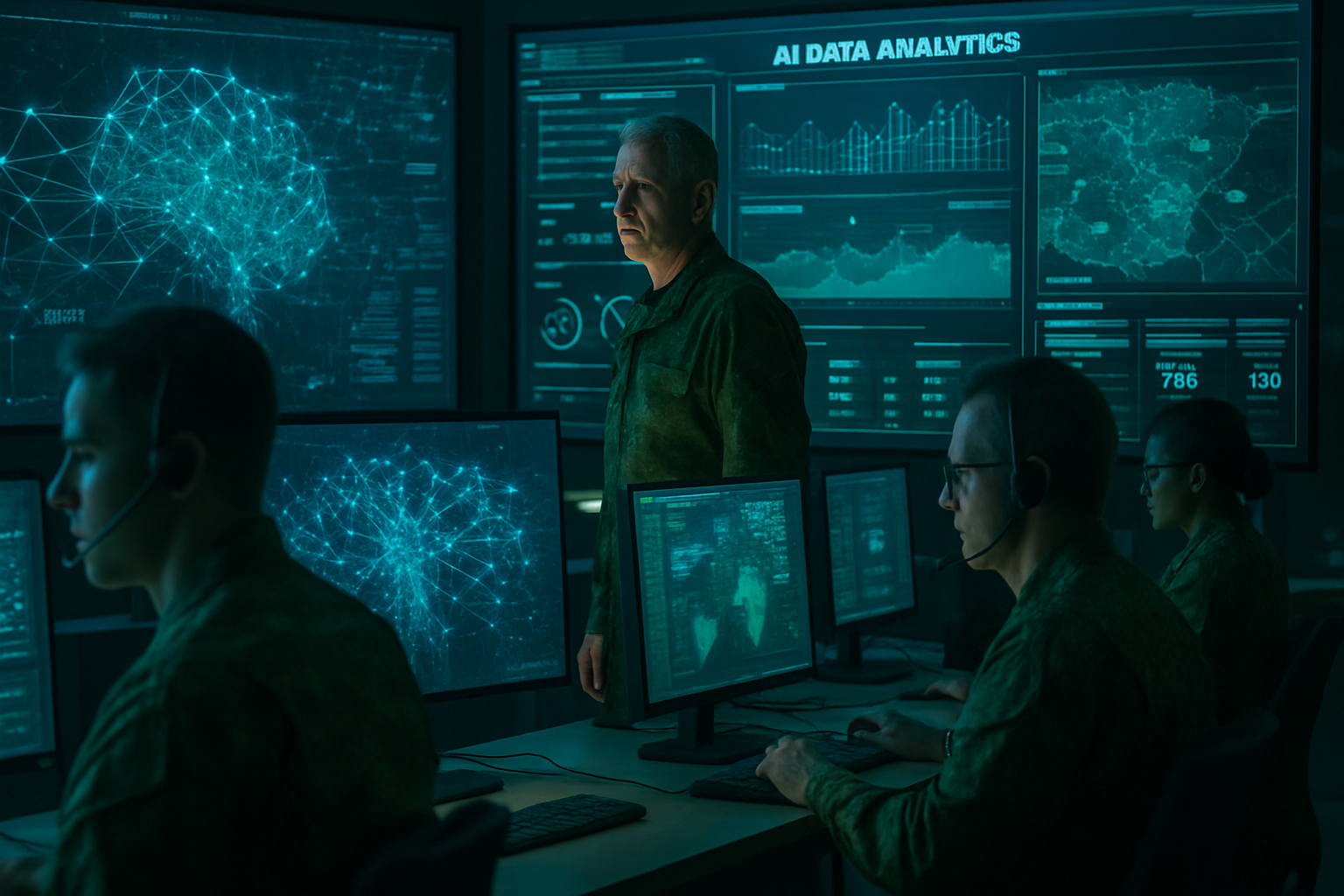
The use of artificial intelligence in military and government operations has reached a critical inflection point, with reports emerging that the U.S. military employed Anthropic's Claude AI during the capture operation of Venezuelan President Nicolás Maduro, despite terms of service prohibiting violence and surveillance applications.
According to The Wall Street Journal, the AI model was accessed through Anthropic's partnership with Palantir Technologies, a contractor that works with U.S. defense and federal law enforcement agencies. The exact role Claude played in the operation remains classified, but the revelation has intensified ongoing tensions between AI safety advocates and military officials seeking unrestricted access to advanced AI capabilities.
Unprecedented Military AI Integration
This incident represents the first confirmed case of a major AI company's technology being used in a classified military operation. Anthropic has become increasingly resistant to loosening restrictions on Pentagon AI deployment, particularly opposing autonomous weapons development while the Defense Department seeks broader access to classified networks.
The Pentagon has been actively urging leading AI companies to expand their tools into classified military networks, representing a fundamental shift in defense AI integration strategy. The Department of Defense is already integrating ChatGPT into military systems through its OpenAI collaboration, with CEO Sam Altman reporting that ChatGPT exceeds 800 million weekly users with 10% monthly growth.
"The exact role Claude played in the operation has not been publicly disclosed, but this represents a significant escalation in military AI applications."
— Defense Industry Source
Global AI Military Competition Intensifies
The controversy unfolds amid broader concerns about international AI military competition. Chinese advances through DeepSeek's breakthrough technology have challenged U.S. technological dominance assumptions, while European initiatives like Deutsche Telekom's Industrial AI Cloud in Munich represent sovereignty efforts to reduce dependence on American AI systems.
Ukrainian forces have deployed AI-enhanced drone systems with improved vision capabilities for low-light operations, demonstrating the practical battlefield applications of AI technology. These developments occur as approximately one-third of countries have agreed to AI warfare governance frameworks, though notably the United States and China have abstained from comprehensive commitments.
Infrastructure Constraints and Market Disruption
The military's push for AI integration faces significant technological challenges. A global memory crisis has driven semiconductor prices up sixfold, affecting major manufacturers including Samsung, SK Hynix, and Micron, who are operating at full capacity. This shortage is expected to persist until 2027 when new fabrication facilities come online.
The broader AI industry is experiencing what analysts term the "SaaSpocalypse" – massive market disruption that has eliminated hundreds of billions in market capitalization as AI systems threaten traditional software business models. This volatility reflects the fundamental restructuring of the technology sector as AI capabilities mature.
Regulatory Response and International Governance
European authorities are intensifying regulatory oversight of AI applications. Spain has implemented the world's first criminal executive liability framework for social media platforms, while France has conducted cybercrime raids on AI companies over content violations. The United Nations has established an Independent International Scientific Panel comprising 40 experts to conduct the first fully independent international AI governance assessment.
These regulatory developments highlight the growing tension between rapid AI advancement and the need for comprehensive governance frameworks. The military applications of AI particularly challenge existing international law and warfare conventions.
Industry Tensions and Safety Concerns
The Pentagon-Anthropic dispute exemplifies broader industry tensions between AI safety considerations and practical military applications. Former Anthropic security researchers have resigned with warnings that "the world is in peril" due to AI development outpacing safety measures, highlighting internal conflicts between commercial pressures and safety considerations at leading AI companies.
Anthropic has maintained its opposition to selling advanced AI chips to China, viewing them as national security risks despite advocacy for expanded access from other industry leaders. This position demonstrates how AI companies are increasingly forced to navigate complex geopolitical considerations.
Educational and Civilian Integration Success
In contrast to military controversies, civilian AI integration has shown promising results. Canadian universities have successfully implemented AI teaching assistants while maintaining critical thinking standards. Malaysia has launched the world's first AI-integrated Islamic school, combining technology with traditional learning approaches. Singapore's WonderBot 2.0 demonstrates successful AI enhancement in heritage education.
These civilian successes provide models for responsible AI enhancement that prioritize human welfare alongside technological advancement, offering alternatives to purely military-focused AI development.
Looking Forward: Critical Decisions Ahead
The year 2026 represents a critical inflection point as AI transitions from experimental technology to essential infrastructure across healthcare, education, entertainment, and governance. The decisions made regarding military AI applications will significantly influence this trajectory, determining whether AI development serves transformative human purposes or becomes dominated by security and surveillance considerations.
The Pentagon's demand for unrestricted AI access, combined with Anthropic's resistance to military applications, reflects fundamental questions about democratic oversight of military technology. As AI capabilities continue to advance, the need for international cooperation on governance frameworks becomes increasingly urgent.
Success in balancing AI innovation with safety governance, international cooperation with national security needs, and civilian benefits with military applications will determine whether the AI revolution fulfills its transformative promise or requires dramatic corrections to prevent systemic risks.
The resolution of the Pentagon-Anthropic dispute may establish precedents for how democratic societies govern the intersection of artificial intelligence, national security, and civilian oversight – decisions that will influence AI development for decades to come.