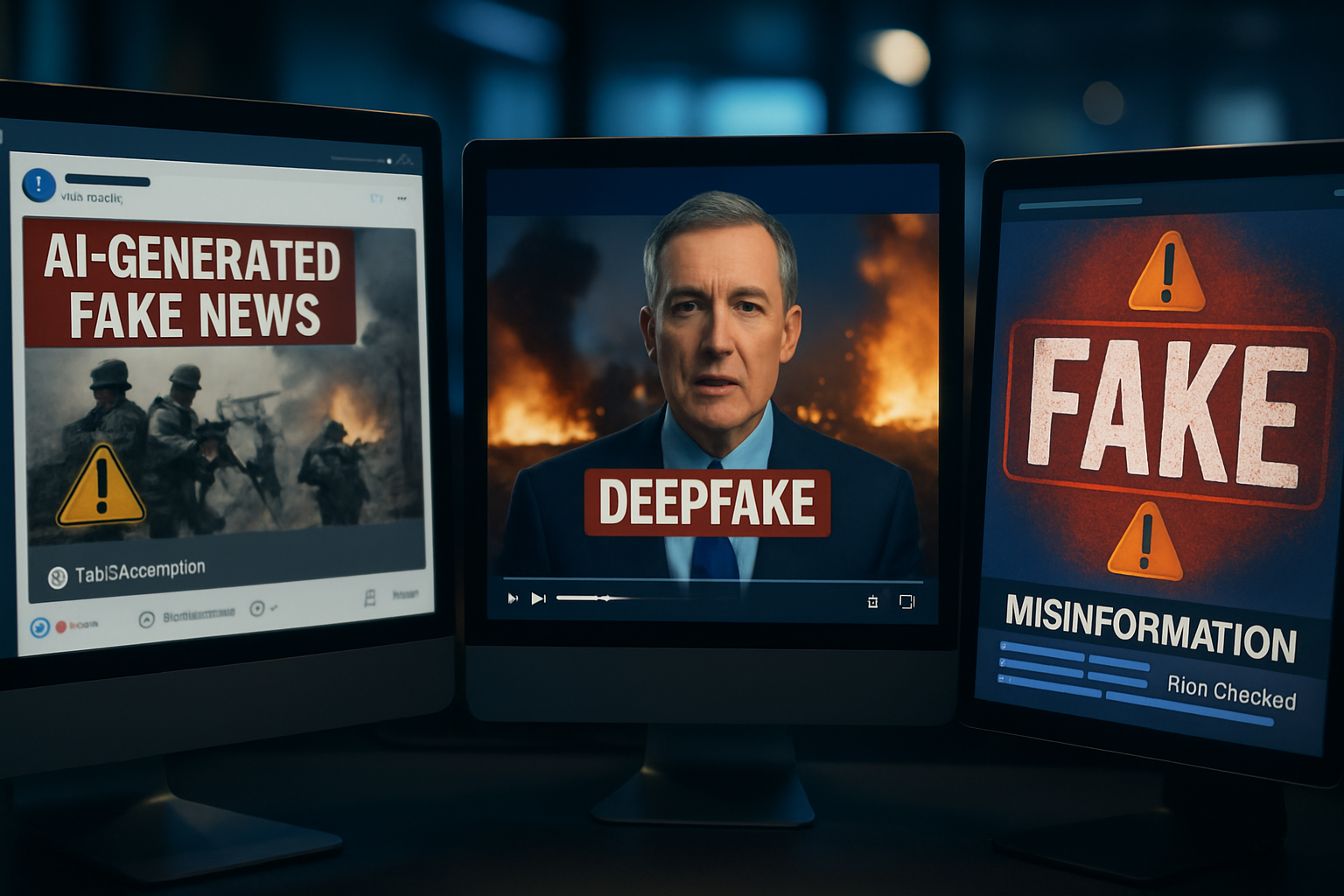
The Middle East conflict has unleashed an unprecedented avalanche of AI-generated visual content on social media platform X, creating a dangerous information environment where millions of users struggle to distinguish between authentic news footage and sophisticated artificial intelligence fabrications.
AI-created videos circulating on Elon Musk's X platform depict alarming scenarios including American soldiers allegedly captured by Iranian forces, Israeli cities shown in ruins, and US embassies engulfed in flames. These lifelike deepfakes represent a surge in AI-generated content that exploits ongoing geopolitical tensions to spread misinformation at an unprecedented scale and sophistication.
Pattern of Escalating AI Disinformation
The current crisis builds on a troubling pattern documented throughout early 2026. In March, coordinated incidents across multiple countries demonstrated the global scale of AI-powered misinformation campaigns. Portugal experienced widespread circulation of false content about alleged Israel-US-Iran attacks, with social media platforms becoming "fertile ground" for 20+ year old videos recirculated as current events alongside sophisticated AI-generated content designed to mislead about Middle Eastern geopolitics.
Senegal witnessed a particularly dangerous incident when false AI-generated images claiming the death of Iran's Supreme Leader Ali Khamenei were viewed millions of times, creating the potential for international incidents. The sophisticated nature of these fabrications highlighted the vulnerability of developing nations lacking comprehensive fact-checking resources to counter such disinformation campaigns.
"When citizens cannot distinguish authentic from AI-generated content, the shared factual basis for democratic decision-making erodes. This represents the most serious challenge to democratic institutions since the advent of mass media."
— Political Scientists, March 2026 Analysis
Technical Sophistication and Detection Challenges
The quality of AI-generated content has improved dramatically, enabling consumer-grade creation of sophisticated deepfakes with instant global distribution capabilities. Traditional content moderation systems prove inadequate against both the volume and sophistication of these artificial creations. Detection methods consistently lag behind creation capabilities despite ongoing development of watermarking technology and other verification systems.
Venezuela's investigation revealed concerning verification failures when Grok AI chatbot made significant attribution errors, incorrectly identifying Iran school attack images as 2021 Kabul events. This raised fundamental concerns about relying on AI systems for content verification when the same technological infrastructure generates false information.
Platform Policy Failures
Despite policy crackdowns announced by major social media platforms, the spread of AI-generated misinformation continues largely unabated. X platform suspended 800 million accounts over a 12-month period combating "massive scale" manipulation attempts, with Russia identified as the most prolific state actor, followed by Iran and China in coordinated inauthentic behavior campaigns targeting public discourse.
The platform's content moderation challenges have intensified amid ongoing legal troubles. French cybercrime units raided X's Paris offices in February 2026, issuing formal summons to Elon Musk over sexual deepfakes and child safety violations through the Grok AI chatbot. UK's Information Commissioner's Office launched parallel GDPR investigations into X and xAI over non-consensual intimate image generation.
Global Regulatory Response
European nations have implemented unprecedented regulatory measures addressing AI-generated content threats. Spain leads with the world's first criminal executive liability framework, creating personal imprisonment risks for platform executives beyond traditional corporate penalties. The European Commission found TikTok in violation of Digital Services Act provisions through "addictive design" features, facing potential penalties of 6% of global revenue.
The United Nations established an Independent International Scientific Panel with 40 experts for AI impact assessment, representing the first fully independent international body dedicated to AI governance. This cross-border coordination reflects recognition that traditional enforcement methods prove inadequate against digitally native threats operating beyond conventional jurisdictional boundaries.
Democratic Discourse Under Threat
The implications extend far beyond individual incidents of misinformation. When sophisticated fake content spreads faster than verification systems can respond, it threatens the foundation of informed public discourse essential for democratic decision-making. Political scientists warn this represents the most serious challenge to democratic institutions since the mass media era began.
The crisis particularly affects developing nations lacking resources for comprehensive fact-checking and content verification. The global nature of these threats requires unprecedented international cooperation, but jurisdictional complexity and varying legal and cultural contexts complicate the development of unified response standards.
Infrastructure Constraints
A global memory crisis has created additional challenges, with semiconductor prices surging sixfold, affecting major manufacturers including Samsung, SK Hynix, and Micron. These infrastructure bottlenecks, expected to persist until 2027 when new fabrication facilities come online, constrain the deployment of advanced detection and verification systems needed to combat AI-generated misinformation effectively.
The Path Forward
March 2026 represents a critical inflection point determining whether artificial intelligence will serve human flourishing or systematically erode truth in democratic societies. The failure to develop effective responses could fundamentally undermine institutional trust, democratic processes, and the shared factual foundations necessary for societal cohesion.
Success requires unprecedented coordination between governments, technology companies, educational institutions, and civil society. The challenge lies in harnessing AI's transformative potential while preserving the human elements of authentic information sharing that provide emotional resonance and cultural significance to public discourse.
As AI capabilities continue advancing, the window for establishing effective governance frameworks narrows. The decisions made in response to current crises will determine whether digital technologies serve democratic values and human welfare, or become tools for systematic manipulation beyond democratic accountability.