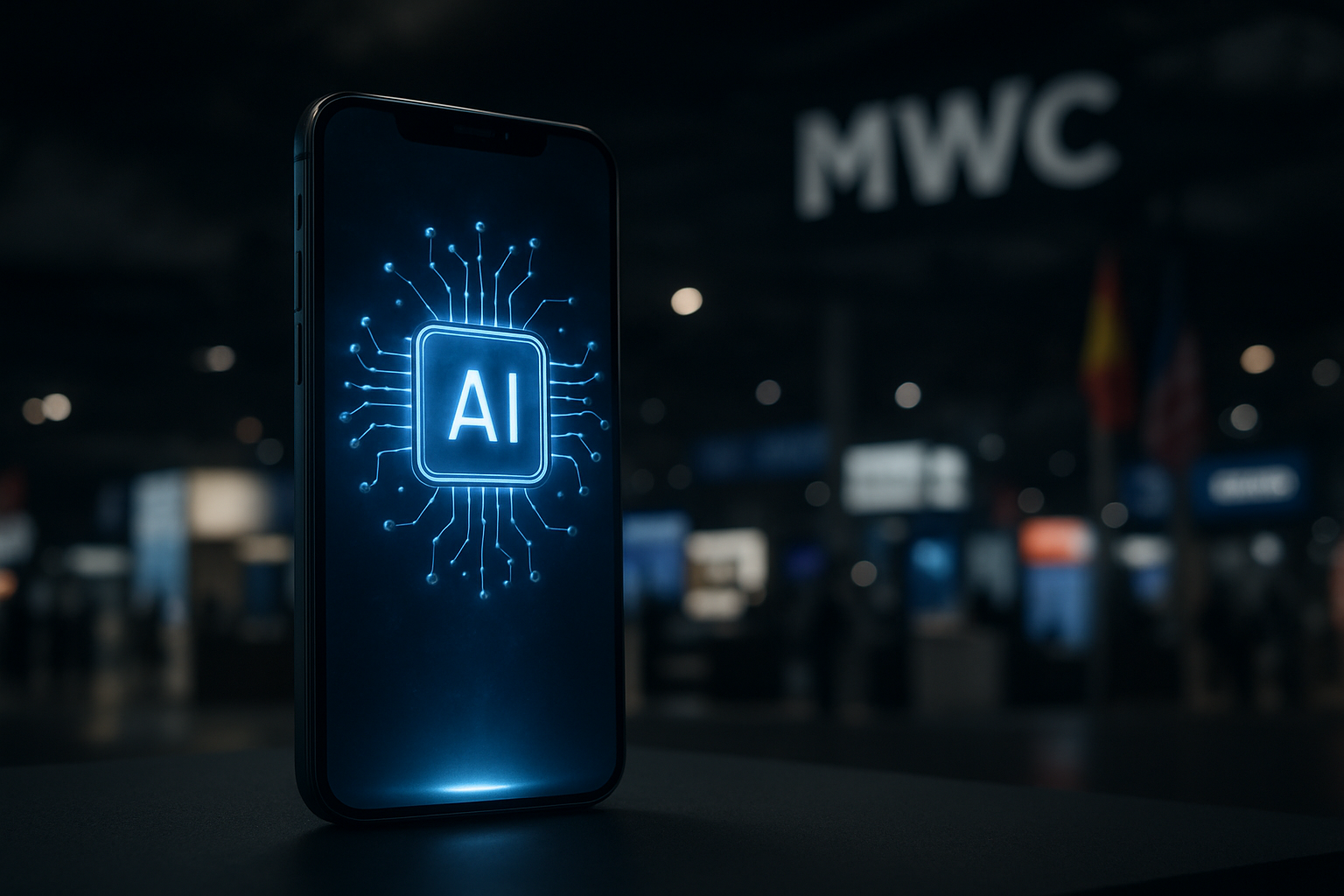
The mobile industry's artificial intelligence revolution reached a critical inflection point at Mobile World Congress Barcelona 2026, where groundbreaking innovations collided with unprecedented global challenges that threaten to reshape the smartphone landscape for years to come.
Despite dazzling AI demonstrations that drew Spain's King Felipe VI and thousands of industry leaders to Barcelona's Fira Gran Via, the euphoria surrounding mobile AI was significantly dampened by the escalating Middle East crisis, a global memory semiconductor shortage driving sixfold price increases, and intensifying regulatory pressure across multiple jurisdictions.
Honor's Revolutionary "Robot Phone" Steals the Spotlight
Chinese smartphone manufacturer Honor emerged as the conference's breakthrough star with its revolutionary "Robot Phone" concept, featuring embodied intelligence and spatial awareness capabilities that CEO James Li described as representing a "new species of smartphone." The device showcased motion capabilities and environmental interaction systems that fundamentally depart from conventional smartphone paradigms.
The Robot Phone demonstration attracted massive crowds, including Spanish royalty, as Honor showcased how artificial intelligence could enable autonomous operation, navigation, and task performance while maintaining connectivity. The technology represents a radical evolution from passive communication devices toward active digital companions capable of independent environmental assessment and response.
"This brings a new dimension to human-device interaction that we've never seen before in mobile technology."
— James Li, Honor CEO
Honor's broader ALPHA PLAN framework, encompassing Alpha Phone, Alpha Store, and Alpha Lab initiatives under their Augmented Human Intelligence (AHI) vision, emphasizes human enhancement rather than replacement—a philosophy that distinguishes the company from competitors pursuing pure automation approaches during this critical AI infrastructure inflection point.
Global Memory Crisis Threatens Industry Innovation
The mobile industry's AI ambitions face a severe reality check from the ongoing global memory semiconductor crisis, which has driven prices sixfold higher and created supply bottlenecks affecting major manufacturers including Samsung, SK Hynix, and Micron. Industry analysts warn that shortages will persist until 2027 when new fabrication facilities come online.
Consumer electronics costs have surged 20-30% over the past year, creating unprecedented pricing pressures that particularly impact mid-range and budget smartphone segments. The crisis has forced manufacturers to develop more memory-efficient algorithms and creative deployment strategies to maximize AI capabilities while minimizing hardware requirements.
Despite these constraints, massive investments continue flowing into AI infrastructure. Alphabet has committed $185 billion to AI development in 2026—representing the largest corporate technology investment in history—while Amazon's AI development plans exceed $1 trillion. This demonstrates industry confidence in long-term transformation despite short-term supply chain challenges.
International AI Journalism Training Initiatives
The democratization of AI technology extended beyond consumer devices at MWC 2026, with the U.S. Embassy in Haiti partnering with the École Supérieure d'Infotronique d'Haïti (ESIH) to conduct groundbreaking training seminars on generative artificial intelligence applications in journalism. The March 2-4 sessions at Hotel Montana in Pétion-Ville represent efforts to expand AI literacy across developing nations.
The initiative reflects growing recognition that AI technology must be accessible and understood globally, not concentrated in traditional tech hubs. Journalists and media professionals received training on practical AI applications while maintaining editorial integrity and professional standards—a balance that has become increasingly important as AI-generated content becomes more sophisticated.
Gaming Hardware Innovation Amid Industry Constraints
Mobile gaming technology also advanced significantly despite supply constraints, with Ayaneo's announcement of the limited-edition Pocket Air Mini B.Duck gaming device featuring a compact 4.2-inch display and playful design elements. The device represents continued innovation in portable gaming hardware, even as manufacturers face component availability challenges.
The gaming device's announcement underscores how specialized manufacturers are adapting to supply chain realities by focusing on niche markets and unique design approaches rather than competing directly with mass-market smartphone manufacturers for scarce components.
Regulatory Pressures Mount Across Europe
The mobile AI revolution occurs against a backdrop of intensifying regulatory scrutiny across European jurisdictions. Spain has implemented the world's first criminal executive liability framework for technology platforms, while France has conducted cybercrime raids on AI companies. These coordinated efforts represent the most sophisticated global technology governance attempt since internet commercialization.
The European Commission's investigation into TikTok for Digital Services Act violations, potentially resulting in billions in penalties for "addictive design" features, signals a fundamental shift from industry self-regulation to government oversight with criminal consequences. This regulatory environment creates additional uncertainty for mobile manufacturers integrating AI capabilities into consumer devices.
Industry Adaptation Strategies Emerge
Mobile manufacturers are responding to these multiple challenges through vertical integration strategies, conservative technology deployment approaches, and enhanced testing protocols. Honor's vertical integration provides competitive advantages during supply constraints, while Samsung's cautious silicon-carbon battery technology adoption emphasizes rigorous testing over rapid market deployment.
The industry is also witnessing successful human-centered AI integration models that enhance rather than replace human capabilities. Examples include Canadian universities implementing AI teaching assistants while maintaining critical thinking standards, and Malaysia operating the world's first AI-integrated Islamic school that combines technology with traditional learning approaches.
Long-term Industry Transformation
March 2026 represents a critical juncture for the mobile industry as it transitions from experimental AI features to essential infrastructure. Success will depend on resolving infrastructure constraints, developing international cooperation frameworks, and creating sustainable business models that prioritize human welfare alongside technological advancement.
The convergence of supply chain challenges, regulatory intensification, massive investments, and international cooperation requirements creates unprecedented coordination demands. Industry leaders must balance innovation acceleration with safety governance, commercial interests with human welfare, and national competitiveness with international cooperation.
Future Implications
The decisions made throughout 2026 will determine whether AI fulfills its transformative promise in mobile technology or creates systemic disruptions requiring dramatic corrections. The industry faces a fundamental choice between technological wisdom and technological dominance, ensuring AI serves human flourishing while preserving the creativity, empathy, and wisdom that define human potential.
Mobile World Congress 2026 demonstrated that while the technical capabilities for revolutionary AI-powered smartphones exist, their successful deployment depends on navigating an increasingly complex landscape of supply chain realities, regulatory requirements, and societal expectations. The companies that succeed will be those that can balance innovation with responsibility, efficiency with humanity, and global reach with local sensitivity.
As the mobile industry continues its AI transformation journey, the lessons learned at MWC Barcelona 2026 will likely influence technology development patterns, regulatory approaches, and consumer adoption trends for years to come. The challenge now is ensuring that the promise of AI-enhanced mobile technology translates into genuine improvements in human communication, creativity, and connection.