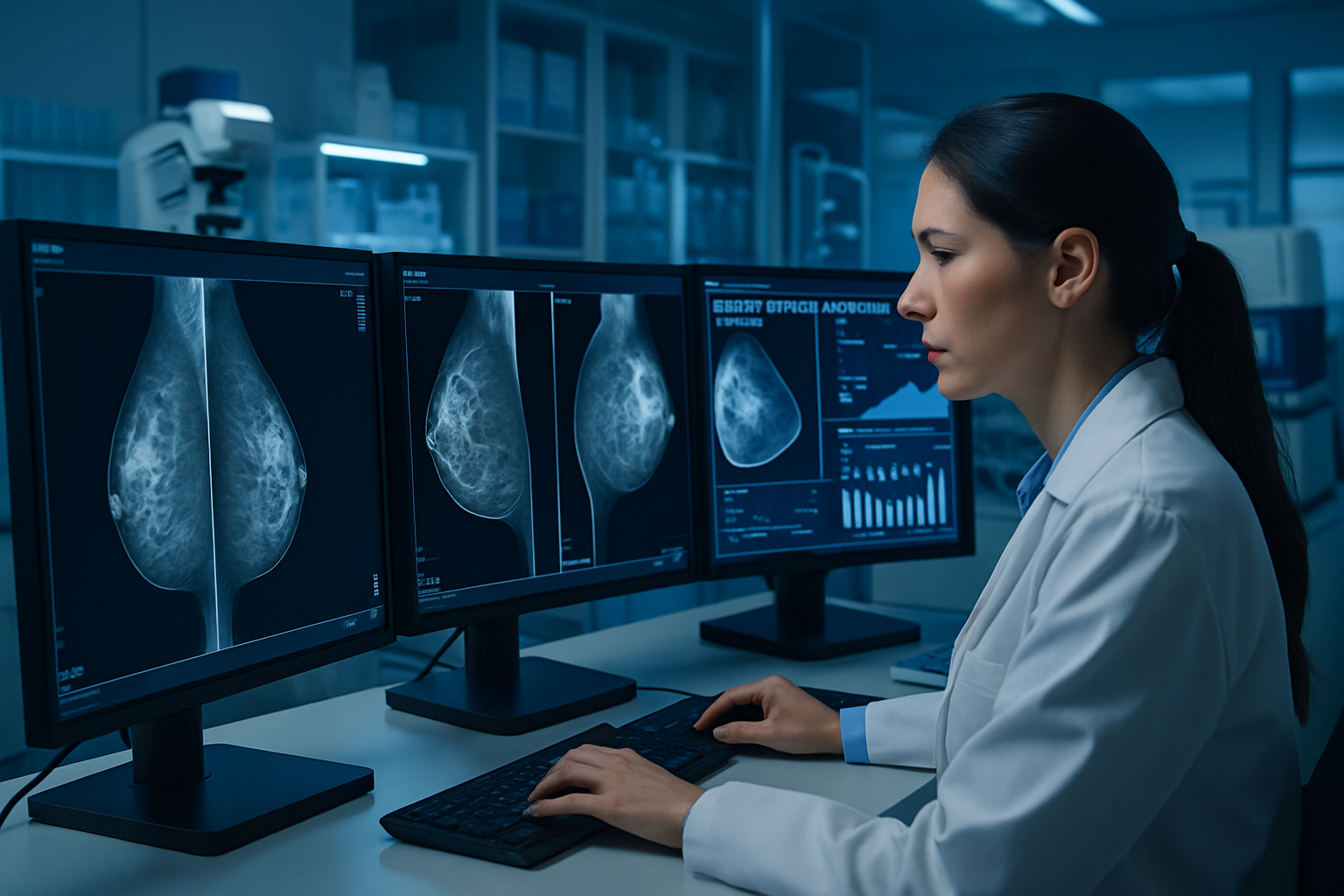
Artificial intelligence is transforming cancer detection with groundbreaking results from a world-first trial in Sweden showing AI can identify more cases of breast cancer during routine screenings, coinciding with World Cancer Day 2026 global initiatives and complementary advances in targeted cancer therapies.
The Swedish trial represents a watershed moment in medical technology, demonstrating that AI systems can significantly enhance radiologists' ability to detect breast cancer during standard mammography screenings. Researchers emphasize that the technology is designed to support clinicians rather than replace them, addressing longstanding concerns about AI's role in healthcare.
World-First AI Trial Shows Promising Results
The breakthrough comes as healthcare systems worldwide grapple with increasing cancer caseloads and the need to improve early detection rates. According to the Swedish researchers, the AI system analyzed mammography images alongside human radiologists, identifying additional cancer cases that might have been missed through conventional screening alone.
"The results could lead to wider use of AI to ease the workload of radiologists," the research team noted, highlighting the dual benefit of improved detection accuracy and reduced burden on medical professionals. The timing coincides with World Cancer Day 2026, which emphasized the theme "United by Unique" and highlighted global healthcare inequalities in cancer treatment access.
Complementary Advances in Cancer Treatment
While Swedish researchers focus on early detection, scientists at Hong Kong Polytechnic University (PolyU) have developed a novel therapeutic approach targeting metabolism-related liver cancer. The research team created an innovative antibody that targets fat cell proteins, offering a new pathway for treating cancers linked to metabolic dysfunction.
This dual approach—enhanced detection through AI and targeted treatment through precision medicine—represents the evolving landscape of cancer care in 2026. The PolyU development addresses the growing concern over metabolism-related cancers, which have increased alongside global rates of obesity and metabolic disorders.
Global Context of Cancer Innovation
These advances build upon a remarkable year of cancer research breakthroughs. Australia launched the world's first mRNA brain cancer vaccine trial for children, leveraging COVID-19 vaccine technology for personalized cancer treatment. Finland's Tampere University Hospital introduced laser treatment for previously inoperable brain tumors, enabling same-day discharge for some patients.
The WHO's recent Nature journal study confirmed that 38-40% of cancer cases remain preventable through lifestyle changes and public health measures, analyzing data from 185 countries and 30 risk factors including tobacco use, alcohol consumption, obesity, air pollution, and infections.
Technology Supporting Clinical Excellence
The Swedish AI breakthrough addresses a critical bottleneck in cancer care: the limited number of specialized radiologists available to analyze the millions of screening images generated annually. By enhancing detection capabilities while supporting rather than replacing medical professionals, the technology offers a sustainable path forward for healthcare systems under pressure.
Early detection remains crucial for cancer outcomes, with survival rates significantly higher when cancers are identified in their initial stages. The AI system's ability to identify subtle patterns that human eyes might miss could translate into thousands of additional lives saved through earlier intervention.
Addressing Healthcare Inequalities
The World Cancer Day 2026 theme "United by Unique" highlighted stark disparities in cancer care access globally. In Gaza, 11,000 cancer patients remain denied specialized treatment, while Bhutan reports doubled cancer cases over the past decade with care centralized in the capital, creating healthcare deserts in rural areas.
AI-powered screening technology could help address some of these inequalities by enabling more accurate diagnosis in regions with fewer specialist radiologists. However, implementation will require significant infrastructure investment and training programs to ensure equitable access to these technological advances.
Looking Forward: Integration and Implementation
The success of AI in breast cancer screening paves the way for expansion into other cancer types and medical imaging applications. Combined with advances in targeted therapies like the PolyU antibody treatment, the future of cancer care increasingly relies on the integration of artificial intelligence, precision medicine, and traditional clinical expertise.
As these technologies mature, healthcare systems must balance innovation adoption with ensuring that technological advances remain accessible to all patients, regardless of geographic location or economic status. The Swedish trial's emphasis on supporting rather than replacing healthcare professionals provides a model for responsible AI implementation in medical settings.
The convergence of AI-powered early detection, precision therapeutics, and preventive medicine represents a comprehensive approach to cancer control that could significantly reduce both the human and economic burden of cancer worldwide. As implementation expands globally, the focus remains on ensuring these breakthrough technologies serve to unite rather than divide access to life-saving cancer care.