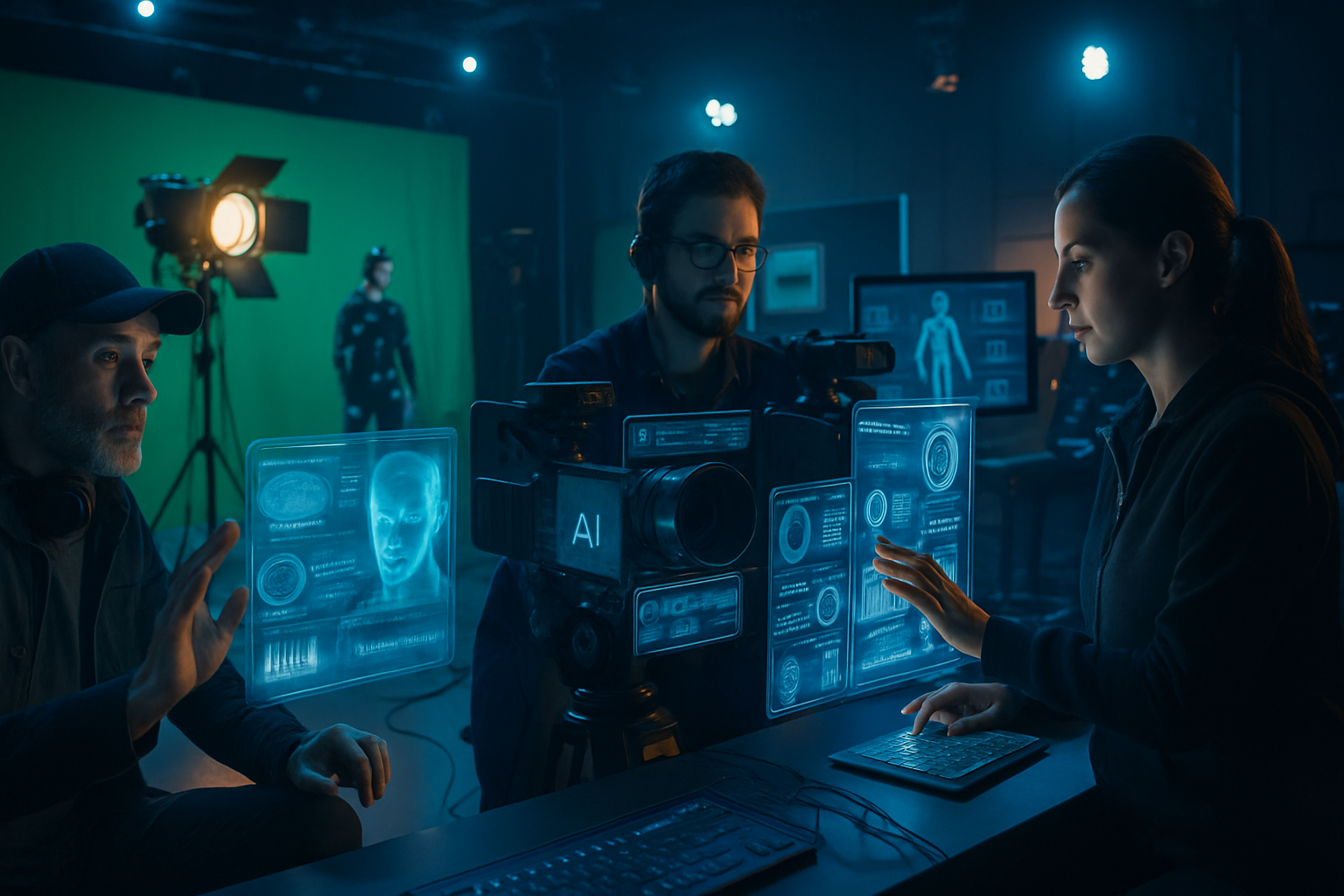
Artificial intelligence is revolutionizing the film industry in ways both subtle and dramatic, from the corridors of the Berlin International Film Festival to the studios of independent creators, fundamentally challenging traditional notions of filmmaking, authenticity, and creative expression.
The 76th Berlin Film Festival in February 2026 became an unexpected epicenter for discussions about AI's transformative impact on cinema, even as organizers maintained that the technology's influence was not immediately evident in the competition lineup. Behind closed doors, however, industry professionals grappled with questions that will define the future of filmmaking.
The Prague Paradox: When AI Becomes Too Real
In Prague, graphic designer Vašek Krejčí's "Postapo Praha" project exemplifies both the promise and peril of AI-generated content. His apocalyptic videos depicting an abandoned Prague Metro system and deserted main railway station populated by deer are so convincing that viewers have contacted him in panic, believing the footage captures reality.
"Despite repeatedly emphasizing that this is fiction, I've encountered reactions from people who believed the footage captures real events," Krejčí explained. "They asked with concern what was happening in the city."
This phenomenon represents a critical inflection point in visual media consumption. When AI-generated content becomes indistinguishable from reality, it challenges fundamental assumptions about documentary evidence and news reporting – a concern that resonates throughout the entertainment industry.
Festival Circuits Embrace Digital Innovation
The Berlin Film Festival's recognition of AI's looming presence reflects broader industry trends documented throughout 2026's cultural renaissance. The festival, which awarded Turkish-German director İlker Çatak's political drama "Yellow Letters" the Golden Bear, demonstrated how traditional storytelling methods continue to coexist with emerging technological capabilities.
"The artificial intelligence revolution sweeping through the entertainment sector was at first glance not evident at this year's Berlin Film Festival, but the potential for widespread changes was still on people's minds."
— The Local Germany
This tension between visible and invisible technological influence characterizes the current moment in cinema. While AI may not yet dominate red carpets or award ceremonies, its impact on production workflows, post-production capabilities, and content creation is accelerating rapidly.
Hollywood's AI Education Revolution
The transformation is most visible in educational initiatives across the industry. Curious Refuge, an online AI film academy launched in May 2023, has become crucial for Hollywood workers acquiring machine learning skills during production slowdowns. Visual effects veteran Michael Eng represents thousands of industry professionals who recognize that AI literacy is no longer optional but essential for career survival.
The academy's success demonstrates the industry's pragmatic approach to technological disruption: rather than resisting change, professionals are actively acquiring skills to remain competitive. This educational revolution creates new career paths even as it potentially displaces traditional roles.
The Authenticity Challenge
Perhaps nowhere is the AI revolution more contentious than in journalism and documentary filmmaking. The German broadcaster ZDF's recall of a New York correspondent over AI-generated images in ICE immigration raids coverage highlights critical transparency and accuracy concerns in AI-generated media content.
This incident demonstrates the urgent need for clear editorial controls distinguishing human-created from artificially generated material. As AI capabilities become more sophisticated, the responsibility for maintaining journalistic integrity becomes more complex and crucial.
European Cultural Integration
European cultural institutions are pioneering thoughtful AI integration approaches. Belgium's Atomium, celebrating its 20th renovation anniversary, incorporated AI-enhanced digital art programming that demonstrates sophisticated technology-tradition synthesis. This model suggests that successful AI adoption in creative industries requires human-centered approaches that amplify rather than replace artistic vision.
Global Industry Transformation
The film industry's AI revolution extends far beyond Hollywood. International co-productions increasingly incorporate AI tools for everything from script analysis to visual effects, democratizing high-quality production capabilities previously available only to major studios.
This democratization creates opportunities for emerging filmmakers while challenging established power structures within the industry. Countries positioning themselves as production hubs are investing in AI-enhanced facilities to attract international projects, fundamentally altering the global filmmaking landscape.
Infrastructure Challenges
The rapid adoption of AI filmmaking tools faces significant infrastructure constraints. The global memory crisis, with semiconductor prices surging sixfold and affecting major manufacturers like Samsung, SK Hynix, and Micron, creates bottlenecks that could limit AI implementation until new fabrication facilities come online in 2027.
These technical limitations force filmmakers to develop more efficient workflows and creative solutions, potentially leading to artistic innovations that wouldn't have emerged under different circumstances.
The Future of Creative Collaboration
Successful examples from Hollywood training programs to European cultural institutions demonstrate that the future lies in sophisticated human-AI collaboration rather than wholesale replacement of creative professionals. The most promising developments treat AI as an instrument for amplifying human creativity while preserving essential elements like imagination, cultural understanding, emotional depth, and authentic expression.
This collaborative model requires ongoing education, clear professional standards, and thoughtful implementation that prioritizes transparency and authenticity. The industry's ability to maintain uniquely human elements while leveraging AI capabilities will determine whether technology enhances or diminishes creative capacity.
Regulatory and Ethical Considerations
As AI becomes more prevalent in filmmaking, regulatory frameworks are developing to address intellectual property, transparency, and professional standards. The entertainment industry must navigate complex questions about attribution, authenticity, and fair compensation as AI tools become integral to production processes.
The success of AI integration in cinema depends on establishing clear guidelines that protect both creative professionals and audiences while enabling innovation. This balancing act requires unprecedented cooperation between technologists, artists, and policymakers.
Looking Forward: The Transformation Continues
The AI revolution in film represents a pivotal moment at the intersection of technology and human expression. Success requires thoughtful navigation that ensures AI enhances rather than diminishes human creative capacity, maintaining cultural authenticity while embracing technological possibilities.
As demonstrated by projects like "Postapo Praha" and initiatives at major film festivals, the technology's power to create compelling, realistic content is undeniable. The challenge for the industry – and society – is harnessing this power responsibly while preserving the essentially human aspects of storytelling that give cinema its emotional resonance and cultural significance.
The conversations happening in festival circuits, training academies, and production studios today will shape the creative landscape for decades to come. As AI capabilities continue to expand, the film industry's response will serve as a model for other creative sectors grappling with similar technological transformations.