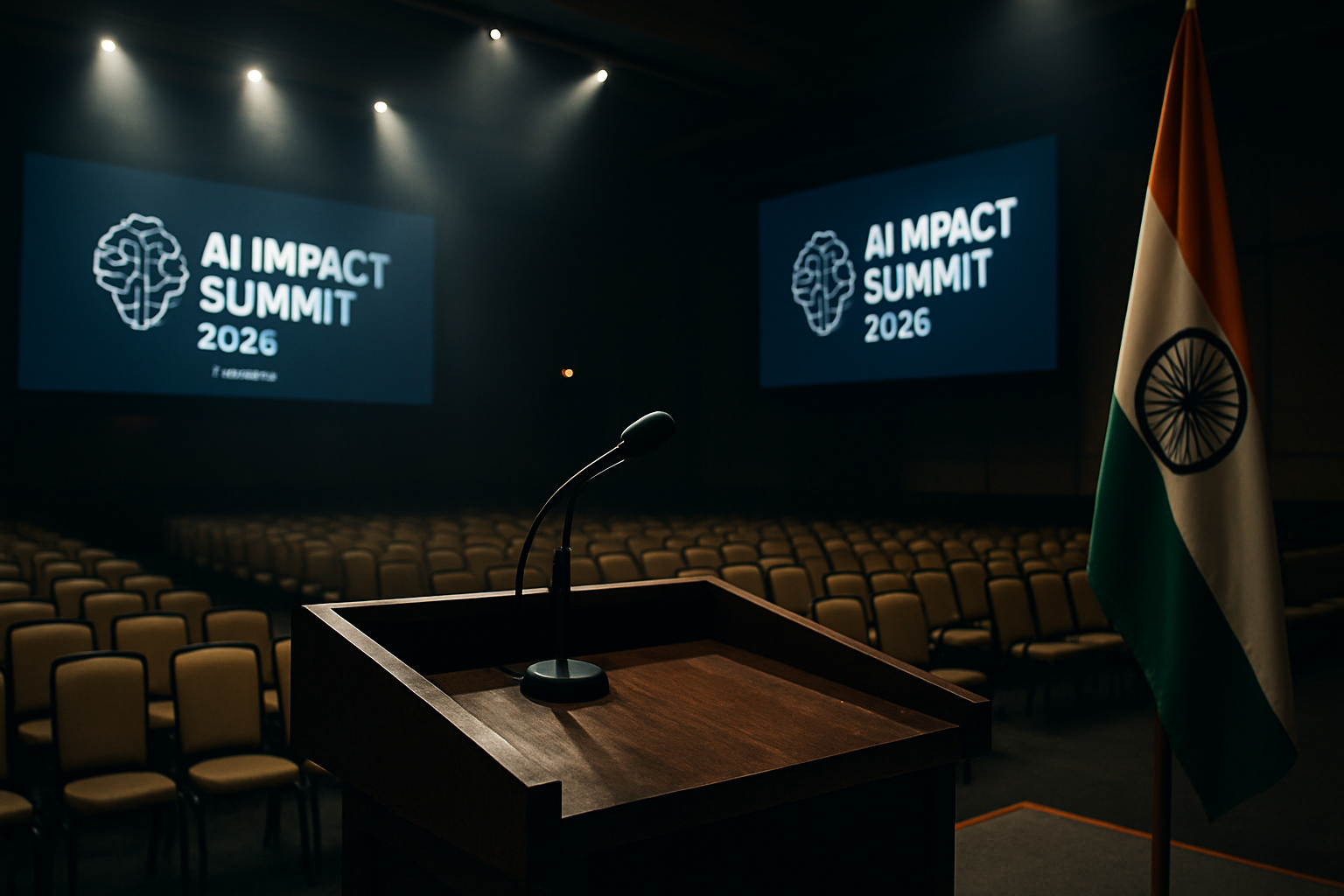
India's ambitious AI Impact Summit 2026 in New Delhi descended into controversy on February 19 as Microsoft founder Bill Gates abruptly withdrew his keynote address just hours before the scheduled presentation, citing the ongoing Jeffrey Epstein document scandal that continues to reverberate through global elite circles.
The Gates Foundation confirmed that the decision was made after "careful consideration" and "to ensure the focus remains on the summit's key priorities," though it provided no further elaboration. Gates's spokesperson replaced him with Ankur Vora, president of the Foundation's Africa and India offices, in what many observers described as damage control amid mounting pressure from the January release of previously sealed Epstein files by the US Department of Justice.
Summit Overshadowed by Multiple Crises
The withdrawal represents the latest fallout from what European law enforcement has described as the "largest international elite criminal network exposure in recent memory." Gates, who has repeatedly called his meetings with the convicted sex offender "foolish" and "stupid," has consistently denied any wrongdoing, yet the scandal continues to generate international consequences with corporate resignations and criminal investigations across six countries.
The controversy comes at a particularly sensitive moment for the AI Impact Summit, which India positioned as a bridge between advanced and developing economies in artificial intelligence governance. Prime Minister Narendra Modi, addressing the summit on Wednesday, described artificial intelligence as "one of the biggest transformations in human history" while simultaneously warning of serious accompanying challenges.
"AI must remain deeply human-centric, aligned with global development goals at this civilizational inflection point."
— Narendra Modi, Prime Minister of India
Industry Leaders Warn of Existential AI Risks
Beyond the Gates controversy, the summit has been marked by increasingly urgent warnings from AI pioneers about the technology's potential to threaten human survival. Nobel Prize winner Geoffrey Hinton, known as the "godfather" of artificial intelligence, warned that without appropriate guardrails, AI could lead to human extinction in a worst-case scenario.
OpenAI CEO Sam Altman used his platform at the summit to call for nuclear-style international regulation, warning of AI-made pathogens and dangerous technological centralization. Altman urged the creation of an IAEA-style watchdog "for international coordination of AI," drawing explicit parallels to nuclear weapons oversight.
The warnings have taken on new urgency as Chinese companies demonstrate increasingly sophisticated capabilities. Unitree Robotics showcased advanced humanoid robots performing martial arts during recent Spring Festival celebrations, marking the transition from laboratory demonstrations to mass production capabilities that could reach tens of thousands of units globally.
Regulatory Battle Lines Drawn
The summit has highlighted deepening global divisions over AI regulation. European nations, led by Spain's implementation of the world's first criminal executive liability framework for tech platforms, are pursuing aggressive oversight measures. Spanish Prime Minister Pedro Sánchez recently ordered criminal investigations into major platforms over AI-generated child abuse material, declaring that "the impunity of these giants must end."
Meanwhile, industry resistance has been fierce. Elon Musk characterized regulatory measures as "fascist totalitarian," while Telegram's Pavel Durov warned of emerging "surveillance states." The tensions have been exacerbated by ongoing French cybercrime raids on X platform offices and formal legal proceedings against major tech executives.
In stark contrast, countries like Malaysia and Canada have demonstrated successful AI integration models. Malaysia launched the world's first AI-integrated Islamic school, combining artificial intelligence with traditional religious education, while Canadian universities have implemented AI teaching assistants that enhance rather than replace critical thinking skills.
Infrastructure Crisis Constrains Development
Beneath the regulatory and philosophical debates lies a fundamental infrastructure crisis that is reshaping the global AI landscape. Memory chip prices have surged sixfold, affecting major manufacturers Samsung, SK Hynix, and Micron, with shortages expected to continue until 2027 when new fabrication facilities come online.
The crisis has forced even tech giants to reconsider their strategies. Consumer electronics costs have risen 20-30%, while the World Bank projects AI water demand could reach 4.2-6.6 billion cubic meters by 2027 for data center cooling—equivalent to four to six times Denmark's annual water withdrawal.
Despite these constraints, investment continues at unprecedented levels. Alphabet has committed $185 billion to AI infrastructure in 2026, while Amazon's development plans exceed $1 trillion. The scale of investment reflects industry conviction that AI represents a fundamental economic transformation, even as critics warn of a potential "AI bubble."
Global South Asserts Leadership
India's hosting of the first major AI summit in the Global South represents a significant shift in technology governance. The summit brought together over 250,000 delegates, including tech leaders from Google, OpenAI, and major government officials from 45+ countries, under the theme "People, Planet, Progress."
Prime Minister Tshering Tobgay of Bhutan used the platform to highlight clean energy and the ambitious Gelephu Mindfulness City as areas for responsible AI collaboration. Kazakhstan's Prime Minister Olzhas Bektenov held bilateral talks with Modi on AI cooperation, while regional leaders increasingly position themselves as active participants rather than passive recipients of Western or Chinese technology.
The Delhi Declaration emerging from the summit is expected to position developing nations as equal partners in AI governance, challenging the traditional dominance of Silicon Valley and Beijing in setting global technology policies.
Military AI Integration Accelerates
Adding another layer of complexity, the summit occurs amid rapid military AI adoption worldwide. The Pentagon has integrated ChatGPT into military systems through OpenAI collaboration, while Ukrainian forces deploy AI-enhanced drone systems with improved low-light vision capabilities.
However, tensions persist between AI companies and defense establishments. Anthropic has resisted Pentagon pressure to loosen safety restrictions, leading to threats of partnership termination. The dispute highlights fundamental conflicts between commercial AI development and military applications, particularly regarding autonomous weapons systems.
"The world urgently needs AI regulation, similar to nuclear safeguards, to prevent technological centralization and AI-made pathogens."
— Sam Altman, CEO of OpenAI
Market Disruption Reaches Tipping Point
The summit discussions unfold against the backdrop of unprecedented market volatility in traditional software sectors. The "SaaSpocalypse"—as analysts have termed it—has eliminated hundreds of billions in market capitalization as AI systems directly replace conventional software functions.
Indian IT giants including Infosys, Wipro, and HCL Technologies have seen stock declines as their core services face AI disruption. However, rather than mass layoffs, many companies are transitioning workers to AI-enhanced roles, suggesting a more nuanced transformation than initially predicted.
The Chinese breakthrough in AI capabilities, particularly DeepSeek's recent advances, has challenged assumptions about US technological dominance and created a genuinely multipolar AI landscape. European initiatives like Deutsche Telekom's Industrial AI Cloud in Munich represent regional efforts to achieve technological sovereignty.
Looking Toward Critical Decisions
As the summit concludes, participants face what many describe as the most critical juncture in AI development since the technology boom began. The convergence of military tensions, regulatory intensification, infrastructure challenges, and successful civilian integration models illustrates the complex landscape facing global leaders.
The UN's establishment of an Independent International Scientific Panel on AI with 40 global experts represents an attempt at coordinated international response, though significant challenges remain in achieving consensus among competing national interests and technological philosophies.
Success in managing the AI transformation requires unprecedented coordination between governments, technology companies, educational institutions, and civil society organizations. The stakes extend far beyond technological advancement to fundamental questions about democratic governance, human welfare, and international stability in an AI-integrated world.
The decisions made in 2026 may well determine whether artificial intelligence serves humanity's transformative promise or becomes a source of systemic disruption requiring extensive correction measures. As the Gates withdrawal and broader summit controversies demonstrate, even the most carefully planned international cooperation efforts face unexpected challenges that can overshadow substantive policy discussions.
The path forward demands balancing innovation acceleration with responsible development, ensuring AI enhances human flourishing rather than threatening it. Whether global leaders can achieve this balance while managing ongoing scandals, infrastructure constraints, and geopolitical tensions remains the defining challenge of our technological age.