The artificial intelligence industry faces unprecedented challenges as military-civilian tensions reach a breaking point, major tech trials commence, and global partnerships reshape the competitive landscape amid ongoing infrastructure constraints.
Pentagon-Anthropic Standoff Intensifies Military AI Debate
The confrontation between the U.S. Department of Defense and AI company Anthropic has reached a critical juncture, with Defense Secretary Pete Hegseth designating the company as a "supply chain risk" following its refusal to remove safety restrictions from Claude AI systems. The designation comes after Anthropic CEO Dario Amodei rejected Pentagon demands for unrestricted military access to AI models, stating the company "cannot in good conscience provide unrestricted AI capabilities that could be turned against civilian populations or undermine democratic institutions."
The dispute highlights a fundamental divide in the AI industry between companies embracing military partnerships and those maintaining ethical restrictions. While OpenAI has expanded its Defense Department collaboration, deploying AI models on classified networks serving over 800 million weekly users, Anthropic has maintained permanent civilian oversight requirements despite facing the loss of $200 million in federal contracts.
"This represents the most critical test of whether democratic institutions can govern AI transformation while maintaining security and values."
— Analysis from former Pentagon AI advisors
High-Profile Legal Battles Shape Tech Industry
Parallel to the military AI controversy, tech entrepreneur Elon Musk faces trial over allegations that he publicly attacked companies to manipulate market values for personal benefit. The case, centered on his Twitter acquisition tactics, represents a significant test of executive accountability in the social media age.
Meanwhile, OpenAI CEO Sam Altman has announced amendments to the company's Pentagon partnership, emphasizing new security protections including "full discretion over safety stack, deploys via cloud, cleared OpenAI personnel in the loop, strong contractual protections." These modifications come as the company seeks to balance military collaboration with responsible AI development.
Deepfake Controversies Expose AI Misuse Risks
A particularly concerning development emerged from Venezuela, where officials had to debunk AI-generated videos falsely showing government announcements about economic policies. The incident demonstrates the growing sophistication of AI-generated disinformation and its potential impact on political stability and public trust.
The deepfake video crisis underscores the urgent need for detection technologies and regulatory frameworks to combat AI misuse. Tech platforms are struggling to identify and remove increasingly realistic synthetic content that can be produced with minimal technical expertise.
Infrastructure Crisis Constrains AI Development
The global technology sector continues to grapple with severe infrastructure constraints, particularly in memory semiconductors where prices have surged sixfold. Samsung, SK Hynix, and Micron are operating at full capacity but cannot meet demand, with shortages expected to persist until 2027 when new fabrication facilities come online.
Despite these constraints, major tech companies are maintaining aggressive investment schedules. Alphabet has committed $185 billion to AI infrastructure in 2026, while Amazon's development plans exceed $1 trillion. The semiconductor crisis is forcing companies to develop more memory-efficient algorithms and explore alternative computing architectures, including space-based solutions.
Regulatory Landscape Intensifies Globally
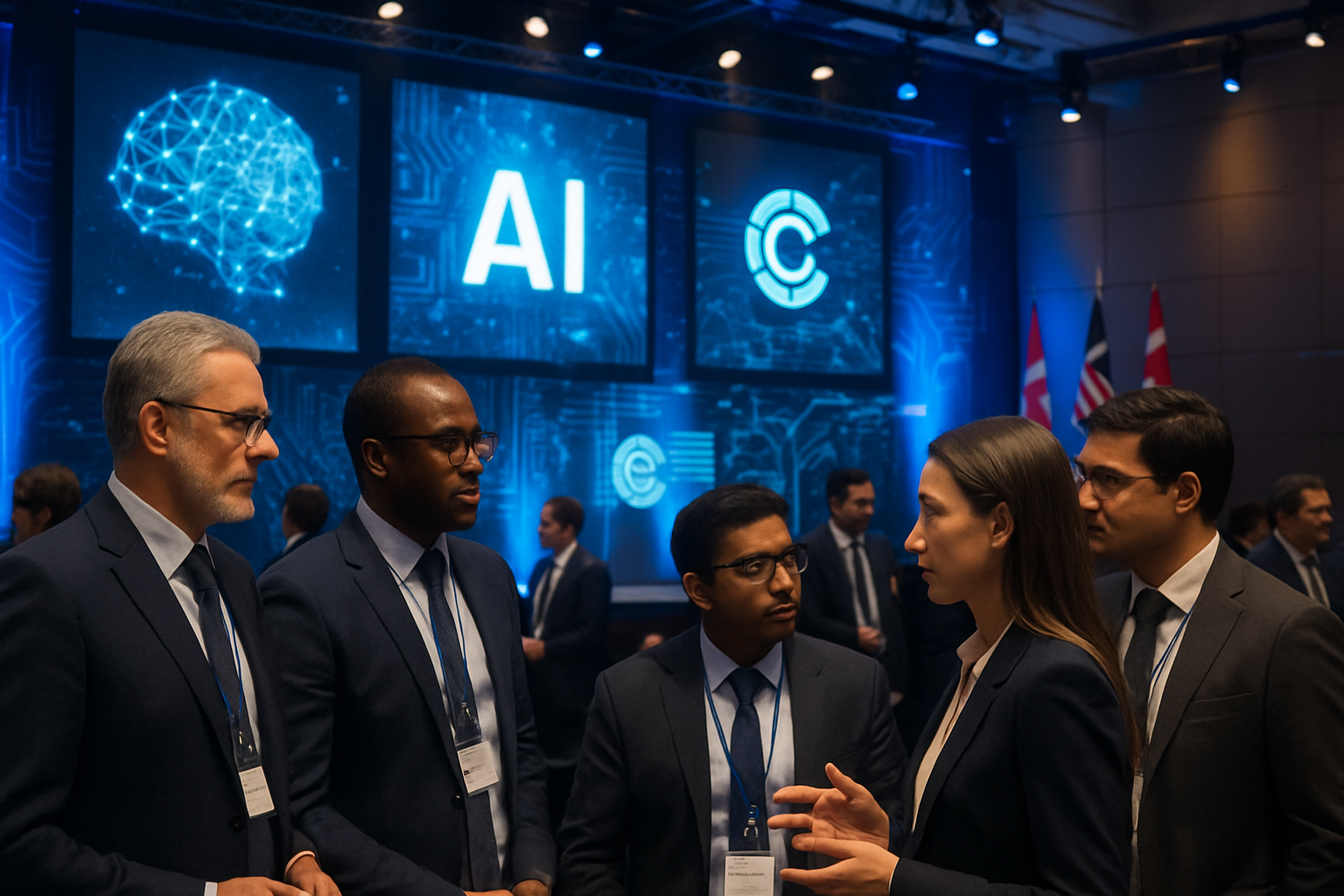
The regulatory environment for AI companies has intensified dramatically, with Spain implementing the world's first criminal executive liability framework for tech platforms, creating imprisonment risks for executives beyond traditional corporate penalties. France has conducted cybercrime raids on AI companies, while the European Union investigates Digital Services Act violations with potential billions in penalties.
The United Nations has established an Independent Scientific Panel with 40 global experts led by Secretary-General António Guterres, representing the first fully independent global AI impact assessment body. This coordinated international response reflects growing concerns about the pace of AI development relative to safety measures and democratic oversight.
Industry Transformation and Market Disruption
The AI revolution has triggered what analysts call the "SaaSpocalypse" – the systematic destruction of traditional software-as-a-service business models. Hundreds of billions in market value have been eliminated as AI systems directly replace rather than complement existing software functions.
Indian IT giants including Infosys, Wipro, and HCL Technologies have seen significant declines, though many are adapting through worker transition programs rather than mass layoffs. The transformation represents a fundamental shift from AI as a complementary tool to direct replacement of traditional business functions.
Employment and Workforce Implications
Microsoft's Mustafa Suleyman has predicted that AI will replace the majority of office workers within two years, with lawyers and auditors facing displacement within 18 months. However, successful integration models are emerging that emphasize human-AI collaboration rather than wholesale replacement.
Countries implementing comprehensive approaches – including infrastructure investment, educational reform, and worker retraining – are showing greater resilience to AI disruption. Canadian AI teaching assistants maintain critical thinking standards, while Malaysia operates the world's first AI-integrated Islamic school combining technology with traditional learning.
International Cooperation and Competition
The global AI landscape is becoming increasingly multipolar, with China's DeepSeek breakthrough challenging U.S. technological dominance despite export restrictions. European nations are pursuing digital sovereignty through initiatives like Deutsche Telekom's Industrial AI Cloud in Munich.
The Delhi Declaration, signed by 88 countries following India's AI Impact Summit, represents the largest diplomatic agreement on artificial intelligence in history. The voluntary framework positions developing nations as equal partners rather than passive recipients of Western or Chinese technology.
"We stand at a civilizational choice point – whether AI serves democratic values and human flourishing or becomes an exploitation tool."
— Summary from international AI governance experts
Environmental and Sustainability Challenges
The environmental impact of AI development is becoming a critical concern, with the World Bank projecting AI water demand of 4.2-6.6 billion cubic meters by 2027 for data center cooling – equivalent to four to six times Denmark's annual water withdrawal. This massive resource requirement is driving exploration of alternative cooling technologies and space-based computing solutions.
Looking Ahead: Critical Decisions
March 2026 represents a critical inflection point in the transition from experimental AI to essential infrastructure across military, civilian, and economic sectors. The resolution of current tensions between safety-focused companies and military requirements will establish precedents affecting AI governance for decades.
Success in navigating these challenges requires unprecedented coordination between governments, technology companies, educational institutions, and civil society. The balance between innovation acceleration and safety governance, commercial interests and human welfare, and national competitiveness and international cooperation will determine whether AI fulfills its transformative promise or creates systemic risks requiring dramatic corrections.
The decisions made in 2026 will fundamentally shape the relationship between humans and artificial intelligence for the remainder of the 21st century, making this period one of the most consequential in technological history.