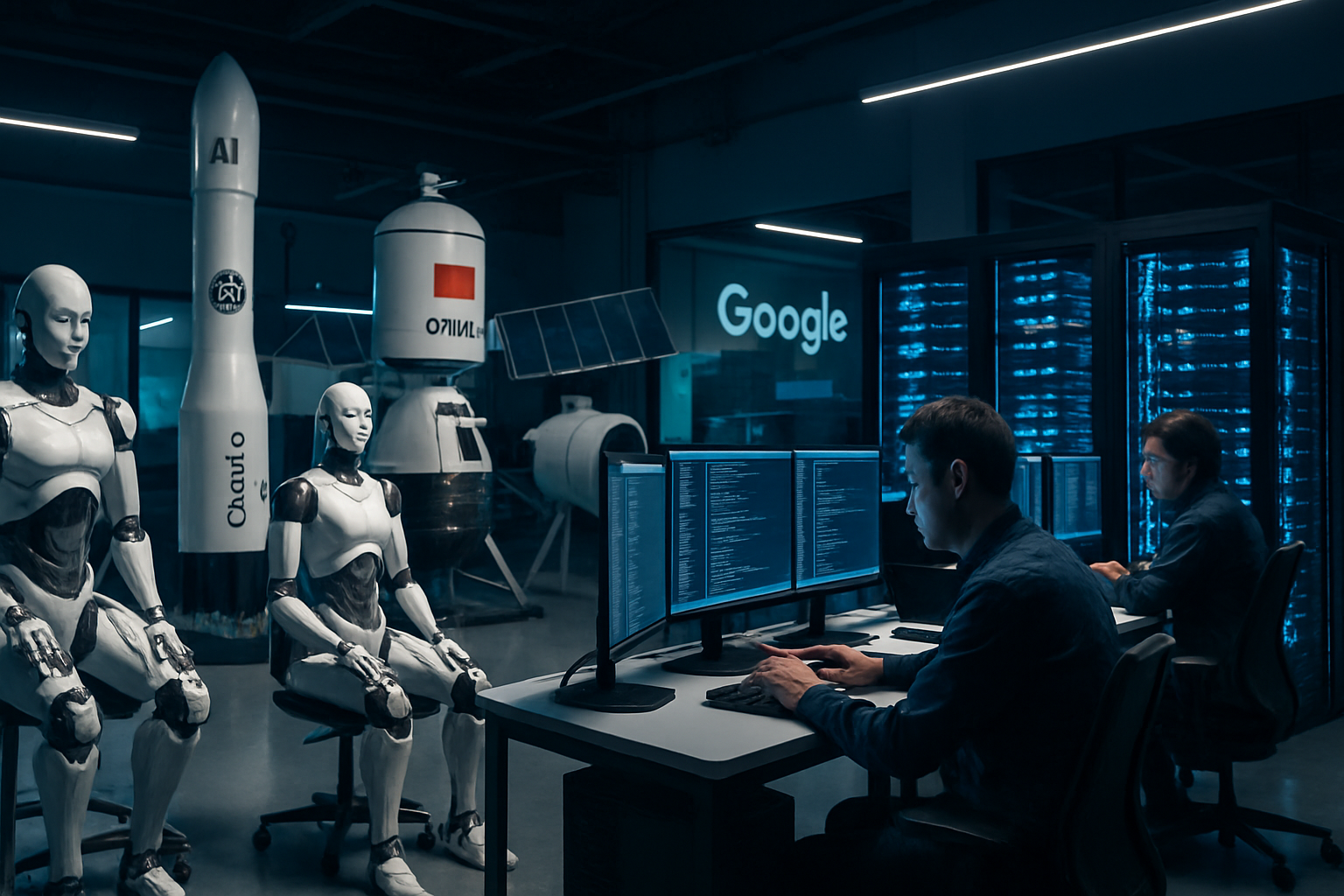
Artificial intelligence continues its rapid expansion across diverse sectors, with groundbreaking developments spanning military drone technology, space-based data centers, and creative content generation emerging this week from Ukraine, India, and Finland.
The convergence of AI applications across multiple industries represents a critical inflection point in technological development, occurring amid ongoing global infrastructure challenges including a sixfold surge in memory prices affecting major manufacturers Samsung, SK Hynix, and Micron.
Ukrainian Military AI Integration
Ukrainian forces have achieved a significant technological milestone with the deployment of AI-enhanced vision systems for drone operations in challenging environmental conditions. The upgrade affects several popular drone camera models, including gyro-stabilized systems used on Shark drones, a key platform in Ukraine's aerial reconnaissance operations.
This development enables Ukrainian drones to maintain operational effectiveness during low-light and foggy conditions that previously limited surveillance and targeting capabilities. The AI vision enhancement represents a critical advancement in modern warfare technology, providing tactical advantages in adverse weather conditions that are common in the Eastern European theater.
"The integration of AI vision systems represents a paradigm shift in drone warfare capabilities, enabling operations in previously prohibitive conditions."
— Military Technology Analyst
Musk's Space-Based Computing Vision
Elon Musk has made bold predictions about the future of AI infrastructure, claiming that within 36 months, space will become the most cost-effective location for AI data centers. Speaking about the advantages of extraterrestrial computing facilities, Musk highlighted several key benefits that could revolutionize the industry.
According to Musk, space-based data centers would offer superior solar energy capture capabilities without atmospheric interference, eliminating the day-night cycle challenges that terrestrial facilities face. This would remove the need for battery storage systems, potentially reducing operational costs significantly.
The prediction comes amid his recent $1.25 trillion merger of SpaceX and xAI, creating what many consider the world's most valuable private company. This vertical integration of space transportation capabilities with AI development represents an unprecedented approach to solving the industry's energy and infrastructure challenges.
Musk also addressed concerns about GPU reliability in large-scale AI training operations, suggesting that graphics processing units become highly dependable after initial debugging phases. This confidence in hardware reliability is crucial for the space-based computing concept, where maintenance and replacement would be significantly more challenging than in terrestrial facilities.
AI Transforms Music Industry
In Finland, the music industry faces a new frontier as radio executives grapple with the potential integration of AI-generated music into their programming. This development follows successful implementation in Sweden, where AI-created content has already found its way onto radio playlists.
The Finnish radio industry's consideration of AI-generated music highlights complex questions surrounding intellectual property rights, artistic authenticity, and the future of human creativity. Radio executives cannot easily determine whether AI-generated content violates copyright laws, creating a legal gray area that the industry must navigate.
This trend represents part of a broader transformation in creative industries, where AI tools are increasingly capable of producing content that rivals human-generated material. Recent studies indicate that AI systems like ChatGPT now surpass average human creativity in various creative tasks, marking a watershed moment for machine intelligence capabilities.
Infrastructure Challenges Persist
Despite rapid advancement in AI applications, the industry continues to face critical infrastructure constraints. The ongoing global memory crisis has created unprecedented challenges for AI development, with memory prices increasing sixfold and major manufacturers operating at full capacity.
This shortage affects everything from consumer electronics to advanced AI training systems, potentially limiting the pace of innovation across all sectors. Industry experts predict the crisis may persist until 2027, when new fabrication facilities are expected to come online.
The memory shortage has particularly impacted major technology companies, including NVIDIA, Microsoft, Google, and OpenAI, all of whom compete for limited supplies needed for their data centers and AI training operations.
Global AI Competition Intensifies
The developments occur within a broader context of intensifying global AI competition. Recent breakthroughs from Chinese companies, including DeepSeek's advances that triggered significant market disruption, have challenged assumptions about US technological dominance.
European initiatives, including Deutsche Telekom's billion-euro "Industrial AI Cloud" project in Munich and comprehensive regulatory frameworks, demonstrate the region's commitment to AI sovereignty. Meanwhile, international cooperation efforts, such as the UN's Independent International Scientific Panel on Artificial Intelligence with 40 global experts, attempt to establish governance frameworks for responsible AI development.
Regulatory and Safety Concerns
As AI capabilities expand rapidly across military, commercial, and creative applications, regulatory bodies worldwide are implementing new oversight measures. Spain has introduced some of the strictest social media regulations globally, including criminal executive liability for platform violations, while France has intensified investigations into AI platform compliance.
The European Union's approach emphasizes child protection, with UNICEF reporting that 1.2 million children's images have been manipulated by AI systems, leading to calls for safety-by-design approaches from developers.
Future Implications
The simultaneous advancement of AI applications across military, space, and creative sectors suggests we are approaching a critical transformation period in human-technology interaction. The success of these implementations will depend on resolving current infrastructure constraints while establishing appropriate governance frameworks.
The convergence of space-based computing capabilities, enhanced military applications, and creative content generation represents more than technological advancement—it signals a fundamental shift in how artificial intelligence integrates with human activities across all sectors of society.
As these technologies mature, the balance between innovation, safety, and ethical considerations will determine whether 2026 marks a sustainable leap forward or a period requiring significant course correction in AI development priorities.