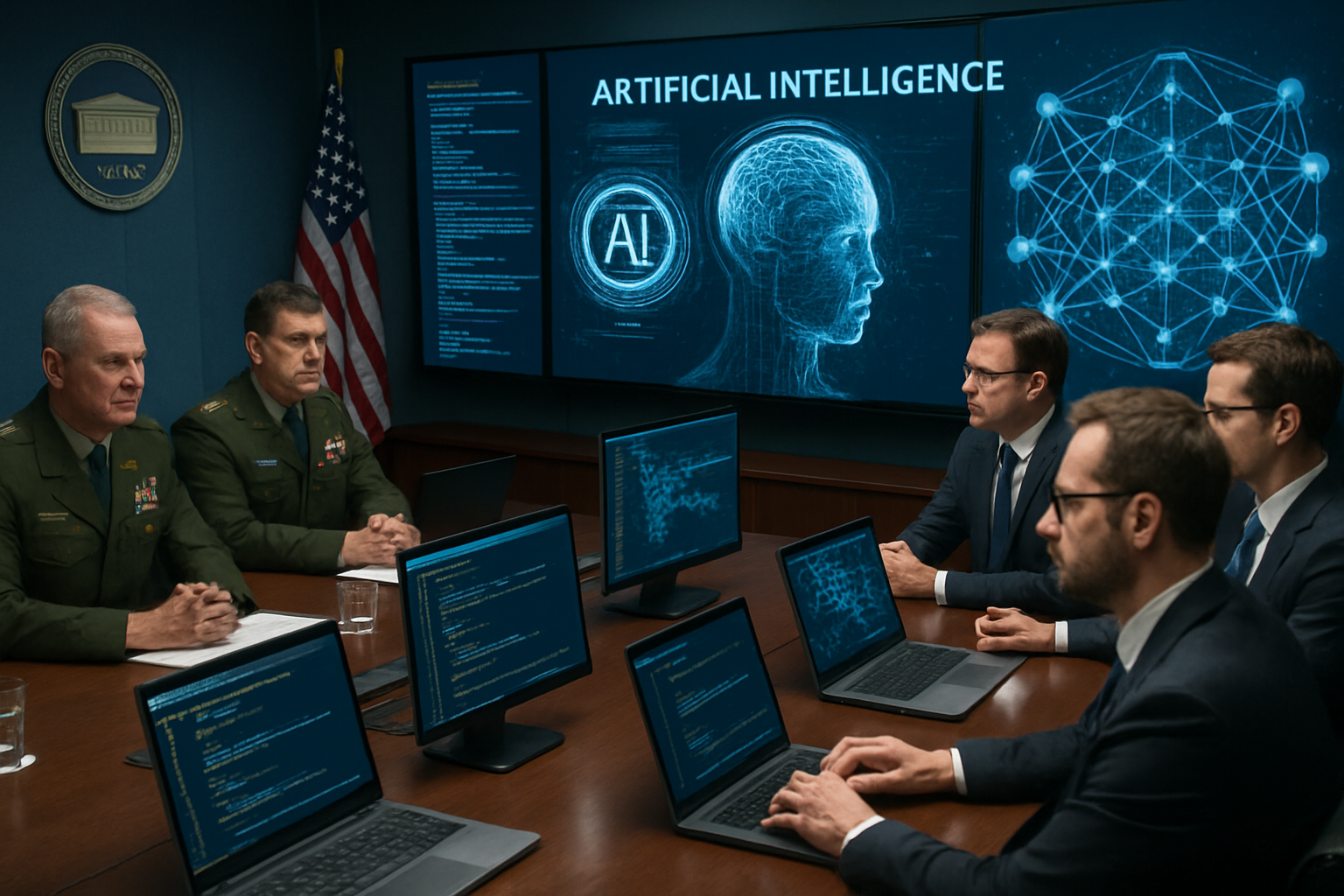
The relationship between the Pentagon and leading AI safety company Anthropic has reached a breaking point, with the Department of Defense threatening to terminate their partnership amid broader global developments that are fundamentally reshaping the artificial intelligence landscape.
According to reports from AzerNEWS, the United States Department of Defense has issued threats to end its collaboration with Anthropic PBC after the company refused to loosen restrictions on how military forces can deploy its AI tools. This conflict represents a deeper tension between AI safety considerations and national defense imperatives that is playing out on the global stage.
Military-AI Partnership Under Strain
The Pentagon's frustration with Anthropic stems from the company's firm stance against autonomous weapons development and its opposition to providing unlimited access to classified military networks. Sources familiar with the matter indicate that Defense Department officials are pushing for fewer restrictions on how Claude AI can be utilized in military operations, including sensitive national security applications.
This dispute comes as the military has already begun integrating AI systems into critical operations. Recent revelations suggest that Pentagon forces have used Anthropic's Claude AI in high-stakes missions, including the reported capture of former Venezuelan President Nicolás Maduro, despite the company's terms of service explicitly prohibiting use in violence and surveillance applications.
The controversy highlights a fundamental challenge facing the AI industry: balancing commercial partnerships with ethical considerations while meeting national security demands. Military officials argue that advanced AI capabilities are essential for maintaining strategic advantage, while AI safety advocates warn against the militarization of civilian AI systems.
China's AI Regulatory Crackdown
While the US grapples with military AI integration, China is taking a different approach to managing its technology giants. The country's top market regulator has summoned leading tech companies including Alibaba Group Holding, ByteDance's Douyin, Baidu, Tencent Holdings, JD.com, and Meituan to address "involutionary" competition.
This regulatory intervention comes as Chinese companies are pouring billions of yuan into Lunar New Year promotional campaigns to win users for AI-powered services. The State Administration for Market Regulation's action represents Beijing's concern that excessive competition among tech giants may undermine market stability and fair competition principles.
"The companies are engaged in a race to the bottom that benefits no one,"
— Chinese regulatory official
The timing is particularly significant as it coincides with the traditional Lunar New Year period, when Chinese companies typically increase marketing spending and launch new features to capture user attention during the holiday season.
Global Cybersecurity and AI Crime Concerns
While nations debate AI regulation, criminal organizations are rapidly adapting artificial intelligence for malicious purposes. Interpol has issued warnings about cybercriminals "weaponizing" AI technology to create sophisticated deepfake audio and video content that endorses fraudulent investment schemes and makes online scam messages appear more genuine and credible.
Law enforcement agencies worldwide are struggling to keep pace with AI-enhanced criminal activities. The technology enables fraudsters to create highly convincing impersonations of celebrities, government officials, and trusted financial advisors to promote fake investment opportunities. These deepfake campaigns are becoming increasingly difficult for ordinary consumers to identify and resist.
The rise of AI-powered cybercrime represents a new frontier in digital security, requiring international cooperation and advanced detection technologies to combat effectively. Traditional cybersecurity measures are proving inadequate against adversaries equipped with cutting-edge artificial intelligence tools.
Digital Innovation in Unexpected Places
Amid these high-level tensions, grassroots digital innovation continues to flourish in unexpected corners of the globe. The Philippines has made significant strides in language preservation and accessibility through technology, with the Komisyon sa Wikang Filipino (KWF) launching a groundbreaking mobile application.
The KWF Diksi app, now available on Google Play and Apple App Store, provides free access to the comprehensive Diksiyonaryo ng Wikang Filipino. This development represents a democratization of linguistic resources, putting scholarly Filipino dictionaries into the pockets of millions of users for the first time.
The app addresses a long-standing accessibility gap in Filipino language resources. Previously, users had to rely on massive printed dictionaries or navigate to desktop websites to access authoritative Filipino language definitions. The mobile application makes these resources instantly available to students, writers, researchers, and anyone seeking to better understand Filipino vocabulary and usage.
Infrastructure Challenges and Market Disruption
These developments unfold against a backdrop of significant infrastructure challenges affecting the global AI industry. A severe memory semiconductor shortage has created bottlenecks for AI development, with prices surging sixfold and affecting major manufacturers including Samsung, SK Hynix, and Micron Technology.
The shortage is driving up costs across the technology sector, with consumer electronics prices increasing 20-30% and forcing AI companies to seek alternative hardware solutions. The crisis is expected to persist until 2027, when new fabrication facilities come online to meet surging demand.
This hardware constraint is coinciding with what analysts call the "SaaSpocalypse" – a market disruption where AI systems are directly replacing traditional software solutions, eliminating hundreds of billions of dollars in market capitalization from established software companies.
Regulatory Response Intensifies
Governments worldwide are responding to rapid AI advancement with increasingly aggressive regulatory measures. Spain has implemented the world's first criminal executive liability framework for social media platforms, while France has conducted cybercrime raids on AI companies over content violations.
The United Nations has established an Independent International Scientific Panel comprising 40 experts to assess AI's global impact, representing the first fully independent international body dedicated to AI governance. This initiative, led by UN Secretary-General António Guterres, signals growing international recognition that AI development requires coordinated oversight.
European authorities are particularly focused on child safety and platform accountability, with multiple nations considering age restrictions and content moderation requirements for AI-powered services. These regulatory developments are creating new compliance challenges for technology companies while potentially fragmenting the global AI market along jurisdictional lines.
Looking Forward: Critical Inflection Point
The convergence of military AI disputes, regulatory crackdowns, criminal exploitation, and grassroots innovation represents a critical inflection point for artificial intelligence development. The decisions made in 2026 will likely determine whether AI fulfills its transformative promise or creates systemic disruptions requiring dramatic policy corrections.
The Pentagon-Anthropic conflict exemplifies broader tensions between AI safety and practical applications. As military and civilian applications of AI become increasingly intertwined, establishing clear boundaries and governance frameworks becomes essential for maintaining both security and ethical standards.
Meanwhile, China's approach to managing AI competition through regulatory intervention offers an alternative model to the largely market-driven development occurring in Western nations. The effectiveness of these different approaches will influence global AI governance strategies for years to come.
The success of grassroots digital initiatives like the KWF Diksi app demonstrates that meaningful technological progress can emerge from diverse sources beyond major technology hubs. Such developments highlight the democratizing potential of digital tools when properly designed and implemented.
As 2026 progresses, the global AI landscape will likely be shaped by how successfully governments, companies, and civil society navigate the competing demands of innovation, security, safety, and accessibility. The stakes could not be higher for determining whether artificial intelligence becomes a force for human flourishing or a source of unprecedented disruption.