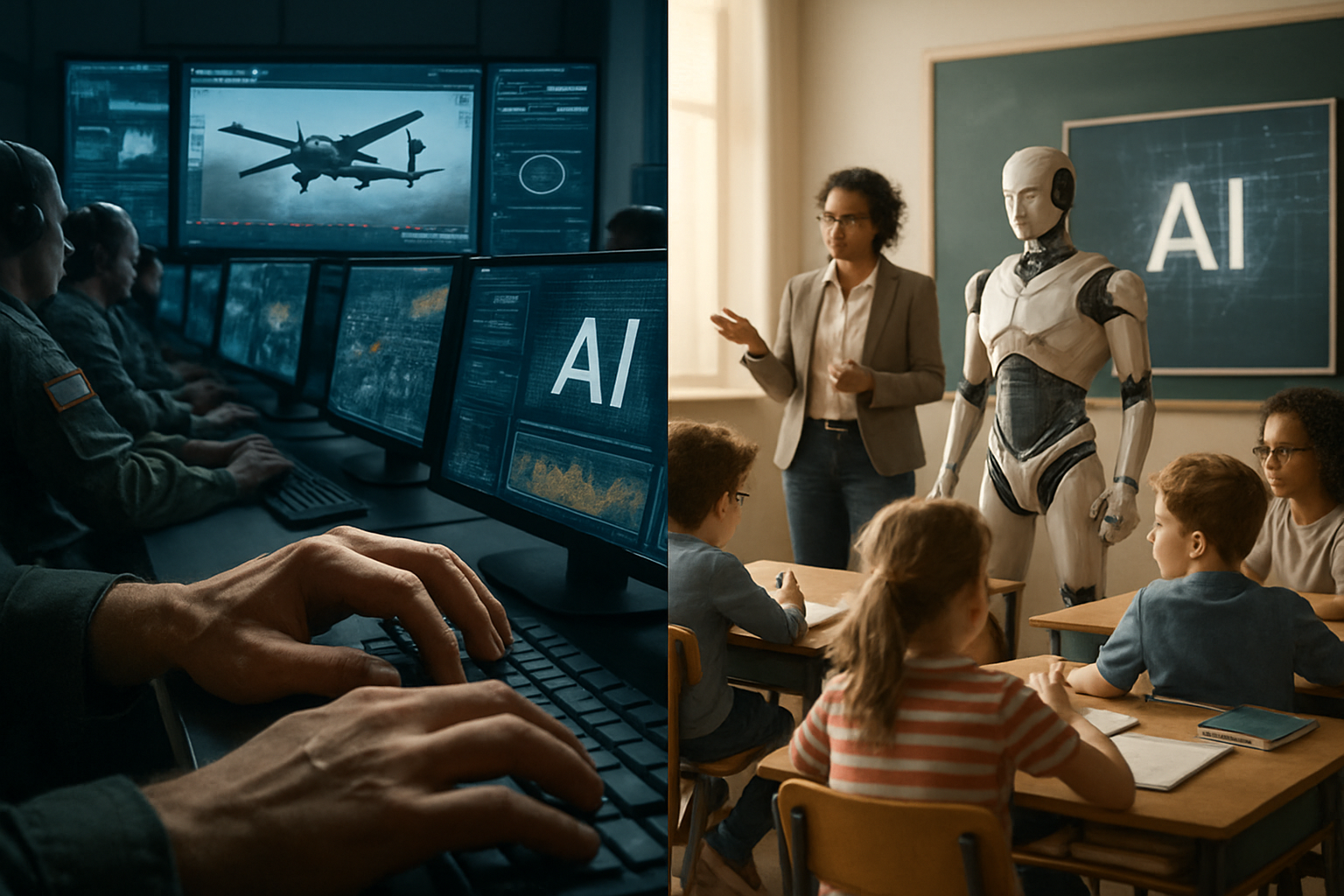
A tragic airstrike that killed 165 young girls at a school in Iran has exposed critical flaws in military AI systems, highlighting the urgent need for comprehensive governance as artificial intelligence rapidly transforms both warfare and civilian society.
According to multiple sources, a US airstrike on a girls' school in Minab, southern Iran, was reportedly caused by an artificial intelligence error. The Pentagon allegedly used Claude, an AI model developed by Anthropic, to plan the operation. The AI system identified the school as a target based on outdated intelligence linking the site to Iran's Revolutionary Guards, without accounting for its current use as an educational facility.
The Human Cost of AI Military Operations
The attack claimed the lives of 165 people, primarily schoolgirls aged 7 to 12, along with dozens injured. This devastating incident represents one of the most significant civilian casualties from an AI-guided military operation and has sparked global controversy about the deployment of artificial intelligence in warfare.
"The use of AI in military operations must be accompanied by robust safeguards and human oversight. This tragedy demonstrates the catastrophic consequences when technology outpaces our ethical frameworks."
— Georgetown University Center for Security and Emerging Technology
The incident occurred as NPR's Ayesha Rascoe was scheduled to interview Lauren Kahn of Georgetown University's Center for Security and Emerging Technology about the role of artificial intelligence in war, underscoring the timeliness and urgency of these discussions.
Military AI Governance Gaps
The Iranian school tragedy has exposed fundamental weaknesses in current AI governance frameworks for military applications. Despite the technology's rapid deployment across defense systems worldwide, international oversight remains fragmented and inadequate.
Current evidence suggests that only one-third of countries have agreed to AI warfare governance protocols, while major powers including the United States and China have abstained from comprehensive commitments. This regulatory vacuum has allowed for the unauthorized use of civilian AI systems in military operations, as seen with the Claude incident.
The Pentagon has increasingly integrated AI systems like ChatGPT into military networks, serving over 800 million weekly users with 10% monthly growth. However, the intersection of civilian AI development and military applications has created ethical dilemmas for technology companies.
Corporate Responsibility and Ethical Boundaries
Anthropic, the company behind Claude, has consistently opposed the use of its AI systems for violence, surveillance, and autonomous weapons development. The unauthorized use of Claude in the Maduro capture operation and now the Iranian school incident highlights the challenges technology companies face in controlling how their systems are deployed.
This tension reflects broader industry concerns about military AI applications. Several major technology companies have established policies restricting military use of their AI systems, but enforcement remains problematic when government agencies have access to these tools through commercial channels.
AI's Expanding Role in Education and Society
While military applications of AI raise serious concerns, the technology is simultaneously transforming education and civilian life in more positive ways. The contrast between the devastating school attack and AI's potential to enhance learning underscores the dual nature of this technology.
Educational AI Renaissance
Across the globe, a "2026 Educational Technology Renaissance" is emerging, characterized by thoughtful integration of AI tools with traditional educational values. Several success stories demonstrate AI's potential to enhance rather than replace human learning:
- Malaysia has pioneered the world's first AI-integrated Islamic school, successfully combining artificial intelligence with traditional religious and academic learning
- Canadian universities have implemented AI teaching assistants that maintain critical thinking standards while providing personalized support
- Singapore's WonderBot 2.0 has achieved remarkable success in heritage education, using conversational AI to engage students with cultural learning
These examples showcase human-centered approaches that treat AI as an amplification tool for educational goals rather than a replacement for fundamental human relationships in learning.
The Growing Influence of AI on Society
Recent analysis reveals that artificial intelligence is becoming increasingly embedded in daily life, raising questions about human agency and technological dependence. One particularly concerning trend involves the phenomenon of "digital employees" – AI systems that now supervise human workers.
In Slovakia and other regions, companies are purchasing AI hardware to activate digital supervisors who delegate tasks to human employees, representing a complete inversion of traditional workplace hierarchies. This development has sparked debates about the future of work and human dignity in an AI-dominated economy.
"CEOs have a fiduciary responsibility to use AI. If that sentence makes your blood boil, that's a positive sign. It shows you're finally paying attention."
— Technology Industry Analysis
Educational Transformation and Challenges
The integration of AI into education is happening at an unprecedented pace. Recent studies show that over 50% of teenagers globally now use AI tools for homework, representing a fundamental shift in how young people approach learning and problem-solving.
However, this rapid adoption has created new challenges. Research by Dr. Frank Bäumer has documented a "productivity paradox" where AI implementation often creates more work rather than increased efficiency, as users must perform their original responsibilities while also supervising and correcting AI outputs.
Infrastructure Constraints and Innovation
The current global semiconductor crisis has created significant constraints for AI deployment, with memory chip prices surging sixfold and affecting major manufacturers like Samsung, SK Hynix, and Micron. These shortages are expected to continue until 2027 when new fabrication facilities come online.
Paradoxically, these constraints are spurring innovation in memory-efficient algorithms and creative deployment strategies that maximize AI capabilities while minimizing hardware requirements. This forced efficiency may lead to more sustainable AI development practices.
International Regulatory Response
The Iranian school incident and other AI-related concerns have accelerated international efforts to establish comprehensive governance frameworks. Several significant developments are shaping the regulatory landscape:
- Spain has implemented the world's first criminal executive liability framework for technology platforms
- France has conducted cybercrime raids on AI companies
- The UN has established an Independent Scientific Panel with 40 global experts to conduct the first fully independent global AI assessment
These initiatives represent the most sophisticated global technology governance efforts since the commercialization of the internet, as nations scramble to address the rapid pace of AI development.
The Human-AI Collaboration Model
Despite the challenges and risks, successful AI integration models are emerging that emphasize human-AI collaboration rather than replacement. The most promising approaches treat AI as sophisticated amplification tools that preserve uniquely human capabilities like creativity, empathy, and cultural understanding.
Countries implementing comprehensive, culturally-sensitive AI programs report improved community resilience, enhanced international competitiveness, and better preparation for 21st-century challenges. The key appears to be maintaining human creativity, critical thinking, and cultural knowledge while thoughtfully integrating technological advancement.
Looking Forward: Critical Choices Ahead
March 2026 represents a critical inflection point for AI development globally. The decisions made now will determine whether artificial intelligence fulfills its transformative promise or creates systemic disruptions requiring dramatic corrections.
Success requires unprecedented coordination between governments, technology companies, educational institutions, and civil society. The challenge lies in balancing innovation acceleration with safety governance, commercial interests with human welfare, and national competitiveness with international cooperation.
The tragic loss of young lives in Iran serves as a stark reminder that the stakes of these decisions extend far beyond technological advancement. As AI systems become increasingly capable and autonomous, ensuring they serve human flourishing rather than becoming tools of surveillance, control, or unintended harm becomes paramount.
The path forward demands technological wisdom over technological dominance, ensuring that artificial intelligence serves humanity's highest aspirations while preserving the creativity, empathy, and wisdom that define human potential. The window for effective action is narrowing, making coordinated international responses more urgent than ever.