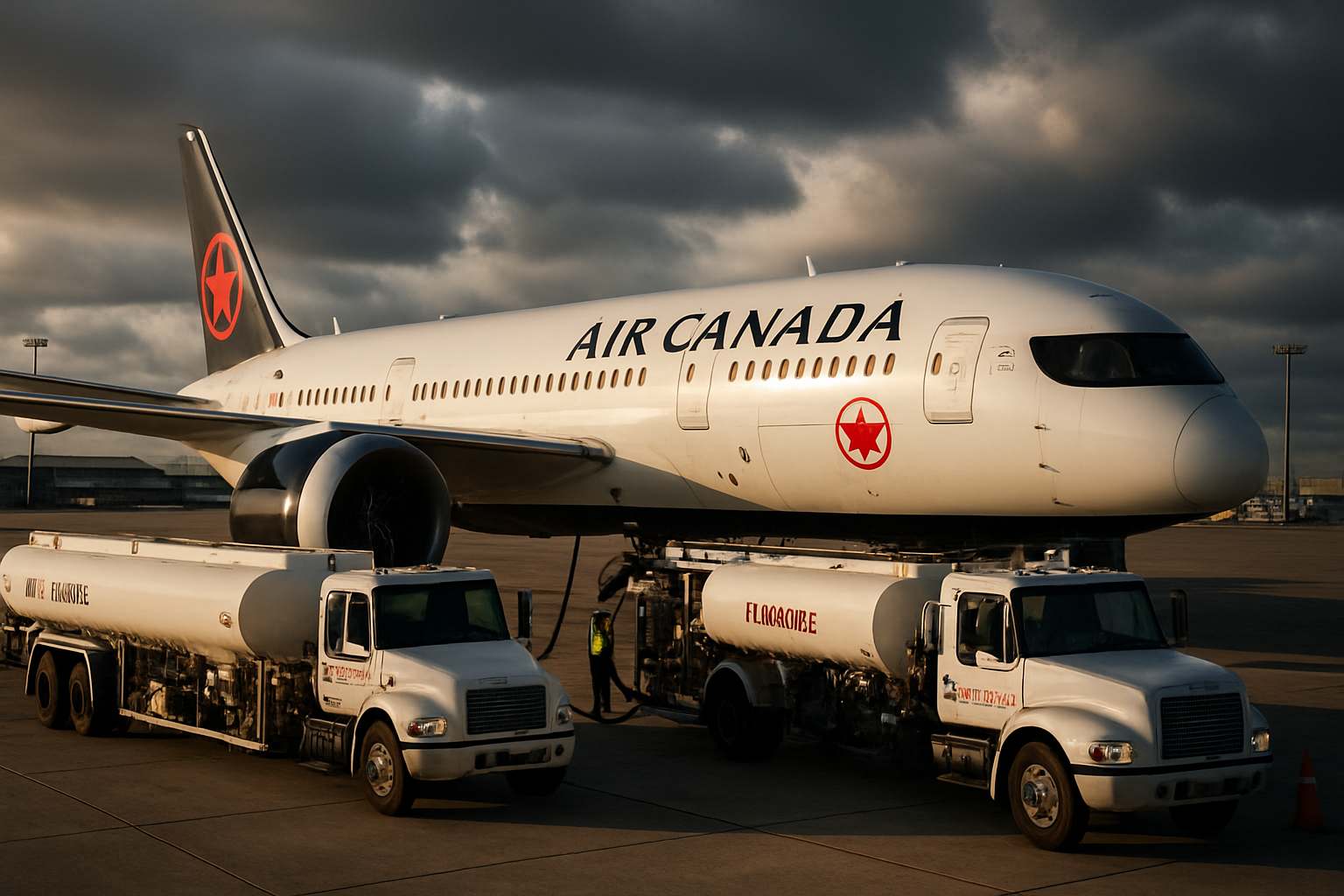
Air Canada announced the suspension of six domestic and international routes, citing jet fuel costs that have surged 122% since February 2026 as operations become "no longer economically feasible" amid the ongoing Middle East energy crisis.
The unprecedented move by Canada's flagship carrier affects routes including services to New York's JFK Airport and several domestic connections, as the airline grapples with jet fuel prices that have skyrocketed from $85-90 per barrel to $150-200 per barrel due to Iran's closure of the Strait of Hormuz.
Global Aviation Crisis Reaches Canadian Shores
Air Canada's decision comes amid what aviation experts are calling the most severe operational crisis since the COVID-19 pandemic. More than 18,000 flights have been cancelled worldwide since March 2026, as airlines worldwide struggle with unprecedented fuel costs and Middle East airspace closures.
The carrier will continue to operate 34 daily trips from six Canadian cities to New York-area airports but has eliminated what it terms "economically unviable" routes. The affected routes include connections that historically relied on lower fuel margins to remain profitable.
"These are difficult but necessary decisions," an Air Canada spokesperson said. "The current fuel cost environment has fundamentally altered the economics of certain route operations."
The Fuel Cost Crisis
The root cause of the aviation industry's unprecedented challenges stems from Iran's Revolutionary Guard closure of the Strait of Hormuz, a critical chokepoint through which 40% of the world's seaborne oil transit passes. This 21-mile waterway has become the epicenter of a global energy crisis that began with escalating Middle East tensions in February 2026.
"We are experiencing the most severe aviation fuel crisis in modern history."
— Industry Expert, Aviation Fuel Association
The International Energy Agency (IEA) has deployed the largest strategic petroleum reserve release in its 50-year history—400 million barrels from 32 countries—but this has provided only temporary relief to skyrocketing energy prices.
Oil prices have reached historic levels, with Brent crude peaking at $119.50 and WTI hitting $108.15, representing an 18.98% record single-day jump. For airlines, fuel typically represents 25-30% of operating costs, making the current price surge unsustainable for many route structures.
Industry-Wide Impact
Air Canada is far from alone in its response to the crisis. Across the Atlantic, European carriers have implemented similarly drastic measures:
- Lufthansa permanently closed its CityLine subsidiary due to unsustainable fuel costs
- SAS cancelled over 1,000 flights in April 2026
- Norwegian Airlines deployed 125 additional aircraft to capture market share as competitors reduced capacity
- Air France-KLM implemented emergency surcharges of €50 for economy and €200 for business class on long-haul routes
The crisis has exposed the aviation industry's vulnerability to geopolitical events, particularly its dependence on Middle Eastern fuel supplies and routing hubs. Dubai International Airport, the world's busiest with 86 million passengers annually, remains completely shut down due to missile damage, severing critical Europe-Asia connections.
Canadian Market Implications
For Canadian travelers, the route suspensions represent a significant reduction in travel options and likely higher fares on remaining routes. The decision affects both leisure and business travelers who relied on the suspended connections for convenient access to international destinations.
Industry analysts note that Canada's geographic position makes it particularly vulnerable to fuel cost fluctuations, as the country imports significant quantities of jet fuel and relies heavily on trans-oceanic routes that consume substantial fuel quantities.
Travel insurance has become a critical issue for passengers, as standard policies exclude war-related cancellations, leaving individual travelers financially exposed. This has driven a shift toward package tours that offer more comprehensive coverage frameworks.
Government and Industry Response
The Canadian government has been monitoring the situation closely, with Transport Canada working with airlines to ensure essential connectivity is maintained. Officials have indicated that emergency measures may be considered if fuel supply situations deteriorate further.
The crisis has accelerated discussions about route diversification and reducing dependence on volatile geopolitical regions. Airlines are implementing complex rerouting strategies, including Caribbean stopovers for trans-Pacific routes and enhanced fuel loading to avoid refueling in affected zones.
Looking Ahead
Recovery timelines remain uncertain, as the aviation crisis depends on diplomatic and military resolution of Middle East conflicts rather than predictable factors like weather disruptions. Airlines are conducting daily operational reviews but cannot make long-term scheduling decisions with multiple airspaces closed and fuel prices volatile.
Air Canada has indicated it will reassess the suspended routes as market conditions evolve. The airline is also exploring alternative fuel sourcing strategies and route optimization to maintain service levels where economically viable.
The current crisis represents a template-setting moment for 21st-century aviation crisis management, forcing fundamental reconsideration of route planning, risk assessment, and international cooperation frameworks. For Canadian aviation, it marks a watershed moment that will influence operational practices and regulatory approaches for years to come.
As the industry navigates these unprecedented challenges, the focus remains on maintaining essential connectivity while adapting to a new reality of elevated operational costs and geopolitical uncertainty. The full impact of these route suspensions on Canada's aviation network and broader economy will become clearer in the coming months as the global crisis continues to unfold.