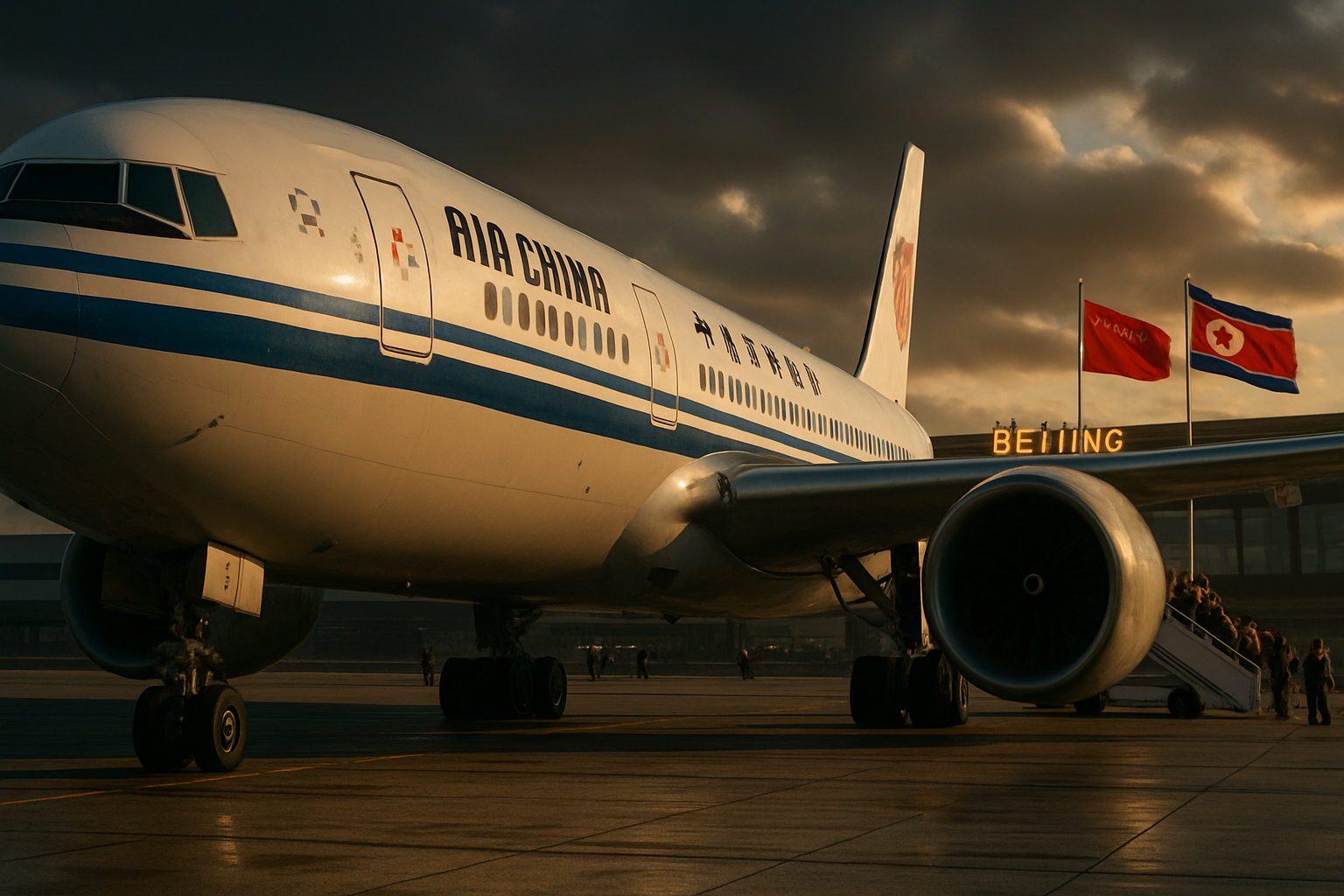
Air China resumed regular passenger service to Pyongyang on Monday, March 30, 2026, marking the first direct flights between Beijing and North Korea's capital in six years, as diplomatic relations between the two nations continue to strengthen.
Flight CA121 departed Beijing Capital International Airport at 8:05 a.m. local time aboard a Boeing 737-79L (B-5297), arriving at Pyongyang's Sunan International Airport at 10:40 a.m., according to Air China's website. The resumption comes just weeks after China-North Korea passenger rail service was restored on March 12, 2026, after a six-year suspension due to COVID-19 border closures.
Breaking North Korea's Aviation Isolation
The flight restoration occurs during a critical period for North Korean aviation, as the country emerges from prolonged international isolation. Cross-border air and rail links between China and the Democratic People's Republic of Korea were closed during the COVID-19 pandemic in 2020, leaving North Korea virtually cut off from international travel.
The resumption is particularly significant given the global aviation crisis that has plagued international travel since March 2026. While over 18,000 flights have been cancelled worldwide due to Middle East conflicts affecting major aviation hubs, the Beijing-Pyongyang route represents a rare bright spot in international connectivity.
Diplomatic Context and Strategic Timing
The flight resumption occurs amid unprecedented developments in North Korean leadership succession planning. Kim Ju Ae, daughter of North Korean leader Kim Jong Un, has been formally designated as the first female heir in the 78-year history of the Kim dynasty, with her succession preparation intensifying since her September 2025 visit to Beijing.
"The restoration of aviation links provides critical infrastructure for future diplomatic initiatives requiring international legitimacy during this historic transition."
— Regional Security Expert
According to memory records, the rail service restoration in March was met with immediate sellouts, with tickets from Beijing to Pyongyang completely sold out according to Beijing ticketing offices. This suggests significant pent-up demand for travel between the two countries.
Regional Security Implications
The aviation restoration comes during a period of heightened regional tensions. North Korea continues advancing its nuclear capabilities, with February 2026 unveiling 600mm rocket systems described as "unique in the world," and March 2026 cruise missile tests from the Choe Hyon destroyer demonstrating maritime nuclear capabilities.
Security experts warn that ongoing global conflicts may reinforce North Korea's belief that nuclear weapons are essential for regime survival. The resumption of Chinese flights could be seen as Beijing's strategic support for Pyongyang during a critical transition period.
Economic and Strategic Partnership
The flight restoration is part of China's broader partnership expansion strategy. Beijing recently announced zero-tariff treatment for products from 53 African countries beginning May 2026, demonstrating its commitment to multilateral cooperation during a global protectionist period.
For North Korea, Chinese market access remains critical for economic survival during international sanctions. The aviation link provides essential connectivity for trade relationships and diplomatic exchanges that have been severely limited during the pandemic isolation.
Contrast with Global Aviation Crisis
The Beijing-Pyongyang route's restoration stands in stark contrast to the global aviation disruption affecting major international hubs. Dubai International Airport, the world's busiest with 86 million passengers annually, remains shut down due to missile damage, while major carriers like Emirates, Air France-KLM, and Wizz Air have suspended operations.
This makes the China-North Korea aviation link particularly significant as one of the few new international routes being established during widespread global flight cancellations.
Future Implications
Air China has scheduled regular Monday flights connecting the two capitals, suggesting this is intended as a sustained service rather than a temporary arrangement. The restoration provides a template for China's approach to regional partnerships during global uncertainty.
The resumption also occurs during a nuclear governance crisis, with the New START treaty having expired in February 2026 - the first time in over 50 years without US-Russia nuclear constraints. In this context, China's enhanced engagement with North Korea takes on additional strategic significance.
Looking Ahead
The flight restoration represents more than just renewed aviation connectivity - it signals China's strategic patience with North Korean dynastic transition and provides crucial international legitimacy for Kim Ju Ae's unprecedented female leadership succession.
As global aviation faces unprecedented challenges from geopolitical conflicts, the Beijing-Pyongyang route restoration demonstrates how regional partnerships can maintain connectivity even during periods of international disruption. The success of this aviation link will likely influence future diplomatic and economic cooperation between the two nations during this historic transition period.