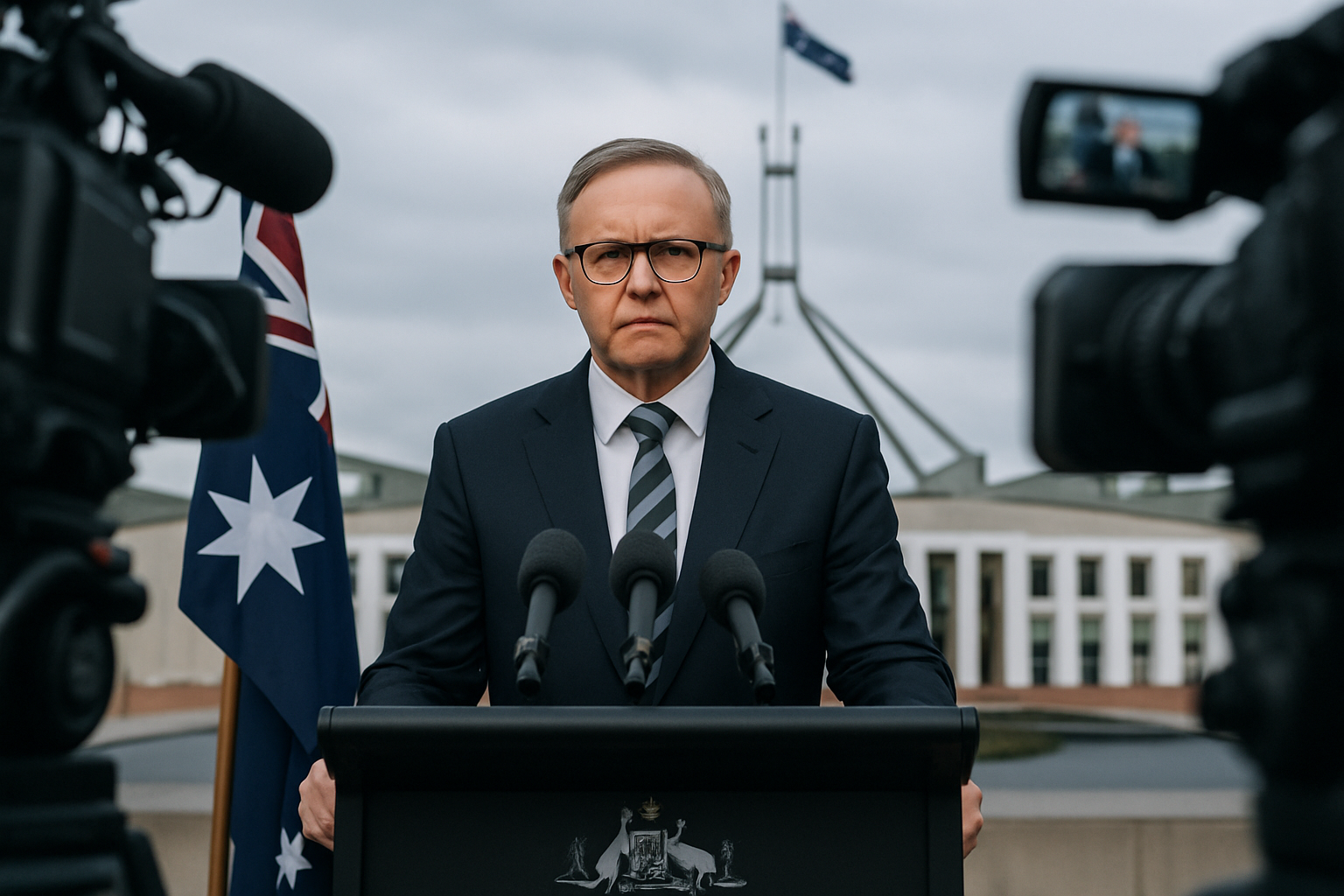
Prime Minister Anthony Albanese will address the Australian nation tonight in a rare televised speech, marking the first time a PM has delivered a national address since the COVID-19 pandemic. The historic broadcast will focus on Australia's response to the escalating Middle East conflict and the country's deepening fuel crisis.
The address, scheduled for 7:00 PM AEDT, will be broadcast simultaneously across all television and radio networks, underlining the gravity of the situation facing Australia as the global energy crisis enters its second month.
Unprecedented Fuel Crisis Gripping Australia
Australia is experiencing its most severe fuel shortage since the 1970s oil crisis, with petrol prices surging past $2.50 per litre and approaching the $3 threshold in some regions. The crisis has been particularly acute in regional Queensland, where stations in Texas township and Robinvale have completely run dry.
Goondiwindi Mayor Lawrence Springborg has reported that major suppliers are favoring bulk distributors over independent stations, creating severe regional shortages that are leaving rural communities without transport alternatives. The Australian Competition and Consumer Commission (ACCC) is actively monitoring fuel companies for potential price gouging as the crisis deepens.
"Australia's fuel supply is currently secure, but we want the country to be over-prepared for any eventuality,"
— Prime Minister Anthony Albanese
Energy Minister Chris Bowen has acknowledged that it would be "sensible" for Australians to explore working from home more frequently as the government pursues demand management strategies rather than immediate supply interventions.
Middle East Conflict Implications
The fuel crisis stems from the ongoing conflict in the Middle East that began in March 2026, which has seen Iran's Revolutionary Guard declare the Strait of Hormuz "unsafe for shipping." This critical waterway handles approximately 40% of global seaborne oil transit, and its effective closure has triggered the most severe worldwide energy emergency since the 1970s oil shocks.
The global impact has been catastrophic, with oil prices breaching $100 per barrel for the first time since 2022, reaching peaks of $119.50 for Brent crude and $108.15 for WTI crude. The aviation industry has been paralyzed, with over 18,000 flights cancelled worldwide—the most extensive disruption since the COVID-19 pandemic.
Government Emergency Measures
In response to the crisis, the Albanese government has announced emergency powers to underwrite private fuel imports and has implemented a 26.3 cent per litre reduction in fuel excise taxes. NSW Energy Minister Penny Sharpe is chairing crisis talks in Sydney with representatives from transport, agriculture, mining, and consumer groups.
The government's approach has focused on demand management and regulatory enforcement rather than direct market intervention. Deputy Prime Minister Richard Marles has admitted that fuel rationing remains a possibility if the Iran conflict continues, marking the first time such measures have been publicly discussed since the 1970s.
International Context and Response
Australia's crisis is part of a global energy emergency that has prompted the International Energy Agency (IEA) to authorize the largest strategic petroleum reserve release in its 50-year history—400 million barrels from 32 countries. Japan has released 80 million barrels for the first time since the 2011 Fukushima disaster, highlighting the unprecedented nature of the current crisis.
The Middle East conflict has created cascading effects beyond energy markets. Dubai International Airport, the world's busiest with 86 million passengers annually, remains shut down due to missile damage. Major shipping companies Maersk and MSC have suspended Persian Gulf operations, stranding over 150 tankers worth billions in cargo.
Regional Impact on Australia
The crisis has particularly affected rural and regional Australia, where communities depend heavily on road transport. Small businesses are facing operational challenges as transport costs escalate, while the tourism sector is under pressure as families reconsider travel plans due to soaring fuel costs.
Financial markets have responded dramatically to the crisis, with the Pakistan KSE-100 recording its largest single-day decline in history at -8.97%, while South Korea's KOSPI fell 12%, triggering circuit breakers. The Korean won has hit a 17-year low as global financial systems grapple with the energy shock.
Strategic Vulnerabilities Exposed
The current crisis has exposed dangerous vulnerabilities in Australia's energy security architecture. The country's limited domestic refining capacity and heavy dependence on fuel imports make it particularly vulnerable to global supply disruptions, especially when critical chokepoints like the Strait of Hormuz are compromised.
Energy experts describe this as the most severe energy security crisis in decades, with Samuel Ciszuk noting that "single-chokepoint vulnerabilities" have been "exposed" in ways not seen since the 1970s. The 21-mile Strait of Hormuz represents a single point of failure for modern logistics with no realistic alternatives.
"This crisis demonstrates the urgent need for fundamental transformation in energy security planning to reduce dependence on strategic chokepoints in volatile regions,"
— Energy Security Expert
Looking Ahead: Recovery and Transformation
The timeline for recovery remains uncertain, as it depends on military and diplomatic developments in the Middle East rather than predictable economic factors. Unlike natural disasters or technical failures, this crisis requires political resolution of the underlying conflict.
Tonight's address is expected to outline Australia's medium-term strategy for managing the crisis, including potential expansion of emergency powers, enhanced coordination with international partners, and acceleration of energy security infrastructure development.
The Prime Minister is also expected to address how everyday Australians can contribute to the national response through conservation measures and behavioral changes, while reassuring the public about the government's crisis management capabilities.
Historical Significance
This national address comes during what UN Secretary-General António Guterres has described as the "greatest test of multilateral cooperation and crisis management in the modern era." The rapid transition from diplomatic negotiations to military conflict has exposed the fragility of crisis management mechanisms in an increasingly multipolar world.
The success or failure of Australia's response to this crisis will provide a template for how middle-power nations manage energy security challenges in an interconnected but volatile global environment. The decisions made in the coming days and weeks will have implications extending far beyond the immediate crisis, potentially reshaping Australia's approach to energy security for decades to come.
As Australians prepare to hear from their Prime Minister tonight, the nation faces a defining moment that will test both government leadership and community resilience in the face of unprecedented global challenges.