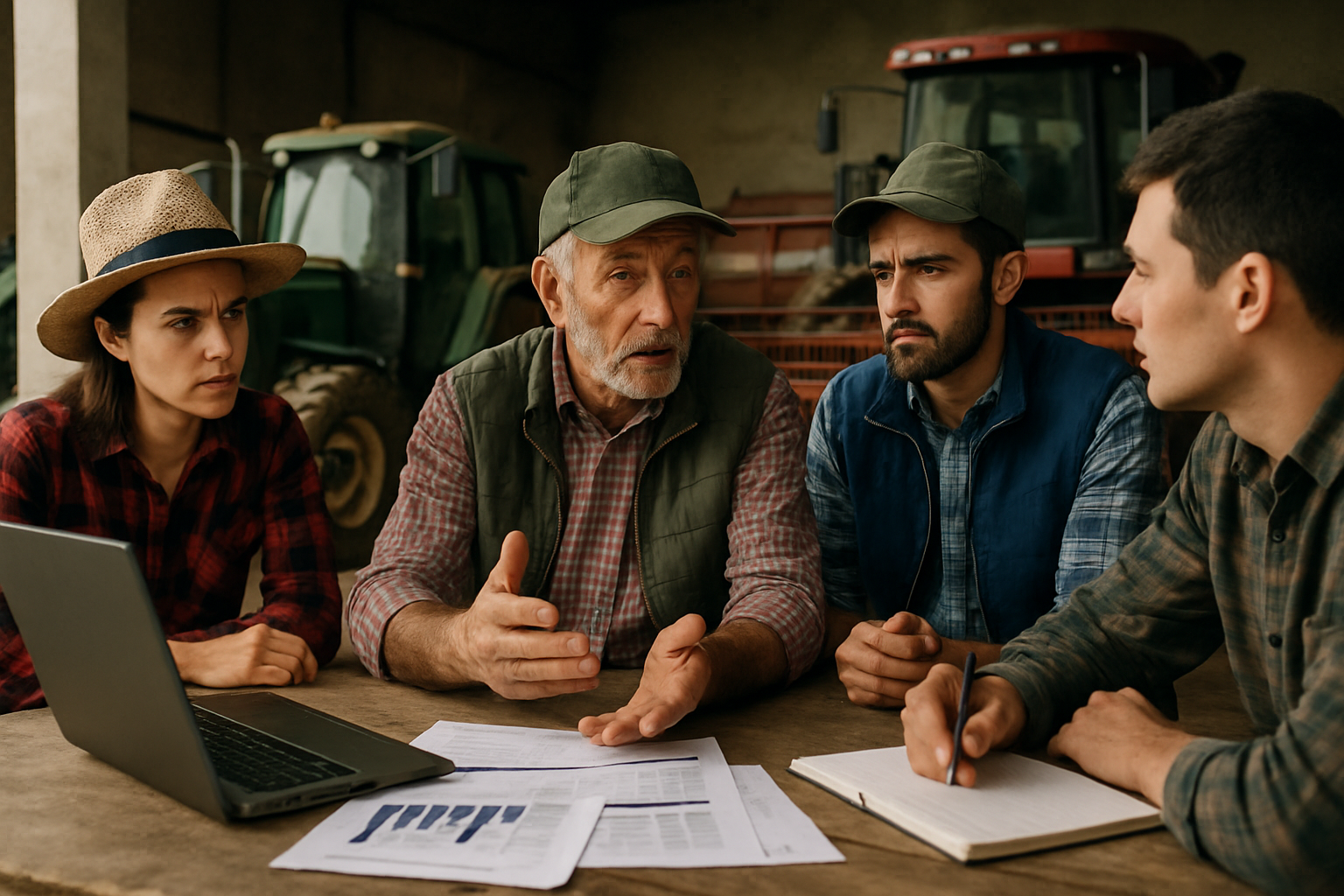
Albania's agricultural sector stands at a critical juncture as the Ministry of Agriculture prepares to unveil a comprehensive 5.2 billion lek national support scheme in February 2026, while farmers and industry experts debate whether current funding mechanisms can adequately address the sector's mounting economic pressures.
Minister Andis Salla announced during an interview with Vizion Plus's E-ZONE program that the new scheme will introduce two significant innovations designed to revitalize Albania's struggling agricultural community. The initiative represents the government's most ambitious agricultural support program to date, coming at a time when farmers across the country are grappling with rising production costs, climate volatility, and insufficient access to capital.
Government's Dual-Track Support Strategy
The ministry's approach centers on two key pillars that emerged from extensive consultations with farming communities. "In the meetings we have had with farmers, we have been asked for more support for the livestock sector," Minister Salla explained. "That's why this year the scheme provides financial support of up to 10,000 euros for every young person who wants to invest in this field."
The livestock support component specifically targets young entrepreneurs, recognizing the critical need to attract new talent to an aging agricultural workforce. However, this initiative has already sparked debate within farming circles about its adequacy and implementation challenges.
The second major innovation focuses on biological production methods. "We will support every farmer who will produce their products in a biological way, without using pesticides," Salla stated. This organic farming incentive aligns with European Union environmental standards and growing consumer demand for sustainable agricultural products.
Industry Skepticism and Implementation Concerns
Despite government enthusiasm, agricultural stakeholders have raised significant concerns about the program's scope and effectiveness. Alban Çakalli, a veteran farmer who has transitioned from livestock to crop production over recent years, represents the growing skepticism within the agricultural community.
Çakalli's experience illustrates broader industry challenges that many believe the current support scheme inadequately addresses. His shift from livestock operations reflects the economic pressures facing Albania's agricultural sector, where traditional farming models struggle to remain viable under current market conditions.
Industry observers point to a fundamental disconnect between government projections and on-ground realities. The 10,000-euro limit for young livestock investors, while substantial in Albanian terms, may prove insufficient for establishing commercially viable operations in today's economic environment.
"The agricultural sector is no longer an attractive sector for investment. We need to understand why this fundamental shift has occurred."
— Agricultural Industry Expert
Economic Context and Market Pressures
Albania's agricultural funding challenges occur within a complex economic transformation. The country has experienced significant currency stability improvements, with economic indicators showing positive trends in several sectors. However, these macro-economic gains have not consistently translated into improved conditions for agricultural producers.
Rising input costs, including fertilizers, seeds, and equipment, have created a cost-squeeze that particularly affects smaller operations. Energy price increases have compounded these pressures, making traditional farming practices increasingly uneconomical without substantial government intervention.
The livestock sector faces additional challenges from feed cost volatility and regulatory compliance expenses associated with European Union agricultural standards. These factors contribute to the sector's declining attractiveness for new investors, despite government efforts to stimulate participation.
Regional Context and Global Trends
Albania's agricultural challenges reflect broader patterns affecting farming communities across the Balkans and Mediterranean regions. Similar funding accessibility issues have emerged throughout Southeastern Europe, where agricultural modernization requirements often exceed available financial resources.
The government's biological production emphasis aligns with European agricultural policy trends promoting sustainable farming methods. However, the transition to organic production typically requires significant upfront investments and multiyear certification processes that current support schemes may not adequately cover.
Regional comparisons reveal varying approaches to agricultural support. Greece, for example, has implemented support programs exceeding 250,000 euros for livestock operations, highlighting the scale difference between national agricultural policies in the region.
Technology and Innovation Gaps
Modern agricultural competitiveness increasingly depends on technological integration, from precision farming equipment to digital livestock management systems. The current support scheme's focus on basic financial assistance may not adequately address technology adoption barriers facing Albanian farmers.
International agricultural development experts emphasize that successful farming sector transformation requires comprehensive approaches combining financial support with technical training, market access facilitation, and infrastructure development. The Albanian program's narrow focus on direct financial assistance may limit its long-term effectiveness.
Implementation Timeline and Challenges
The Ministry of Agriculture plans to present the complete scheme details within February 2026, with implementation beginning shortly thereafter. However, several implementation challenges have already emerged during the planning phase.
Administrative capacity questions persist regarding the ministry's ability to effectively evaluate applications, distribute funds, and monitor program outcomes. Previous agricultural support initiatives have faced delays and accessibility issues that current planning efforts aim to address.
Geographic disparities in agricultural infrastructure may create uneven access to support programs, potentially disadvantaging farmers in remote or mountainous regions where transportation and communication challenges compound existing economic pressures.
Alternative Approaches and International Examples
International agricultural development experiences suggest that successful farmer support requires integrated approaches extending beyond direct financial assistance. Countries achieving agricultural transformation have typically combined funding with comprehensive technical assistance, market development, and infrastructure investment.
South-South cooperation initiatives, such as partnerships between Albania and other developing agricultural economies, could provide cost-effective knowledge transfer and technical assistance that complement domestic funding programs.
Regional agricultural cooperation through Balkan economic integration could create larger markets for Albanian agricultural products, improving the economic viability of farming operations and reducing dependence on government support programs.
Environmental and Sustainability Considerations
The emphasis on biological production methods reflects growing recognition that sustainable agriculture represents both environmental necessity and economic opportunity. Consumer demand for organic products continues growing, both domestically and in export markets.
However, the transition to sustainable farming practices requires significant technical expertise and often involves temporary productivity reductions during conversion periods. Current support mechanisms may not adequately address these transition challenges.
Climate change adaptation represents an additional layer of complexity for Albanian agriculture. Rising temperatures, changing precipitation patterns, and increased extreme weather events require farming system adaptations that traditional support programs may not address.
Future Outlook and Strategic Implications
The success of Albania's agricultural support initiative will likely depend on its ability to address systemic challenges extending beyond immediate financing needs. Effective agricultural development requires coordination between financial support, technical assistance, market development, and infrastructure investment.
Monitoring and evaluation systems will be crucial for determining program effectiveness and making necessary adjustments. International experience suggests that agricultural support programs require flexible implementation allowing for modifications based on farmer feedback and changing economic conditions.
The program's impact on young farmer participation will be particularly important for sector sustainability. Albania's agricultural workforce is aging, and successful youth engagement requires addressing not only financial barriers but also broader economic opportunities and quality-of-life considerations in rural areas.
As Albania's agricultural sector navigates these complex challenges, the February 2026 support scheme represents both an opportunity for transformation and a test of the government's commitment to comprehensive rural development. The program's ultimate success will depend on its ability to address not just immediate funding needs but the broader systemic changes required for a competitive, sustainable agricultural economy.