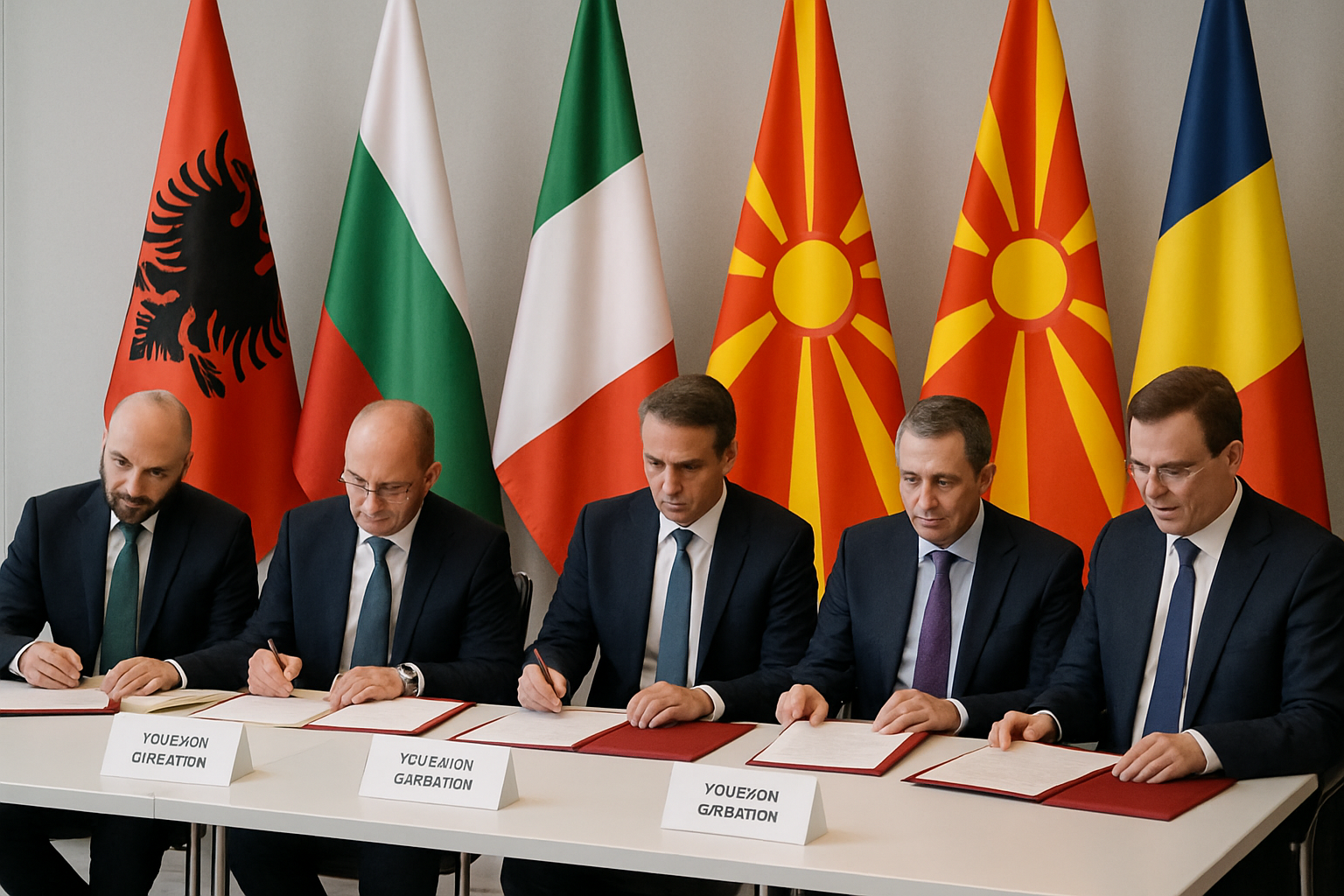
Albania's capital Tirana became the epicenter of regional diplomatic dialogue on February 18, 2026, as foreign ministers from five European nations signed a historic joint declaration advancing the strategic Corridor VIII transport infrastructure project, a critical East-West connection linking the Adriatic and Black Sea regions.
The Tirana Joint Declaration was signed by Foreign Ministers from Albania, Bulgaria, Italy, North Macedonia, and Romania, marking a pivotal moment in pan-European transport integration. The ceremony culminated months of high-level diplomatic negotiations that began with the first ministerial meeting in Brindisi on July 27, 2023, followed by subsequent discussions in Brussels in December 2025 and the Letter of Intent signed at the Washington Summit in 2024.
Strategic Importance of Corridor VIII
Albanian Foreign Minister Elisa Spiropali emphasized the project's transformative potential during the ministerial session, declaring, "Corridor VIII is not simply an investment. It is a strategic necessity." The corridor represents the long-missing East-West connection of the Southern Balkans, linking the Adriatic with the Black Sea and connecting regional markets to the heart of Europe.
The infrastructure project is recognized as a vital component of the Trans-European Transport Network (TEN-T), serving as a key factor for stability, prosperity, and security in Southeast Europe. The declaration underscores the corridor's role in regional economic integration, facilitating trade flows, improving logistical efficiency, and strengthening connectivity between participating nations.
International Collaboration Framework
The Tirana meeting brought together Deputy Prime Minister and Foreign Minister of Italy Antonio Tajani, North Macedonia's Foreign Minister Timčho Mucunski, Bulgaria's Deputy Foreign Minister Nikolay Pavlov, and Romania's Ambassador to Albania Octavian Şerban. Their participation demonstrates broad regional commitment to the project's advancement.
"This is not just about drawing a line on a map, but about shaping the future of our region. Corridor VIII is the missing East-West connection of the Southern Balkans. It connects the Adriatic with the Black Sea, markets with markets, and our region with the heart of Europe."
— Elisa Spiropali, Albanian Foreign Minister
Italian Foreign Minister Tajani expressed strong support for Albania's European Union aspirations, stating, "We will do our utmost to ensure you are in the EU." This endorsement reflects Italy's strategic interest in Balkan integration and infrastructure development that benefits broader European connectivity.
Military Mobility Enhancement
The declaration also addresses the creation of a Harmonized Military Mobility Corridor along Pan-European Corridor VIII, reflecting NATO and EU strategic priorities for enhanced defense cooperation in Southeast Europe. This military dimension adds geopolitical significance to the transport infrastructure project, supporting both civilian economic development and strategic security objectives.
The military mobility component follows established frameworks for dual-use infrastructure that serves both civilian transportation needs and defense requirements, aligning with broader European efforts to strengthen deterrence capabilities and rapid deployment capacity across member states.
Economic Development Implications
Regional economic integration through Corridor VIII promises substantial benefits for participating countries. The infrastructure will reduce transportation costs, improve market access, and create new opportunities for cross-border trade and investment. Albania's position as a reliable hub in this network could attract significant foreign investment and boost its economic development prospects.
The corridor addresses long-standing connectivity gaps that have hindered regional economic cooperation. By providing efficient transport links between the Adriatic and Black Sea regions, the project will enable more competitive logistics networks and support the growth of regional supply chains.
Infrastructure Investment Context
The Corridor VIII initiative occurs within a broader context of unprecedented global infrastructure investment, with over $570 billion committed to transportation projects worldwide. The project aligns with European Union priorities for sustainable transportation and regional integration, supporting both economic development and environmental objectives.
The timing is particularly significant given Europe's experience with extreme weather events in early 2026, which have highlighted the importance of resilient infrastructure designed for future climate conditions. Corridor VIII planning incorporates climate adaptation measures and sustainable development principles.
Implementation Challenges and Opportunities
The project faces complex coordination requirements across multiple jurisdictions, requiring harmonized technical standards, regulatory frameworks, and financing mechanisms. Success will depend on sustained political commitment from all participating governments and effective project management across international boundaries.
Environmental considerations will play a crucial role in project development, with comprehensive impact assessments and sustainable construction practices essential for securing international financing and regulatory approval. The corridor must balance economic benefits with environmental protection and community engagement.
European Integration Momentum
The Tirana Declaration represents a concrete step toward deeper European integration in Southeast Europe. The project strengthens Albania's case for EU membership by demonstrating its commitment to regional cooperation and strategic infrastructure development that benefits broader European interests.
The corridor's advancement comes at a time when European leaders are emphasizing the importance of infrastructure connectivity for economic competitiveness and security. The project aligns with EU strategies for strengthening ties with Western Balkan countries and supporting their European integration aspirations.
Future Development Timeline
While specific implementation timelines were not announced, the ministerial meeting established clear diplomatic momentum for the project's advancement. The signed declaration provides a framework for continued technical cooperation and financing negotiations among participating countries.
The project will likely require several years of detailed planning, environmental assessments, and construction phases. Success will depend on maintaining political support across multiple election cycles and securing adequate financing from both public and private sources.
The Corridor VIII ministerial meeting in Tirana marks a historic milestone in Southeast European infrastructure cooperation, positioning the region for enhanced connectivity and economic integration within the broader European framework. The project's success could serve as a model for similar cross-border infrastructure initiatives across Europe.