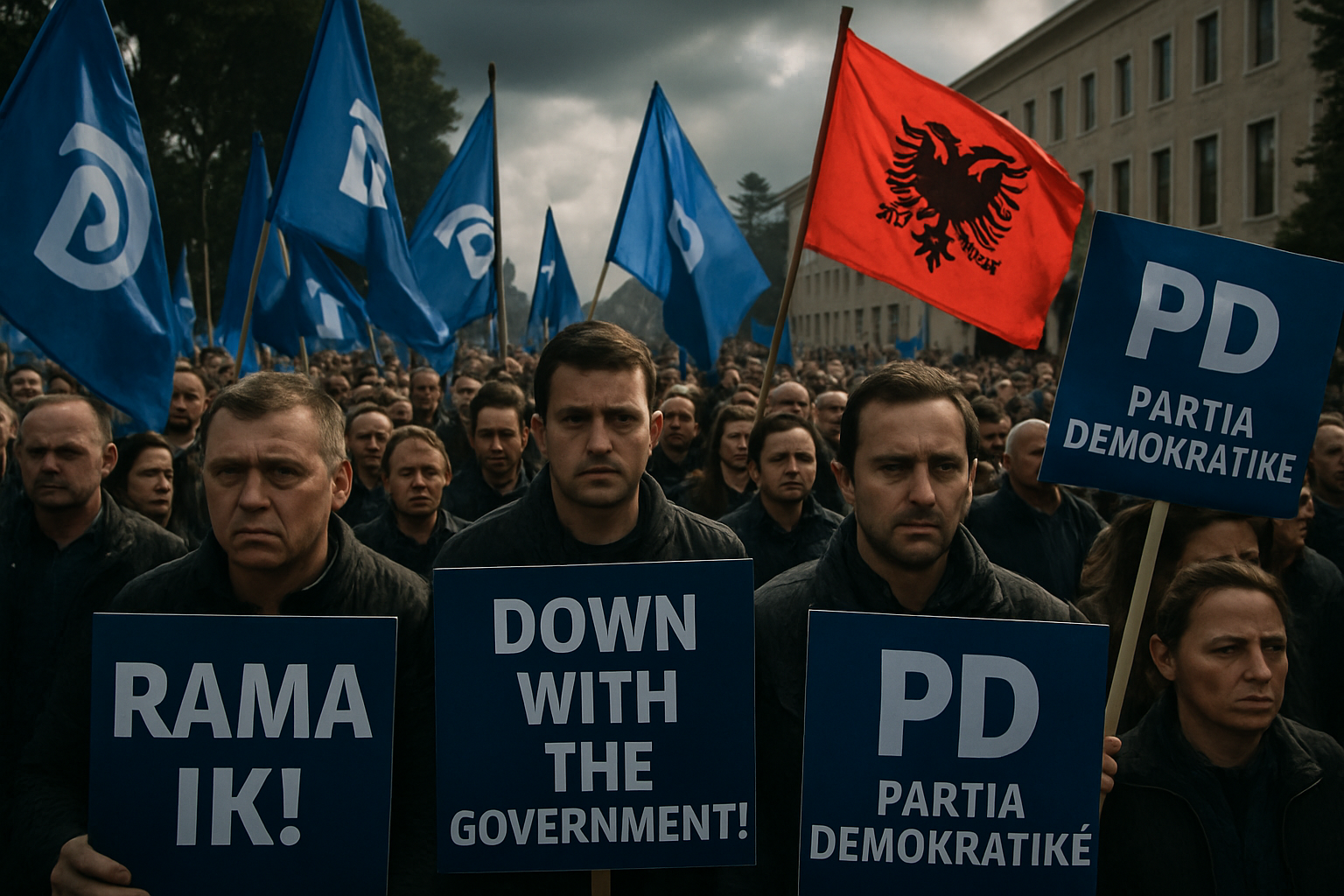
Albanian opposition leader Sali Berisha is facing mounting criticism from legal experts and journalists who question whether his "non-grata" status and protest strategy can effectively challenge Prime Minister Edi Rama's government or bring the Democratic Party back to power.
Lawyer Kujtim Ibraj, speaking on Vizion Plus television's "Quo Vadis" program, delivered a scathing assessment of Berisha's leadership, arguing that the Democratic Party (PD) must fundamentally change course to remain politically viable. "The international factor has set several points for Berisha: non-grata by the USA. Trump came, the non-grata status wasn't lifted. The prime minister changed in Britain, the non-grata status wasn't lifted," Ibraj stated during the February 12 broadcast.
International Isolation Undermines Opposition Credibility
Ibraj's critique centers on what he sees as the fundamental contradiction at the heart of Berisha's political position. "How do you inspire me when Berisha cannot cross the ocean? Is there a deadlock in international relations?" he asked, highlighting how the former prime minister's designation as "persona non grata" by the United States over corruption allegations has severely limited his diplomatic reach.
The lawyer's analysis reflects broader concerns about the opposition's ability to present itself as a credible alternative to Rama's Socialist government. Since being designated "non-grata" by the US State Department, Berisha has been unable to travel to key Western capitals, potentially hampering Albania's European Union integration process if the Democratic Party were to return to power.
Violent Protests Raise Questions About Democratic Norms
Recent opposition protests have drawn criticism for their violent nature, with security expert Fatjon Softa describing the materials used by demonstrators as "quite dangerous" during a February 12 television appearance. The protests have featured Molotov cocktails and other incendiary devices typically associated with extremist groups in Europe, raising concerns about the escalation of political tensions.
"The substances used were quite dangerous; they are used in Europe, but only by extremist groups"
— Fatjon Softa, Security Expert
The violent nature of recent demonstrations has prompted debate about whether such tactics serve the opposition's political interests. PD representative Eda Grimci defended the protests as "peaceful," arguing that any Molotov cocktails thrown were meant merely to "intimidate" rather than cause harm. However, critics argue this distinction is insufficient and that such tactics undermine democratic discourse.
Journalist Analysis: Strategic Missteps Benefit Ruling Party
Journalist Armir Shkurti offered a particularly damning assessment of the opposition's strategy, suggesting that Prime Minister Rama actually benefits from the current protest approach. "Rama likes this noise! Small parties should be careful how they position themselves," Shkurti warned, implying that the chaotic nature of opposition demonstrations may inadvertently strengthen the government's position.
This analysis reflects a broader concern that the Democratic Party's focus on street protests rather than institutional politics may be playing into the ruling party's hands. By presenting themselves as disruptive rather than constructive, opposition leaders risk alienating moderate voters who prefer stability to political upheaval.
Historical Context: Pattern of Political Violence
The current tensions represent a continuation of political violence that has periodically erupted in Albania since February 2026. Previous demonstrations led by Berisha's Democratic Party resulted in 16 police officers being hospitalized with injuries from Molotov cocktails, fireworks, and smoke bombs. These confrontations marked the worst political violence in years and occurred during Albania's EU accession process, raising international concerns about democratic backsliding.
The February 10, 2026 violence led to 13 arrests and hospitalized opposition deputy Bledion Nallbati with head injuries. The incidents prompted widespread condemnation, with Socialist Party Deputy Erion Braçe describing them as an "attempt to kill police officers." International observers expressed concern about the implications for Albania's European integration timeline.
Calls for Political Renewal and Coalition Building
Critics argue that the Democratic Party must move beyond its current approach to remain relevant in Albanian politics. Ibraj specifically called for the party to "sit down and talk with small parties," suggesting that coalition-building rather than confrontational protests might offer a more viable path to power.
"The PD should open up and renew itself. The PD took 1 million slaps in 2013. The PD has not adapted to the electoral system," Ibraj stated, referencing the party's devastating electoral defeat and its apparent failure to evolve with changing political realities.

Impact on EU Integration Process
The ongoing political crisis has significant implications for Albania's European Union membership aspirations. Brussels has made clear that rule of law, democratic institutions, and political stability are prerequisites for accession. Continued political violence and institutional confrontation could jeopardize Albania's progress in the integration process.
European officials have repeatedly emphasized the importance of managing political opposition through legal and democratic channels rather than street violence. The current crisis tests Albania's commitment to these principles and its readiness for EU membership.
Opposition Strategy Under Scrutiny
The criticism directed at Berisha and the Democratic Party reflects broader questions about opposition strategy in Albanian politics. With traditional confrontational approaches appearing to yield limited results, some analysts suggest the party needs fundamental reforms to its approach and potentially its leadership structure.
The challenge for Albanian opposition forces is developing an effective response to government policies while maintaining democratic norms and international credibility. The current trajectory appears to be achieving neither electoral success nor constructive political change.
Looking Forward: Reform or Continued Marginalization
As Albania approaches future electoral cycles, the Democratic Party faces critical decisions about its direction and leadership. The mounting criticism from legal experts, journalists, and civil society suggests that maintaining the status quo may lead to continued political marginalization.
The party's ability to adapt to contemporary political realities, rebuild international relationships, and offer constructive alternatives to current government policies will largely determine its future viability. Without significant changes, the Democratic Party risks becoming increasingly irrelevant to Albanian voters seeking effective governance and European integration.
The ongoing debate about Berisha's leadership and the party's strategic direction represents more than internal political maneuvering—it reflects fundamental questions about the nature of democratic opposition in Albania and the country's commitment to European values and institutions.