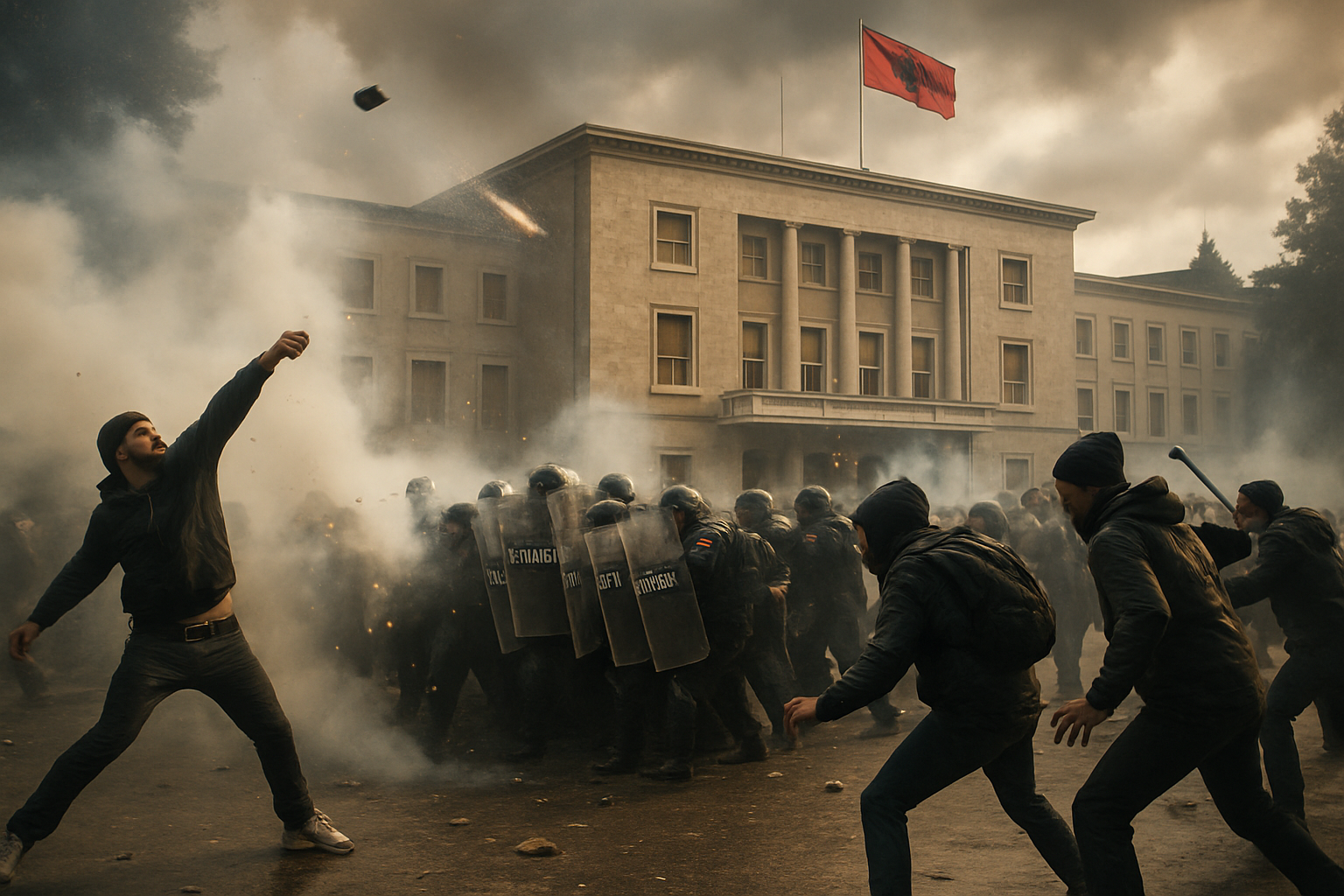
Albanian authorities have condemned violent clashes during opposition protests that left multiple police officers injured after demonstrators hurled Molotov cocktails, fireworks, and projectiles at law enforcement in what officials described as an unprecedented assault on democratic institutions.
Interior Minister Albana Koçiu issued a stern condemnation on February 11, 2026, following violent incidents during opposition protests the previous day. "The failed attempt to come to power by attacking law enforcement officers, burning institutions, and throwing solid objects and Molotov cocktails at police officers is a shameful and punishable act," Koçiu declared in her official statement.
The protests, part of ongoing political tensions in Albania, represent the latest escalation in a series of demonstrations that have increasingly turned violent, testing the country's democratic institutions and raising concerns about political stability as Albania pursues European Union membership.
Government Response and Condemnation
Minister Koçiu emphasized the distinction between legitimate protest rights and criminal violence, stating: "The right to protest is untouchable, but violence is unforgivable. Those who attack the uniform of the State Police and try to destabilize the constitutional order will face the law beyond any political alibi."
The Interior Minister praised police professionalism in handling the violent confrontation, expressing support for officers who "serve with professionalism and restraint even in the face of violent protest." She pledged that authorities would stand behind officers while defending citizens' right to peaceful democratic protest.
From Vizion Plus television reporting, the minister further characterized the violence as evidence that "the Democratic Party has been massively abandoned by citizens," suggesting the violent tactics reflect desperation rather than popular support.
Simultaneous Protests in Durrës
Violence was not limited to Tirana, as residents in Durrës also engaged in confrontational protests outside the municipal building. Citizens affected by the "TID Durrës" urban development project clashed with city councilors and police officers during heated demonstrations over property expropriation disputes.
The Durrës protests centered on opposition to rental arrangements imposed without proper agreement on property compensation for residents whose properties would be affected by public investment projects. Protesters initially attempted to enter the municipal council meeting to halt proceedings, leading to physical confrontations with arriving councilors.
Police responded with arrests as demonstrators tried to prevent councilors from participating in the municipal meeting. According to municipal authorities, the council approved a financial framework of 867,776,164 lekë for property expropriations affecting 131 identified property owners impacted by the public investment project.
International Perspective and Context
The violent clashes have drawn international attention, with Al Jazeera reporting that "anti-government protesters in Albania hurled petrol bombs and fireworks at police," highlighting the severity of the confrontations and their impact on Albania's international image.
These protests occur within the broader context of Albania's ongoing challenges with democratic governance and rule of law, critical factors in the country's European Union accession process. The violence raises questions about political polarization and institutional capacity to manage opposition dissent through democratic channels.
"We are alongside every police officer who serves with professionalism and restraint even in the face of violent protest, and in defense of every citizen's right to protest who chooses democracy, not violence."
— Albana Koçiu, Interior Minister
Historical Context of Albanian Political Violence
The February protests represent a continuation of violent political confrontations that have plagued Albanian democracy in recent months. Previous demonstrations in February 2026 resulted in 16 police officers being hospitalized with burns and injuries from Molotov cocktails, fireworks, and projectiles thrown by protesters.
These earlier incidents involved Democratic Party supporters led by Sali Berisha in what was described as the worst political violence in years, with clashes occurring outside Parliament and the Prime Minister's office. The pattern of escalating violence suggests deepening political polarization and institutional challenges in managing opposition through legal democratic processes.
The recurring violence has raised concerns among international observers about Albania's democratic consolidation and capacity to resolve political disputes through institutional mechanisms rather than street confrontations.
Law Enforcement Response and Investigations
Albanian authorities have initiated comprehensive investigations into the violent incidents, with multiple arrests reported following the confrontations. Police are examining evidence including video footage and witness testimony to identify and prosecute those responsible for attacks on officers.
The Interior Ministry has emphasized that criminal charges will be pursued to the fullest extent of the law, sending a clear message that political motivations will not excuse violent attacks on law enforcement or state institutions.
Enhanced security protocols have been implemented for future demonstrations, with authorities balancing citizens' constitutional rights to peaceful protest against the need to protect public order and officer safety.
Democratic Institutions Under Pressure
The violent protests highlight ongoing challenges facing Albanian democratic institutions as the country navigates political tensions while pursuing European integration. The incidents test the government's capacity to maintain rule of law while preserving democratic space for legitimate political opposition.
European Union officials and international partners are closely monitoring Albania's handling of political dissent, as respect for democratic norms and rule of law remains central to the country's EU accession timeline. The government's response to these challenges will likely influence international assessments of Albania's democratic progress.
Civil society organizations have called for de-escalation and dialogue between political forces, emphasizing the importance of resolving disputes through democratic institutions rather than street violence that undermines Albania's European aspirations.
Looking Forward
As Albanian authorities pursue investigations and legal proceedings against those responsible for the violence, the broader challenge remains addressing the underlying political tensions that continue to generate confrontational demonstrations.
The government faces the delicate task of maintaining security and rule of law while ensuring democratic space for legitimate political opposition. Success in managing this balance will be crucial for Albania's continued progress toward European integration and democratic consolidation.
Opposition parties and civil society must also grapple with questions about acceptable forms of political dissent and the responsibility to reject violence as a means of political expression, particularly as Albania seeks to demonstrate its commitment to European democratic values.