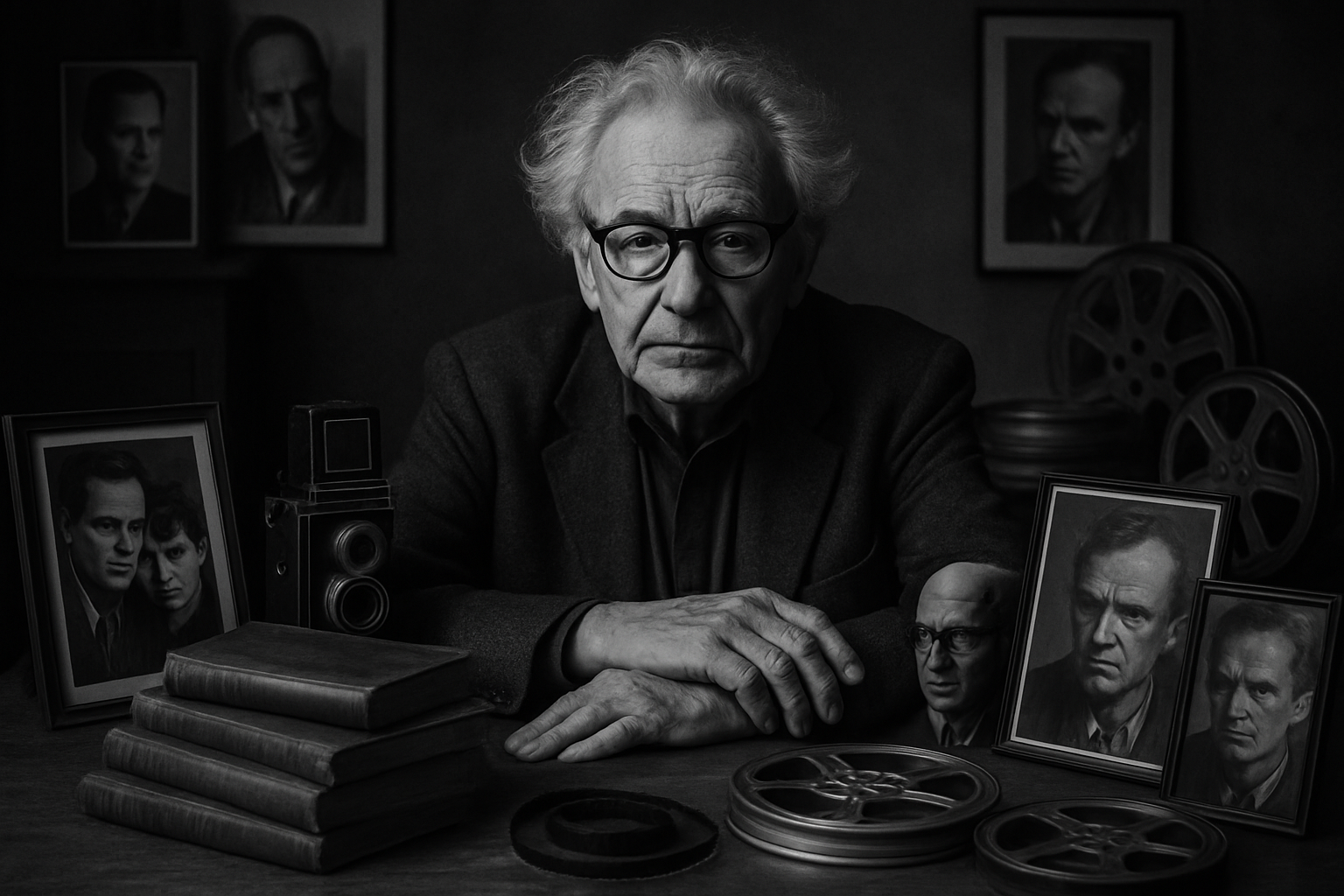
Alexander Kluge, the visionary German filmmaker, author, and television producer who helped revolutionize post-war German cinema and intellectual discourse, has died at the age of 94, according to reports from German media outlets on Thursday, March 26, 2026.
The polymath, who was equally influential as a director, writer, jurist, philosopher, and television pioneer, passed away leaving behind a monumental legacy that fundamentally reshaped Germany's cultural and intellectual landscape in the decades following World War II. His death marks the end of an era for European cinema and letters.
A Founding Father of New German Cinema
Kluge emerged as one of the most significant figures in the New German Cinema movement of the 1960s and 1970s, a generation that made unprecedented aesthetic demands on post-war Germany arising from what he termed "the civilizational break" of the Nazi period and Holocaust. His work consistently challenged conventional narrative structures and explored the intersection of personal memory with collective history.
Born in 1932, Kluge began his career as a lawyer before transitioning to filmmaking in the early 1960s. He was instrumental in drafting the Oberhausen Manifesto in 1962, a revolutionary declaration that proclaimed "the old film is dead" and called for a new German cinema free from commercial and ideological constraints.
"With Alexander Kluge, Europe loses a defining filmmaker, author and thinker who has permanently changed the forms of cinema and the public sphere."
— Veronica Kaup-Hasler, Vienna's Cultural Councillor
Master of Multiple Media
What distinguished Kluge from his contemporaries was his unprecedented versatility across media. He was simultaneously a filmmaker, philosopher, writer, and television producer, approaching each medium with sociological curiosity that blended documentary and fictional elements. His work demonstrated an extraordinary ability to connect intimate human experiences with broader historical and social phenomena.
As a filmmaker, Kluge directed over 30 feature films and documentaries, including influential works that examined German history through unconventional narrative techniques. His cinematic style was characterized by fragmented storytelling, mixing fiction with documentary footage, and a profound engagement with Germany's complex relationship to its past.
Beyond cinema, Kluge was a prolific author, publishing numerous books that explored philosophy, sociology, and cultural criticism. His literary works often employed similar techniques to his films, creating innovative narrative structures that challenged readers to engage actively with complex ideas about history, memory, and contemporary society.
Television as Cultural Laboratory
In later decades, Kluge pioneered innovative approaches to television programming, treating the medium as a laboratory for cultural experimentation rather than mere entertainment. He produced and hosted numerous television programs that featured long-form interviews with intellectuals, artists, and thinkers, creating spaces for serious cultural discourse on mass media.
His television work reflected his belief that media could serve as tools for democratic engagement and critical thinking, challenging audiences to grapple with complex social and philosophical questions. This approach influenced a generation of German media practitioners and contributed to elevated standards of cultural programming across Europe.
Legacy of Intellectual Rigor
Kluge's death represents the loss of one of Germany's most versatile intellectual figures, someone who refused to be confined to a single discipline or medium. His career spanned over six decades, during which he consistently pushed boundaries and challenged conventional approaches to storytelling, cultural production, and public discourse.
Swiss media described him as "the great German chronicler of feelings" who combined sociological curiosity with an ability to blend documentary and fictional elements. His work demonstrated how art could serve as a vehicle for processing collective trauma while simultaneously engaging with contemporary social questions.
International Recognition and Influence
Throughout his career, Kluge received numerous international awards and recognition for his contributions to cinema and culture. His films were regularly featured at major international film festivals, and his theoretical writings on media and society influenced scholars and practitioners worldwide.
His approach to filmmaking – characterized by intellectual rigor, formal innovation, and deep engagement with historical questions – helped establish German cinema as a significant force in international art house cinema during the 1970s and 1980s.
A Voice for Post-War Generation
Kluge represented a generation of German intellectuals who felt compelled to create new forms of cultural expression adequate to their historical moment. Having grown up during World War II and come of age in its aftermath, he understood the necessity of developing aesthetic approaches that could address the rupture in German civilization while pointing toward possibilities for renewal.
His work consistently demonstrated how cultural production could serve as a form of collective memory work, helping societies process traumatic experiences while maintaining critical engagement with contemporary challenges. This approach made him not merely a filmmaker or author, but a cultural diagnostician whose insights extended far beyond the arts.
Enduring Impact on European Culture
The news of Kluge's death prompted tributes from across the German-speaking world and beyond, with cultural leaders acknowledging his foundational role in shaping post-war European intellectual culture. His influence extended well beyond Germany, inspiring filmmakers, writers, and cultural critics throughout Europe and internationally.
Vienna's Cultural Councillor Veronica Kaup-Hasler's tribute captured the breadth of his impact, noting how Kluge "permanently changed the forms of cinema and the public sphere." This recognition reflects how his innovations extended beyond artistic techniques to encompass new models for cultural engagement and democratic discourse.
Alexander Kluge's death at 94 closes a remarkable chapter in European cultural history. His legacy lives on through his extensive body of work and the countless artists, intellectuals, and cultural practitioners influenced by his example of rigorous, innovative, and socially engaged cultural production. His vision of media as tools for critical thinking and democratic engagement remains particularly relevant in our current era of rapid technological and social change.