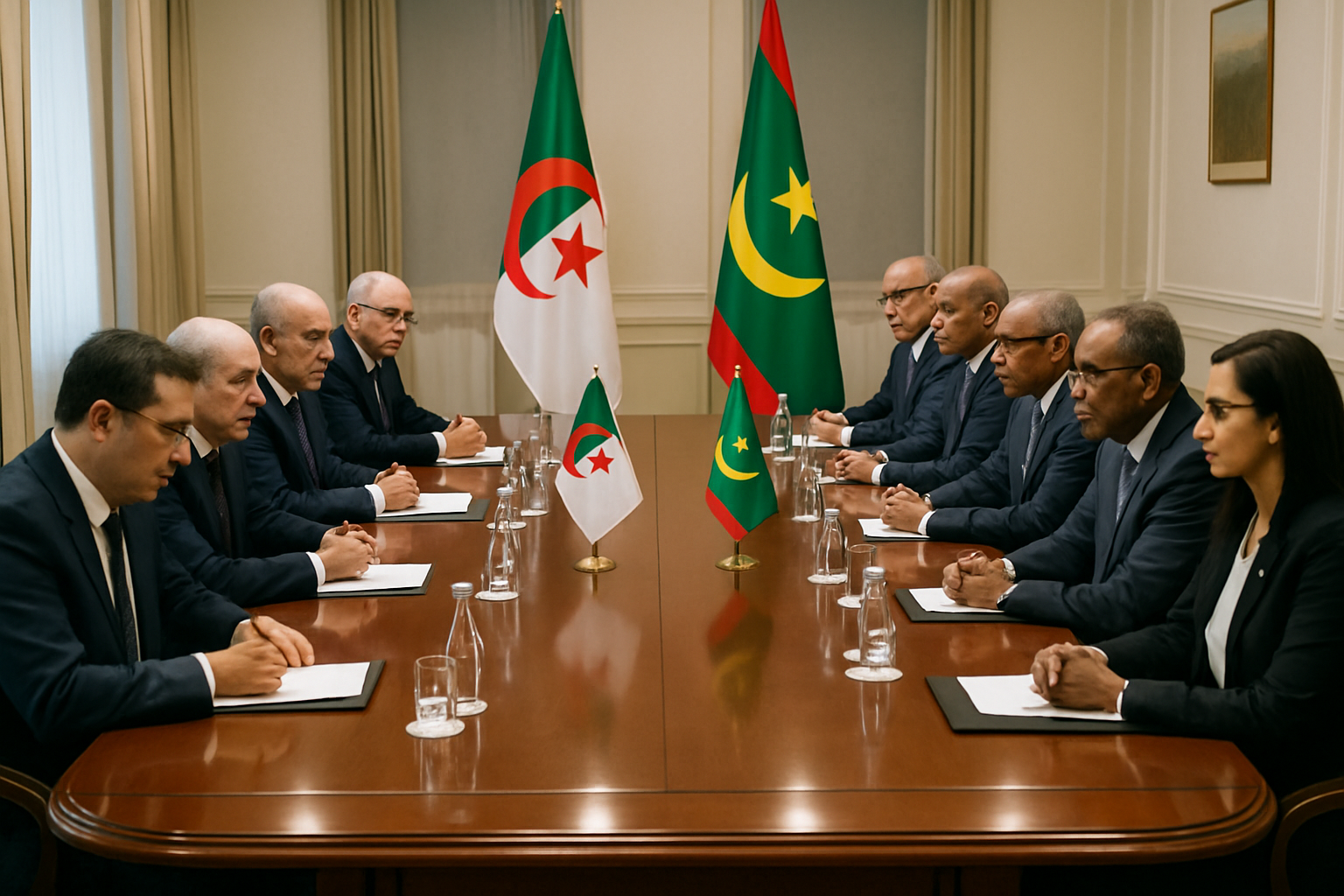
Algeria and Mauritania advanced their strategic partnership through a series of high-level ministerial meetings on Monday, April 6, 2026, focusing on energy cooperation, trade facilitation, and transportation infrastructure as both nations prepare for the 20th session of the Algeria-Mauritania Joint Committee for Cooperation.
The diplomatic engagement featured multiple bilateral meetings between Algerian ministers and their Mauritanian counterparts, who are visiting Algeria as part of a high-level ministerial delegation led by Mauritanian Prime Minister Mokhtar Ould Ajay. The discussions represent a significant milestone in North-West African regional integration, with implications extending far beyond bilateral relations.
Energy Partnership Takes Center Stage
Minister of State for Hydrocarbons and Mining Mohamed Arkab conducted extensive discussions with Mauritanian Minister of Oil and Energy Mohamed Ould Khaled, focusing on expanding energy cooperation and strategic partnerships in the hydrocarbons sector. The talks, held in Algiers, included Secretary of State for Renewable Energy and Energy Efficiency Fouzia Laroussi, signaling Algeria's commitment to comprehensive energy sector collaboration.
The energy discussions come at a critical juncture as global energy markets experience significant volatility, with natural gas prices surging 24% in Europe and 78% in the United States over recent months. Algeria's positioning as a key regional energy coordinator, recognized by the US Chamber of Commerce, provides strategic opportunities for enhanced Mauritanian energy security while supporting broader regional energy integration initiatives.
Trade Relations and Economic Integration
Foreign Trade and Export Promotion Minister Professor Kamal Rzig held comprehensive talks with Mauritanian Minister of Trade and Tourism Zeinab Bint Ahmadna, focusing on streamlining trade and customs procedures between the two countries. The discussions addressed practical barriers to bilateral commerce while exploring opportunities to expand commercial exchanges beyond traditional patterns.
Minister Rzig has been instrumental in Algeria's economic diversification efforts, recently launching the first shipment of locally manufactured children's clothing to Mauritania during February's National Exhibition of Clothing and Textile Industries. This precedent in non-hydrocarbon exports demonstrates Algeria's commitment to developing diverse trade relationships with African partners under the African Continental Free Trade Area (AfCFTA) framework.
The trade discussions build on a broader trend toward bilateral partnerships over complex multilateral frameworks, allowing more rapid implementation of targeted cooperation. This approach has proven successful in various international contexts, including recent agreements between China and African nations, and Trump administration bilateral initiatives with Argentina and India.
Transportation Infrastructure Coordination
Interior, Local Communities and Transport Minister Saïd Saoud received Mauritanian Minister of Equipment and Transport Ali Ahmed El-Firik and accompanying delegation, with senior officials from Air Algeria and the National Civil Aviation Agency participating. The meeting focused on enhancing cooperation in various transportation modes, including aviation, maritime, and land transportation networks.
The transportation cooperation discussions align with continental infrastructure development trends, including Algeria's advancing Gara Djebilet railway project (accessing world's third-largest iron ore reserves) and broader regional connectivity initiatives under AfCFTA objectives. Enhanced transportation links between Algeria and Mauritania could facilitate increased trade volumes while supporting broader North-West African economic integration.
Diplomatic Framework and Regional Context
Foreign Affairs Minister Ahmed Attaf welcomed his Mauritanian counterpart Mohamed Salem Ould Merzoug ahead of their co-chairing the Algeria-Mauritania Follow-up Committee meeting, which serves as preparation for Tuesday's 20th session of the Joint Committee. This institutional mechanism provides regular consultation frameworks ensuring implementation continuity and systematic diplomatic engagement.
The diplomatic engagement reflects broader North African positioning as a strategic bridge between Europe, Africa, and the Middle East. Recent memory includes Algeria's successful mediation in regional disputes and its expanding energy cooperation throughout the Sahel region, including partnerships with Niger that serve Europe's energy diversification objectives away from Russian supplies.
Cultural and Academic Exchange
The visit included cultural diplomacy elements, with Mauritanian Prime Minister Ould Ajay received by Sheikh Mohamed Al-Mamoun Al-Qasimi Al-Hasani, Dean of the Great Mosque of Algeria. Such exchanges reinforce the multifaceted relationship extending beyond government cooperation to cultural and academic collaboration, building sustainable partnership foundations that transcend individual political leadership tenures.
This cultural dimension reflects Algeria's broader South-South cooperation strategy, emphasizing shared historical experiences and mutual respect rather than traditional aid dependency relationships. The approach has proven effective in various African partnerships, creating frameworks for sustained cooperation across political transitions.
Strategic Implications and Implementation
The Algeria-Mauritania cooperation framework represents a template for modern bilateral partnerships that prioritize practical cooperation over symbolic agreements. Success factors include regular ministerial consultations, technical working groups, joint investment committees, and monitoring mechanisms that provide continuity beyond individual meetings.
Implementation challenges remain significant, requiring sustained political commitment across electoral cycles, adequate financing for infrastructure projects, technical capacity building, and regulatory coordination. However, the institutional framework established through the Joint Committee mechanism provides tested structures for addressing these challenges systematically.
The partnership occurs within the context of broader continental integration momentum, with African nations increasingly asserting strategic autonomy while maintaining diverse international relationships. Seven African countries, including Algeria, participate in the US-EU-Japan Critical Minerals Partnership while simultaneously benefiting from China's zero-tariff access for 53 African countries starting May 1, 2026.
Future Prospects and Regional Impact
The 20th session of the Algeria-Mauritania Joint Committee, scheduled for Tuesday, represents a milestone in bilateral cooperation spanning multiple decades. The institutional maturation demonstrates both countries' commitment to sustained partnership frameworks that serve national interests while contributing to broader regional integration objectives.
Success of the Algeria-Mauritania model could influence other North-West African partnerships, particularly as regional countries navigate complex international relationships while pursuing economic development and energy security objectives. The partnership's emphasis on practical cooperation in specific sectors—energy, trade, transportation—provides a replicable framework for neighboring countries facing similar development challenges.
As climate pressures intensify and global supply chains undergo fundamental restructuring, the Algeria-Mauritania partnership represents adaptive regional cooperation that balances sovereignty principles with practical collaboration needs. The framework's success will be measured not through ceremonial declarations but through tangible improvements in energy security, trade facilitation, and transportation connectivity serving both nations' development objectives.