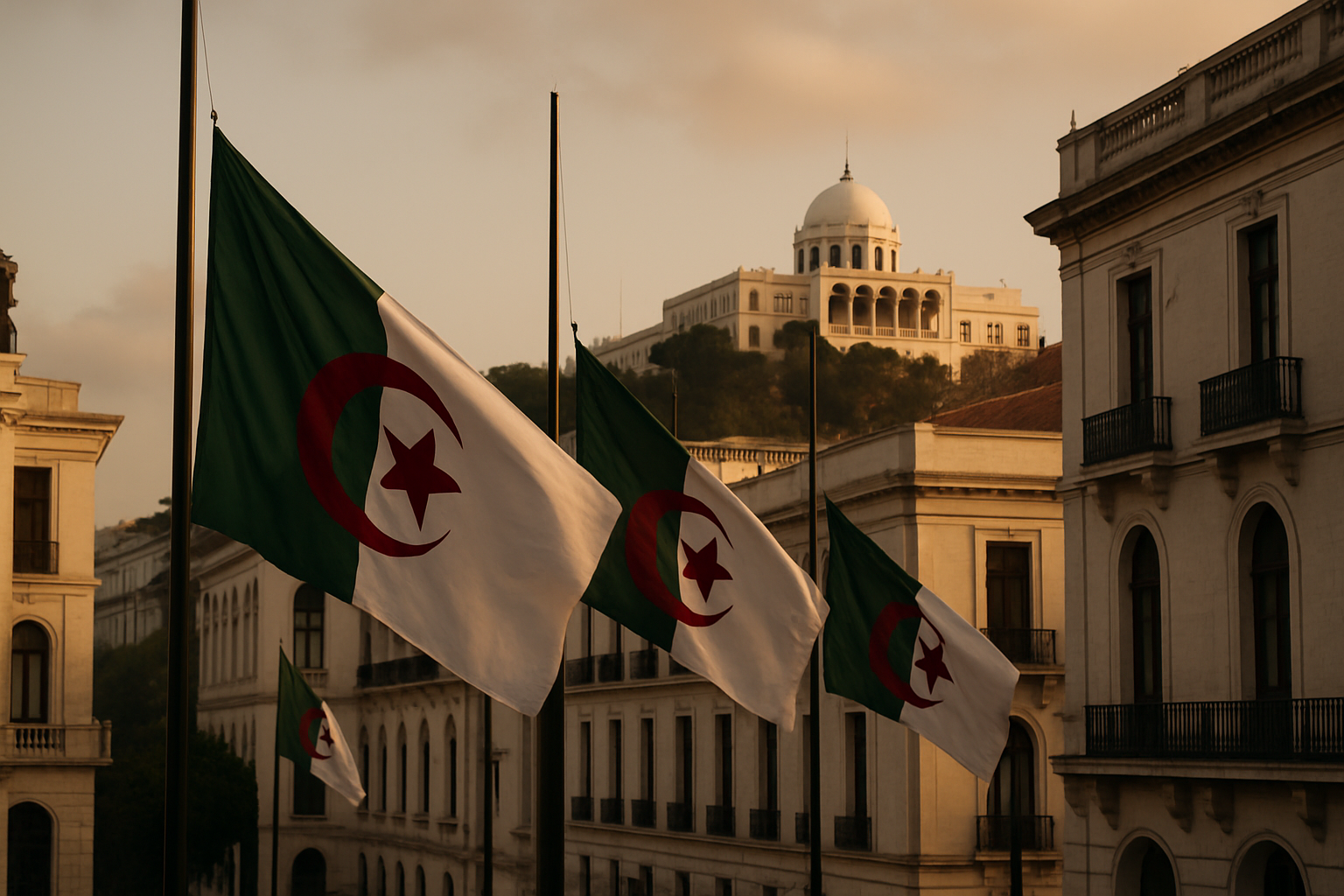
Former Algerian President Liamine Zeroual, a veteran of the independence struggle who served as the nation's leader during a turbulent period in the 1990s, died Saturday evening at the age of 85, prompting the government to declare three days of national mourning across the country and its diplomatic missions abroad.
The Presidency of the Republic announced the national mourning period late Saturday, following Zeroual's death at the Mohamed Seghir Nekkach Military Hospital in the capital. The former president, known for his role in Algeria's fight for independence and his later political leadership, passed away after a prolonged illness, according to official sources.
Independence War Hero and Political Leader
Born on July 3, 1941, in the city of Batna in northeastern Algeria, Liamine Zeroual emerged as a significant figure in his nation's history through two distinct phases of service. As a young man, he left his studies to join the National Liberation Army (ALN) and participated in the war of independence against French colonial rule from 1957 to 1962, representing the dedication of an entire generation to Algeria's freedom.
Following independence, Zeroual pursued military training in the Soviet Union and later attended the French Military Academy in 1974. This dual educational experience would shape his understanding of both Eastern and Western military doctrines, preparing him for the complex challenges he would later face as a national leader.
Military Career and Rise to Leadership
Zeroual's post-independence career was marked by steady advancement through the ranks of the National People's Army. He held various responsible positions within Algeria's military structure, eventually being appointed commander of the military academy, where he influenced the training and development of future officers.
His military expertise and commitment to national service positioned him as a respected figure within Algeria's defense establishment. These credentials would prove crucial when the country faced one of its most challenging periods in the 1990s, during which political instability and security concerns demanded strong leadership.
Presidential Legacy and Transition Period
While specific details of Zeroual's presidency from the available sources focus on his early life and military service, his role as president during the 1990s came at a critical juncture in Algerian history. This was a period when the nation grappled with significant political and security challenges, requiring leadership that could bridge military experience with civilian governance.
His background as both an independence fighter and a professional military officer provided him with unique insights into Algeria's national identity and security needs. This combination of revolutionary credentials and institutional experience made him a significant figure in navigating the country through a complex transition period.
National Mourning and Commemorations
The announcement of three days of national mourning reflects Zeroual's enduring significance in Algerian national memory. The mourning period, which began immediately following the announcement, applies to all national territory and extends to Algeria's diplomatic representations abroad, with the national flag to be flown at half-mast during this period.
This official recognition acknowledges not only his service as president but also his role as a "mujahid" – a fighter for independence – a title that carries special reverence in Algerian society. The designation connects him to the founding generation of modern Algeria, those who fought to establish the nation's sovereignty.
Contemporary Algeria and Historical Memory
Zeroual's death comes at a time when Algeria, like many nations in the region, continues to navigate complex political and economic challenges. The country has undergone significant changes since the independence era, with new generations of Algerians seeking to balance respect for their revolutionary heritage with aspirations for democratic governance and economic development.
His passing serves as a reminder of the connection between Algeria's founding struggle and its ongoing evolution as a modern state. The independence generation, of which Zeroual was a prominent member, established the foundations upon which contemporary Algeria has been built.
Regional and Historical Context
The death of Zeroual occurs within a broader regional context where North African nations are reflecting on their post-independence trajectories. Algeria's experience, marked by both achievements and challenges, provides important lessons for understanding the complex dynamics of post-colonial state-building in the region.
His life spanned crucial periods in Algerian history, from the independence struggle through various phases of national development. This historical perspective, embodied in leaders like Zeroual, represents a direct link to the foundational moments of modern Algeria.
Legacy and Remembrance
As Algeria observes the mourning period for Liamine Zeroual, the nation reflects on the contributions of a leader who served in multiple capacities throughout his life. From his early participation in the independence struggle to his later role in national leadership, his career exemplified the commitment to service that characterized many of Algeria's founding generation.
The three-day mourning period provides an opportunity for Algerians to honor not only Zeroual's individual contributions but also to reflect on the broader legacy of those who fought for independence and later worked to build the institutions of the modern Algerian state.
His death marks the passing of another member of Algeria's independence generation, underscoring the importance of preserving the memory and lessons of that formative period while continuing to work toward the aspirations of freedom, dignity, and prosperity that motivated the original struggle for independence.