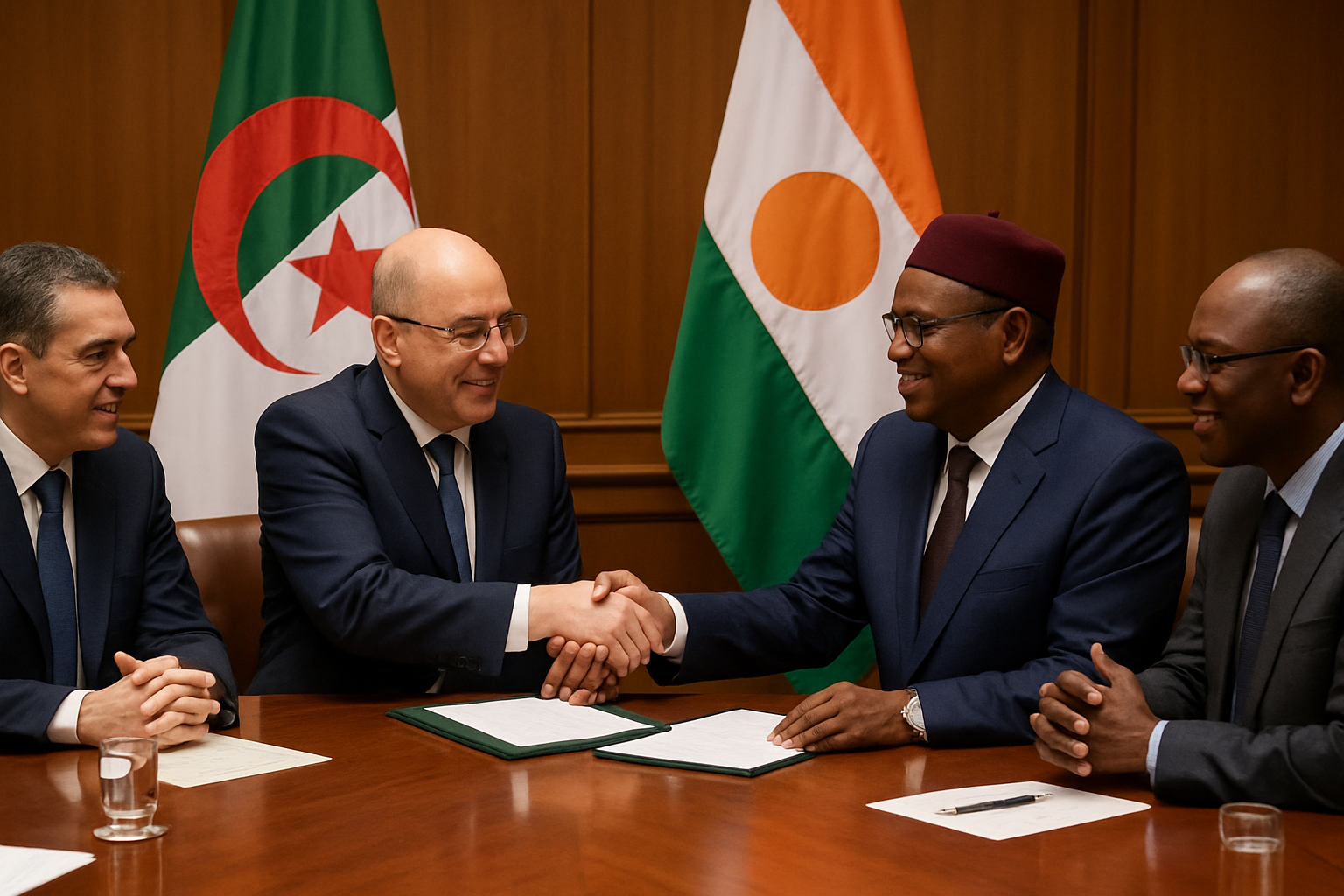
Algeria and Niger are deepening their strategic economic partnership through comprehensive bilateral discussions held during the second session of the Joint Commission for Cooperation, as senior ministers from both countries met in Niamey to explore expanded commercial, industrial, and economic collaboration.
The high-level diplomatic engagement featured extensive meetings between Algerian Foreign Trade and Export Promotion Minister Kamal Rzig, Industry Minister Yahya Bashir, and their Nigerien counterpart, Trade and Industry Minister Abdullah Sidi. The discussions, conducted within the framework of the ongoing Joint Commission sessions, focused on identifying concrete opportunities to strengthen bilateral economic ties between the two North and West African neighbors.
Ministerial-Level Economic Dialogue
According to an official statement from Algeria's Ministry of Foreign Trade, the ministerial meeting was specifically dedicated to examining various commercial and industrial aspects of the bilateral relationship. The discussions built upon expert-level consultations held the previous day, where technical teams from both countries reviewed potential cooperation mechanisms and identified priority sectors for enhanced partnership.
The talks centered on exploring practical pathways to strengthen economic cooperation, with particular emphasis on expanding trade volumes and diversifying commercial exchanges between Algeria and Niger. Both sides expressed commitment to moving beyond traditional trade patterns toward more sophisticated forms of industrial collaboration and economic integration.
Prime Ministerial Oversight
The economic discussions occurred under the broader framework of high-level political engagement, with Algerian Prime Minister Nadir Larbaoui conducting private bilateral talks with his Nigerien counterpart, Ali Lamine Zein Mahaman, at the Prime Ministry headquarters in Niamey. These leadership-level consultations provided political guidance and strategic direction for the technical economic discussions between ministerial teams.
The Prime Ministerial meeting underscored both countries' commitment to elevating their bilateral relationship beyond ceremonial exchanges toward substantive cooperation frameworks. The discussions were held at the International Conference Center "Mahatma Gandhi" in Niamey, reflecting the formal diplomatic significance attached to these bilateral consultations.
Expanding Cooperation Framework
The Joint Commission sessions encompassed discussions on multiple cooperation sectors, extending beyond pure trade and commerce. Interior and Local Communities Minister Said Saoud, who accompanied the Prime Minister on the official visit to Niger, held separate bilateral meetings with his Nigerien counterparts, including Interior, Public Security and Territorial Administration Minister Mohammed Toumba and Transport and Civil Aviation Minister Colonel Abdul Rahman Amadou.
These parallel discussions addressed cooperation in internal security, transportation infrastructure, and civil aviation, indicating both countries' intention to develop comprehensive partnerships spanning multiple government sectors. The multi-track diplomatic approach suggests a systematic effort to institutionalize bilateral cooperation across various domains of mutual interest.
Strategic Regional Context
The Algeria-Niger economic cooperation initiative occurs within a broader context of evolving regional dynamics in the Sahel and North Africa. Both countries face similar challenges related to economic diversification, regional security, and development of cross-border trade infrastructure. The bilateral commission provides a mechanism for coordinated approaches to these shared challenges.
Niger's strategic position as a landlocked Sahel nation gives it particular importance for Algeria's efforts to expand economic influence in West Africa. Conversely, Algeria's industrial capacity and energy resources offer Niger opportunities for economic partnership that could support its development objectives.
Implementation Mechanisms
The Joint Commission framework establishes regular consultation mechanisms between technical experts and political leaders from both countries. The alternating expert-level and ministerial sessions create institutional continuity for bilateral cooperation, ensuring that agreements reached at political levels can be translated into practical implementation measures.
The commission structure allows for systematic follow-up on cooperation agreements and provides platforms for addressing challenges that may emerge during implementation phases. This institutional approach reflects both countries' commitment to moving beyond ad hoc cooperation toward sustained partnership frameworks.
Economic Diversification Objectives
For Algeria, the partnership with Niger represents part of broader efforts to diversify economic relationships beyond traditional hydrocarbon exports and European markets. The country has been actively seeking to strengthen South-South cooperation and expand trade relationships within Africa as part of economic diversification strategies.
Niger, meanwhile, benefits from partnership with a more economically developed regional neighbor that can provide industrial goods, technical expertise, and potentially investment capital for development projects. The cooperation framework offers opportunities for Niger to access Algerian expertise in various sectors while positioning itself as a partner for Algerian companies seeking to expand in West African markets.
Future Cooperation Prospects
The comprehensive nature of the bilateral discussions, spanning trade, industry, transportation, and security cooperation, suggests both countries envision substantial expansion of their partnership. The Joint Commission provides an institutional framework for regular review and expansion of cooperation areas as opportunities emerge.
Success of the current cooperation framework could serve as a model for Algeria's engagement with other Sahel nations and contribute to broader regional integration initiatives. The systematic approach to bilateral cooperation, combining political oversight with technical implementation, offers a template for sustainable international partnership development.
The Algeria-Niger Joint Commission sessions represent a significant step toward deeper economic integration between North and West Africa, demonstrating both countries' commitment to practical cooperation that addresses shared development challenges while creating opportunities for mutual economic benefit.