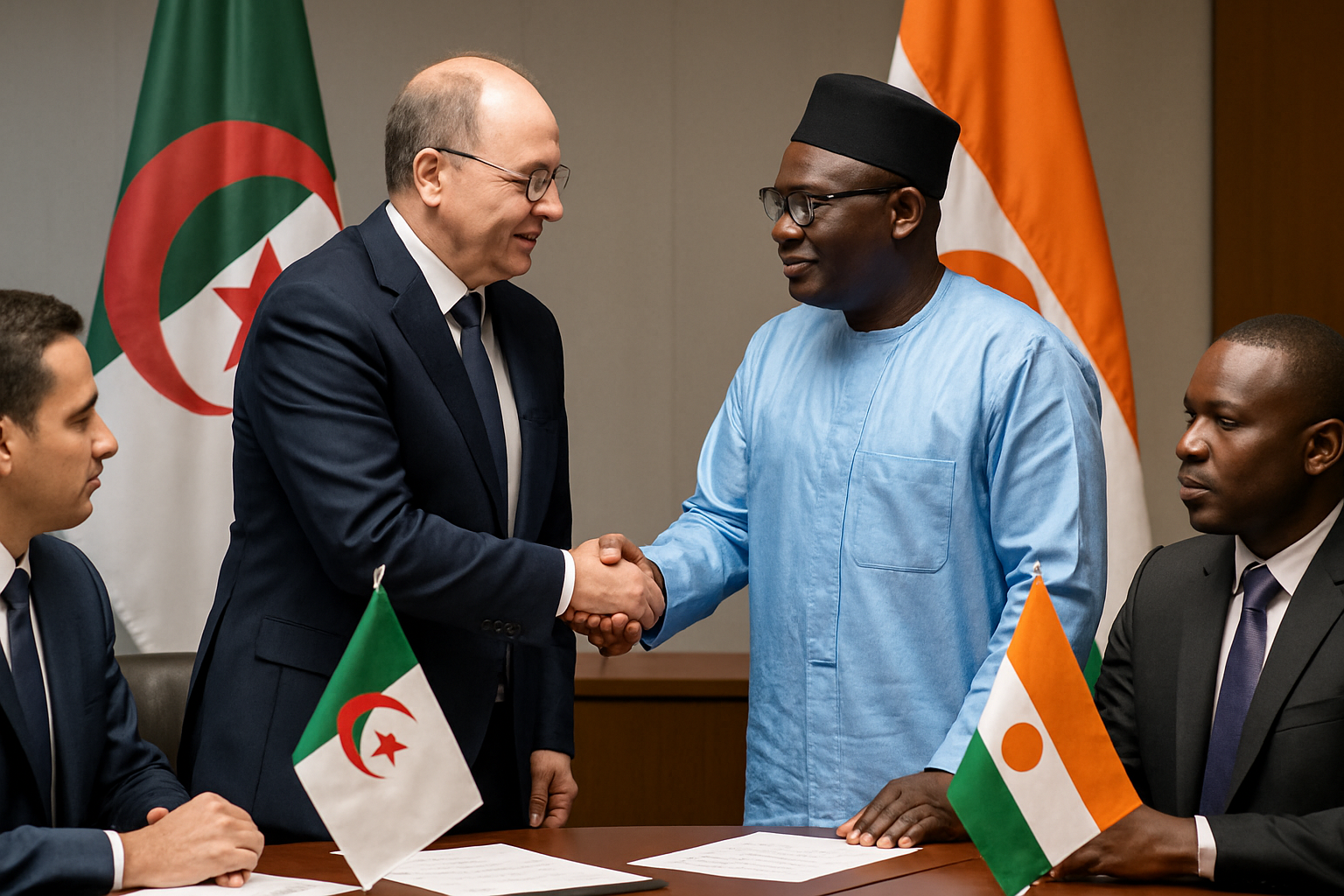
Algeria and Niger signed a historic memorandum of understanding in the hydrocarbons sector on March 24, 2026, during the second session of the Algeria-Niger Joint High Commission for Cooperation in Niamey, marking a significant expansion of energy partnerships across Africa and beyond as nations increasingly turn to bilateral agreements to strengthen trade relations.
The ceremony took place on the sidelines of the commission meeting held on March 23-24, 2026, in the Nigerian capital, with joint presidency shared between Algerian Prime Minister Seif Gharib and his Niger counterpart, Prime Minister Ali Lamine Zeine. The agreement represents a cornerstone achievement in Algeria's strategy to expand its energy cooperation throughout the Sahel region while Niger seeks to diversify its economic partnerships beyond traditional frameworks.
Strategic Energy Cooperation in the Sahel
The hydrocarbon memorandum builds upon Algeria's positioning as a key regional energy coordinator, leveraging its substantial oil and gas reserves to foster deeper partnerships across North and West Africa. Algeria has emerged as a crucial energy supplier to Europe, particularly following the continent's efforts to reduce dependence on Russian energy supplies.
The partnership with Niger reflects broader trends across the Sahel region, where countries are increasingly seeking diversified economic relationships to address development challenges and enhance energy security. Niger, despite facing various political transitions, continues to pursue international cooperation frameworks that support its long-term economic objectives.
According to regional energy experts, the agreement positions Algeria to extend its influence as an energy hub connecting North African production with emerging markets across the continent. The timing coincides with increased global demand for alternative energy partnerships as nations seek reliable suppliers outside traditional geopolitical arrangements.
EU-Australia Trade Relations Breakthrough
Simultaneously, significant developments in international trade relations emerged from Estonia, where reports confirmed that the European Union and Australia have successfully concluded negotiations on a comprehensive free trade agreement while signing a new security and defense partnership.
The EU-Australia agreement represents years of complex negotiations aimed at reducing trade barriers and enhancing economic cooperation between Europe and the Asia-Pacific region. Australian households are expected to benefit from reduced prices on European cars, trucks, and appliances, while European businesses gain enhanced access to Australian markets.
This breakthrough comes amid a broader trend toward bilateral and regional trade agreements as nations seek more agile frameworks for economic cooperation compared to complex multilateral negotiations that can take decades to complete.
Evolving Diplomatic Landscape
The Algeria-Niger agreement and EU-Australia trade deal exemplify a fundamental shift in international relations toward bilateral partnerships that can be implemented more rapidly than traditional multilateral frameworks. This approach allows nations to address specific mutual interests while maintaining flexibility in their broader international relationships.
"These bilateral agreements demonstrate how countries are adapting diplomatic strategies to meet contemporary economic and security challenges through targeted cooperation frameworks."
— Regional Diplomacy Expert
The trend reflects lessons learned from recent global disruptions, including supply chain vulnerabilities exposed during the COVID-19 pandemic and geopolitical tensions that have affected traditional trade routes. Nations are increasingly prioritizing partnerships with reliable partners who can provide strategic resources and markets.
Regional Integration and Security Considerations
The Algeria-Niger cooperation occurs within the context of broader Sahel regional dynamics, where countries face complex challenges including security concerns, climate impacts, and economic development needs. The energy partnership provides Niger with potential access to Algerian expertise and resources while offering Algeria opportunities to expand its regional influence.
Both nations have emphasized that their cooperation extends beyond energy to include broader economic, cultural, and security dimensions. The joint commission framework established mechanisms for regular consultations and coordination on shared challenges affecting the region.
The partnership also reflects Algeria's continued commitment to South-South cooperation principles, working with fellow African nations to develop mutually beneficial relationships that support continental integration objectives while maintaining sovereignty over national resources and policies.
Global Trade Architecture Evolution
The simultaneous developments in Africa and between the EU and Australia signal broader changes in global trade architecture. Recent months have witnessed numerous bilateral agreements, from China's comprehensive tariff elimination for African countries to various energy partnerships emerging across different regions.
These developments suggest that while multilateral institutions remain important, bilateral frameworks are increasingly preferred for addressing specific economic and strategic objectives. The approach allows for more targeted solutions while providing flexibility to adapt to changing circumstances.
Experts note that successful bilateral partnerships often serve as building blocks for broader regional integration, creating networks of cooperation that can eventually contribute to larger multilateral frameworks while addressing immediate practical needs.
Implementation and Future Prospects
The success of the Algeria-Niger hydrocarbon agreement will depend on effective implementation mechanisms, including technical cooperation, infrastructure development, and regulatory coordination. Both governments have committed to establishing working groups and regular monitoring procedures to ensure the partnership delivers concrete benefits.
For Niger, the agreement provides access to Algerian technical expertise and potential investment in energy infrastructure development. For Algeria, the partnership expands its regional energy footprint while supporting broader objectives of African continental integration.
The EU-Australia agreement similarly requires careful implementation to realize its full potential, with both sides committing to establish mechanisms for ongoing consultation and dispute resolution. The success of these agreements may influence other nations to pursue similar bilateral frameworks for addressing their specific economic and strategic needs.
Implications for International Relations
These developments reflect a broader evolution in international relations toward more flexible, practical cooperation frameworks that can adapt to contemporary challenges. The emphasis on bilateral agreements suggests that nations are prioritizing relationships with reliable partners who share compatible objectives over broader multilateral arrangements that may be more difficult to negotiate and implement.
The trend does not necessarily indicate a retreat from multilateralism, but rather a recognition that bilateral partnerships can provide more immediate solutions while contributing to longer-term regional integration objectives. Success in these arrangements may create templates for other nations facing similar challenges in developing effective international partnerships.
As global economic and security dynamics continue to evolve, the ability of nations to develop effective bilateral partnerships while maintaining broader international commitments will likely become increasingly important for achieving sustainable development and security objectives in an interconnected but rapidly changing world.