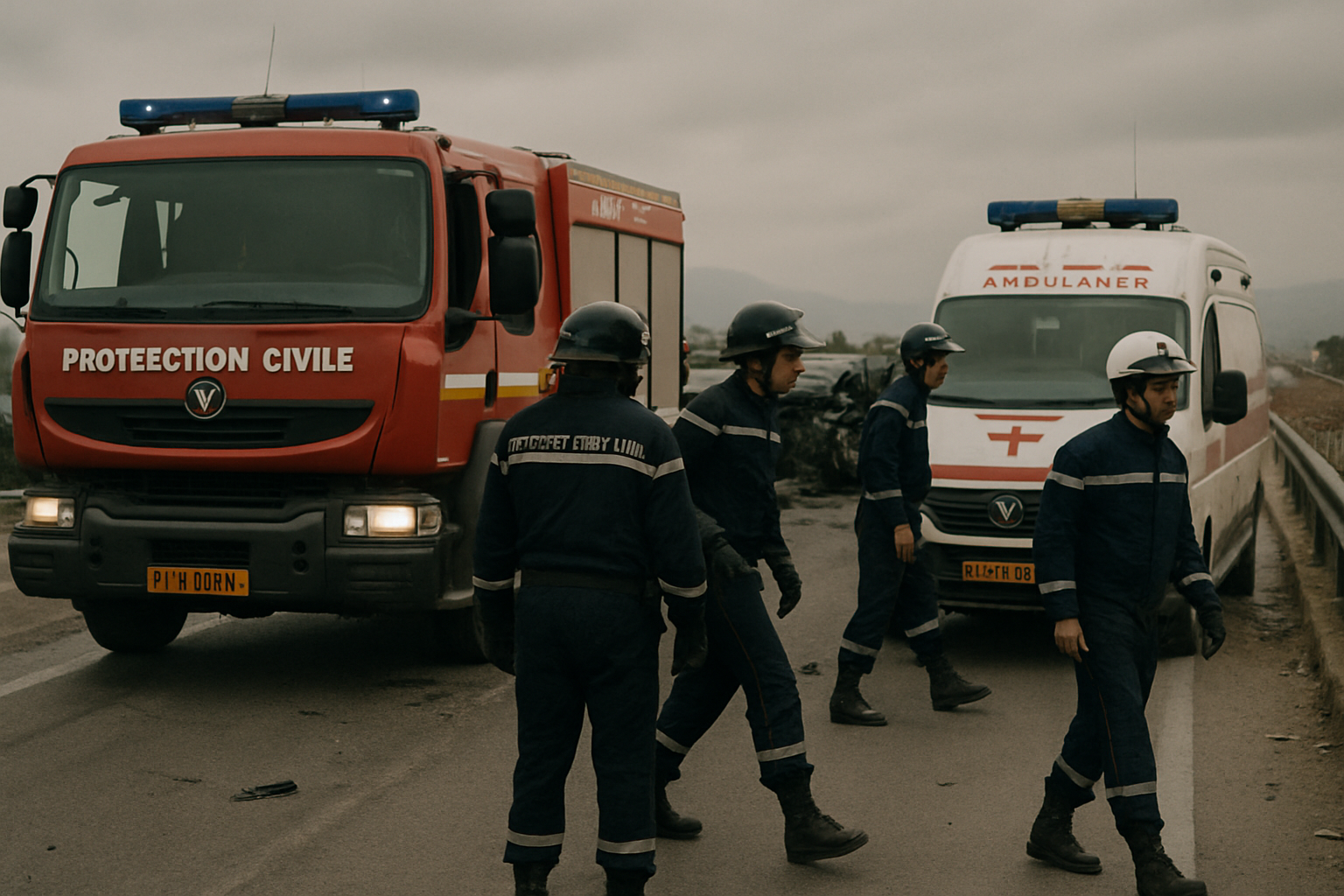
Algeria recorded 16 deaths and 367 injuries from traffic accidents across multiple provinces in a devastating 48-hour period, underscoring the nation's ongoing road safety crisis amid a broader global pattern of transportation emergencies.
According to a statement released Saturday by the General Directorate of Civil Protection, the heaviest toll was registered in Souk Ahras province, where three people died and eight others were injured in traffic accidents. An additional three fatalities occurred in a separate incident in Djanet province, while other provinces across the country contributed to the mounting casualty figures.
The latest incidents add to a troubling pattern of road safety challenges that have plagued Algeria and reflect broader transportation infrastructure vulnerabilities observed globally throughout February 2026. Emergency response teams worked around the clock to manage the crisis, with Civil Protection services coordinating rescue operations and medical evacuations across affected regions.
Provincial Breakdown of Casualties
Beyond the immediate fatalities, the 48-hour period saw widespread injuries requiring emergency medical intervention. In Béchar province, two people died and one was injured in a vehicle accident involving a swerving collision on National Road 06, specifically on the section connecting Béchar municipality to Abadla municipality in the Aqid area.
A separate incident in Jijel province resulted in eight people sustaining various injuries when a small bus veered off course and collided with the roadside. Civil Protection units responded at approximately 12:39 PM after receiving reports of the accident on the Zerifa road in Djemaa Beni Habibi municipality, under the El Anser district.
All victims from the Jijel incident received immediate medical attention at the scene before being rapidly transported to medical facilities for further treatment. The swift response demonstrated the coordination capabilities of Algeria's emergency services, though it also highlighted the persistent frequency of such incidents requiring intervention.
Global Context of Transportation Crisis
Algeria's traffic casualties occur within a broader context of global transportation safety emergencies documented throughout February 2026. International data reveals that motorcyclists represent 41% of all traffic fatalities despite constituting a smaller percentage of road users, while countries worldwide grapple with aging infrastructure and enforcement gaps that contribute to preventable deaths.
The timing coincides with what experts describe as a global transportation crisis, with multiple countries experiencing simultaneous infrastructure failures, extreme weather impacts on road networks, and emergency response systems operating beyond their designed capacity limits. From European storm damage affecting highways to deteriorating road conditions in developing nations, the challenges facing Algeria reflect broader systemic issues.
Emergency response quality varies significantly by region, with developed networks demonstrating more sophisticated coordination capabilities while remote locations often struggle with resource limitations and geographic challenges that complicate rescue operations.
Infrastructure and Enforcement Challenges
The recurring nature of Algeria's road safety incidents points to systemic issues including inadequate lighting and signage on major routes, enforcement gaps that allow dangerous driving behaviors to persist, and delayed medical response times that can convert survivable accidents into fatalities. Vehicle safety standards also vary, affecting survival rates in collision scenarios.
Economic impact analysis suggests that each traffic death costs society hundreds of thousands of dollars in lost productivity, medical expenses, and legal proceedings. Algeria's persistent casualty rates likely represent billions in economic losses while affecting tens of thousands of family members and community members socially and emotionally.
International solutions offer potential models for improvement, including Sweden's Vision Zero approach that aims to eliminate traffic deaths through coordinated infrastructure improvements, enforcement enhancements, and public education. The Netherlands' Safe System Approach designs roads to account for human error, while Australia's speed management programs have successfully reduced urban fatalities.
Technology and Prevention Opportunities
Advanced Driver Assistance Systems (ADAS), autonomous emergency braking, and intelligent transportation systems present opportunities to prevent human errors that contribute to the majority of traffic accidents. These technologies, while requiring significant infrastructure investment, have demonstrated effectiveness in reducing collision rates in countries where they have been implemented systematically.
Data-driven analysis beyond basic statistics collection could enable more targeted interventions, while infrastructure investment in improved roads, lighting, and emergency response capabilities offers long-term solutions to recurring problems. Legal framework enhancements with consistent enforcement, combined with public education campaigns specifically targeting high-risk behaviors, represent additional prevention strategies.
Regional and International Cooperation Needs
Algeria's road safety challenges require comprehensive action that extends beyond national borders. International cooperation in sharing best practices, coordinated emergency response protocols, and standardized reporting systems could accelerate progress in reducing traffic fatalities across North Africa and the broader Middle East region.
The success of transportation safety improvements often depends on sustained political commitment, comprehensive professional training for emergency responders, and international cooperation frameworks that address both immediate safety needs and long-term climate adaptation requirements affecting road infrastructure.
As Algeria continues to develop its transportation networks and urban centers, the integration of modern safety standards from the design phase, rather than retrofitting existing infrastructure, could prevent future tragedies and position the country as a regional leader in road safety innovation.
Emergency Response and Recovery
Civil Protection services demonstrated effective coordination in responding to the multiple incidents, with rescue teams from various districts collaborating to evacuate trapped passengers and provide immediate medical care. However, the frequency of such incidents strains emergency resources and highlights the need for preventive rather than purely reactive approaches.
The human cost extends far beyond immediate casualties, affecting families, communities, and economic productivity across affected provinces. Mental health services report increased demand following repeated traffic incidents, while businesses and agricultural operations suffer disruptions when key transportation routes become unsafe or congested.
Recovery from this 48-hour period will require not only medical care for the injured but also comprehensive analysis of contributing factors to prevent similar incidents. The patterns observed in Algeria mirror global challenges where traditional infrastructure designed for historical conditions struggles to meet current demands under changing environmental and social pressures.
As emergency services continue to respond to transportation incidents across Algeria, the urgent need for transformative rather than reactive approaches becomes increasingly apparent. The choice between crisis management and comprehensive safety infrastructure development may determine whether Algeria can break the cycle of preventable traffic tragedies that continue to claim lives and strain emergency response systems.