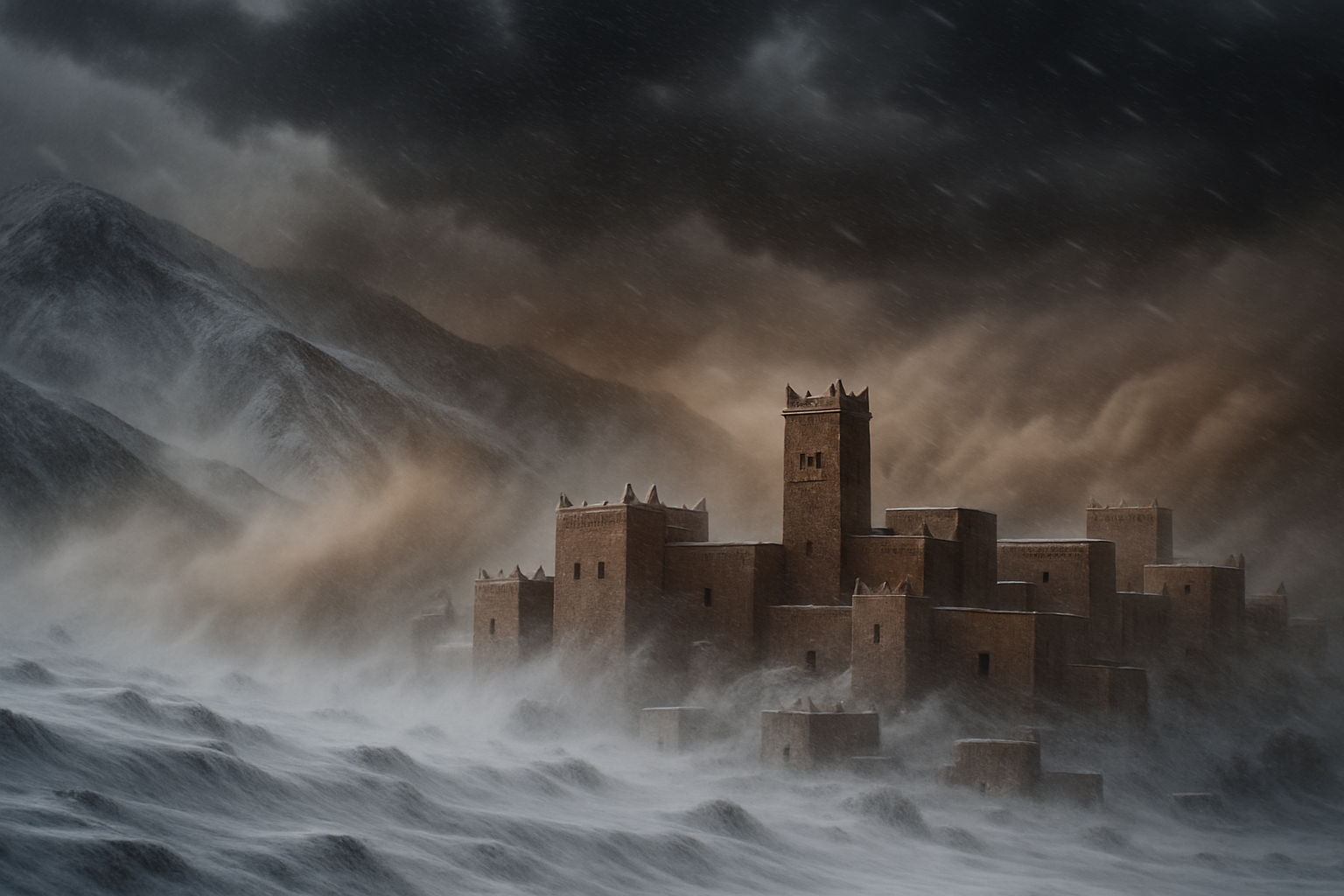
Algeria is experiencing a dangerous triple weather threat as heavy snowfall, powerful winds exceeding 100 km/h, and flooding rains simultaneously impact 15 provinces across the country, prompting urgent warnings from meteorological services and emergency responses from civil protection authorities.
The Algerian National Meteorological Office issued comprehensive warnings Monday morning as the severe weather system brought heavy snowfall to eastern mountainous regions, with accumulations continuing throughout the day. The affected provinces include Tebessa, Khenchela, Batna, Souk Ahras, Oum El Bouaghi, Guelma, Constantine, Mila, Setif, Bordj Bou Arreridj, Bouira, Skikda, Jijel, Bejaia, and Tizi Ouzou.
Unprecedented Storm System Brings Multiple Hazards
The current weather emergency represents a convergence of three distinct but related meteorological phenomena. Heavy snowfall exceeding 20 centimeters has blanketed western and central mountainous areas above 1,100 meters elevation, creating treacherous driving conditions and disrupting transportation networks. Simultaneously, thunderstorms with rainfall intensities exceeding 60 millimeters are affecting 14 provinces, raising serious flooding concerns in urban areas and agricultural regions.
Perhaps most concerning are the powerful winds exceeding 100 kilometers per hour, accompanied by dense dust storms that pose significant respiratory health risks. The combination of high winds and dust has reduced visibility to dangerous levels across multiple regions, prompting authorities to advise residents with respiratory conditions to remain indoors and take protective measures.
Civil Protection services reported early Monday that they had successfully rescued a family of four trapped by snow on National Route 30 in Bouira province, specifically in the Tizi Nkouan area of Saharidje municipality. The rescue operation highlighted the dangerous conditions created by the rapid snow accumulation on major transportation routes.
Emergency Response and Public Safety Measures
Algerian Civil Protection authorities have deployed emergency teams across the affected provinces, with particular focus on mountainous regions where snow accumulation has created the most hazardous conditions. Emergency services are maintaining heightened readiness levels and have established coordination centers to manage rescue operations and provide assistance to stranded motorists and isolated communities.
The meteorological service has advised the public to avoid unnecessary travel, particularly in mountainous areas where snow and ice have made roads extremely dangerous. Authorities are also urging residents to secure outdoor objects that could become projectiles in the high winds and to take precautions against dust exposure, especially those with pre-existing respiratory conditions.
Transportation authorities have reported significant disruptions to both road and rail networks, with several mountain passes closed temporarily due to snow accumulation and visibility concerns. Emergency shelters have been activated in affected regions to provide refuge for travelers who may become stranded by the severe conditions.
Regional Climate Pattern and Broader Context
The severe weather affecting Algeria occurs during what climate scientists describe as the 21st consecutive month of global temperatures exceeding 1.5°C above pre-industrial levels – the longest sustained warming period in recorded human history. This unprecedented warming streak has contributed to increasingly volatile weather patterns across the Mediterranean and North African regions.
Algeria has experienced multiple severe weather episodes throughout 2026, reflecting a broader pattern of climate volatility that has affected countries worldwide. Previous incidents include dangerous wind storms, flooding, and unusual temperature fluctuations that have tested the country's emergency response capabilities and infrastructure resilience.
The current triple threat demonstrates the complex challenges that arise when multiple severe weather phenomena occur simultaneously, overwhelming traditional emergency response protocols designed to handle single-type disasters. Emergency management experts note that such concurrent weather events are becoming increasingly common as global climate patterns become more volatile.
Infrastructure and Economic Impacts
The severe weather is expected to have significant impacts on Algeria's infrastructure and economy. Agricultural regions are particularly vulnerable, with heavy rainfall potentially damaging crops and flooding farmland, while snow and wind threaten livestock operations in mountainous areas. The timing of the storm system coincides with critical agricultural seasons, potentially affecting food production and rural livelihoods.
Transportation infrastructure is under severe strain, with road closures affecting commerce and emergency services access to remote areas. The combination of snow, wind, and dust creates particularly challenging conditions for aviation, with airports monitoring conditions closely and implementing safety protocols for aircraft operations.
Energy infrastructure faces pressure from high winds that can damage transmission lines, while heating demands increase due to cold temperatures in snow-affected areas. Power companies have positioned crews strategically to respond quickly to outages and maintain essential services during the emergency.
Public Health Considerations
Health authorities have issued specific warnings regarding the dust storms accompanying the severe weather system. The combination of high winds and dust poses respiratory risks, particularly for individuals with asthma, chronic obstructive pulmonary disease, or other breathing difficulties. Medical facilities in affected areas have been advised to prepare for potential increases in respiratory-related emergency visits.
The cold conditions in snow-affected regions also present hypothermia risks, especially for vulnerable populations including the elderly and those without adequate heating. Emergency services are conducting welfare checks in isolated areas and ensuring that emergency shelters have sufficient capacity and supplies to support displaced residents.
Water safety concerns have emerged in areas experiencing heavy rainfall, as flash flooding can contaminate water supplies and create breeding conditions for waterborne diseases. Public health officials are monitoring water quality in affected areas and providing guidance on water purification measures where necessary.
Looking Ahead: Recovery and Preparedness
As Algeria continues to manage the immediate emergency response, attention is also focusing on recovery planning and future preparedness. The concurrent nature of the current weather crisis – combining snow, wind, rain, and dust storms – provides important lessons for emergency management protocols and infrastructure design.
Weather forecasters indicate that the severe conditions may persist through Tuesday, with authorities maintaining high alert levels and continuing emergency operations. Recovery efforts will likely extend well beyond the immediate weather event, particularly in areas where infrastructure damage has occurred or where agricultural losses require assessment and support.
The incident adds to a growing body of evidence demonstrating the need for enhanced climate adaptation strategies across North Africa and the Mediterranean region. As extreme weather events become more frequent and complex, countries are recognizing the importance of building resilient infrastructure and emergency response capabilities designed to handle multiple simultaneous hazards.
Emergency management experts emphasize that the successful rescue operations and coordinated response to the current crisis demonstrate Algeria's improving capacity to manage severe weather events. However, they also note that the increasing frequency and intensity of such events require continued investment in early warning systems, emergency preparedness, and climate-resilient infrastructure to protect communities and economic activities.