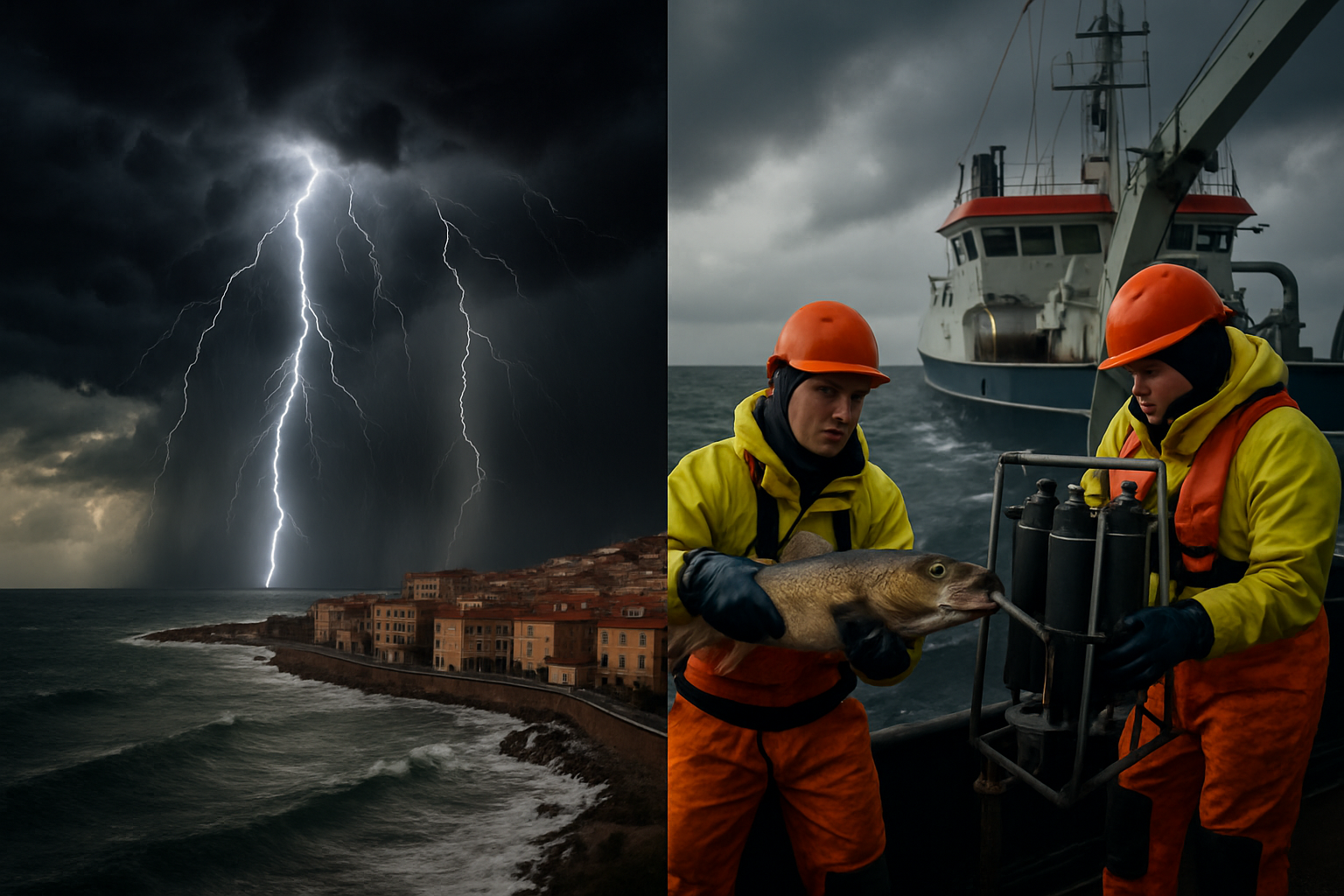
Algeria's meteorological services issued urgent warnings for severe thunderstorms across 33 provinces while Swedish marine biologists delivered surprising findings about Baltic Sea cod health, highlighting the complex environmental challenges and recoveries occurring during what may become the 24th consecutive month of global temperatures exceeding 1.5°C above pre-industrial levels.
The Algeria National Meteorological Service warned of dangerous thunderstorms continuing throughout Saturday, with the severe weather system expected to persist until 9 PM local time. The affected provinces span much of the country's northern regions, including Tlemcen, Ain Temouchent, Oran, Mostaganem, Chlef, Tipaza, El Naama, Saida, Sidi Bel Abbes, Mascara, Ghilizane, Tissemseelt, Tiaret, El Bayadh, Ain Defla, Medea, Blida, and Bouira.
Severe Weather Threatens Infrastructure
Additional thunderstorm warnings extend to provinces beginning from midday, with meteorological officials cautioning residents about potential infrastructure damage and transportation disruptions. The severe weather system represents part of broader atmospheric instability affecting North Africa and the Mediterranean region during unprecedented global climate conditions.
Algeria's Civil Protection services have been conducting multiple rescue operations during similar weather events in recent months, including families trapped by heavy snow and flash flooding in mountainous regions. The current thunderstorm warnings follow a pattern of increasingly volatile weather affecting the region throughout 2026.
Baltic Sea Cod Research Offers Hope
Meanwhile, researchers at Linnaeus University in Kalmar have provided more optimistic findings about Baltic Sea cod health than previously documented. Doctoral student Marc Hauber's study examining vital vitamins in Baltic cod populations found less severe nutritional deficiencies than earlier research suggested, offering hope for the beleaguered fish species.
The research represents a crucial development for Baltic Sea marine ecosystems, which have faced mounting pressure from climate change, pollution, and overfishing. Baltic cod populations serve as critical indicators of marine ecosystem health in one of Europe's most economically important bodies of water.

Global Climate Context
These environmental developments occur during Earth's most challenging climate period in recorded history, with January 2026 marking the hottest month ever documented. The sustained warming streak has completely overridden natural climate variability, including La Niña cooling effects that typically moderate global temperatures.
The World Meteorological Organization projects a 50-60% probability of El Niño development between July and September 2026, potentially driving temperatures into unprecedented territory through the combination of baseline warming and natural cycle amplification. This climate volatility paradox enables both record heat and devastating regional extremes through disrupted atmospheric circulation patterns.
Environmental Protection as Economic Strategy
The mixed environmental news from Algeria and Sweden demonstrates how environmental protection increasingly functions as economic development strategy rather than regulatory burden. Countries implementing comprehensive environmental monitoring and protection consistently show greater economic resilience and attract sustainable investment across multiple sectors.
Baltic Sea marine research enhances Sweden's environmental credentials and supports the country's position as a leader in sustainable marine resource management. Similarly, Algeria's sophisticated meteorological monitoring systems help protect agricultural productivity and tourism infrastructure from extreme weather impacts.
"The contrast between severe weather warnings in North Africa and positive marine research findings in Northern Europe illustrates the complex regional variations within global environmental challenges."
— Environmental Systems Analysis, April 2026
Technology and Traditional Knowledge Integration
Both Algeria's weather monitoring and Sweden's marine research demonstrate the sophisticated synthesis of cutting-edge technology with traditional ecological knowledge that characterizes effective modern environmental management. Advanced satellite monitoring, environmental DNA sampling, and AI-powered analysis combine with generations of local environmental expertise to create comprehensive frameworks for understanding and responding to environmental change.
This technology-tradition integration represents a fundamental evolution in environmental protection methodology, moving beyond purely technological or traditional approaches toward comprehensive frameworks that combine scientific rigor with cultural sensitivity and community engagement.
International Cooperation Essential
Environmental challenges increasingly transcend national boundaries through atmospheric systems, ocean currents, and species migrations that connect ecosystems globally. The success of both weather preparedness systems and marine conservation efforts requires unprecedented international cooperation, enhanced coordination, and innovative financing mechanisms that recognize environmental protection as essential infrastructure.
Knowledge sharing creates global networks that strengthen local capacity while contributing to planetary sustainability. The diversity of approaches—from North African meteorological monitoring to Nordic marine research—provides resilience against single-solution dependencies while offering multiple adaptation pathways for complex environmental challenges.
Critical Action Window
Environmental scientists warn that the window for effective climate action continues to narrow as ecological systems approach critical thresholds that could trigger potentially irreversible changes affecting global food security, climate stability, and human settlements. The choice between reactive crisis management and proactive ecosystem service management becomes increasingly critical during this decisive climate action decade.
Current conditions provide a preview of what may become routine in the 2030s without comprehensive climate adaptation investment. The tools, knowledge, and cooperation frameworks exist for comprehensive environmental protection, but success depends on unprecedented speed of coordination and sustained international cooperation during Earth's most environmentally challenging period in recorded history.
Strategic Significance
The convergence of severe weather preparedness challenges in Algeria and positive marine research developments in Sweden encapsulates the complex environmental moment facing humanity in April 2026. While some regions battle immediate extreme weather threats, others document signs of ecosystem resilience and recovery, demonstrating that coordinated environmental action can yield positive results even during unprecedented global climate stress.
These developments potentially influence environmental protection approaches for decades ahead, providing templates for scaling successful monitoring and research programs globally while building the adaptive capacity necessary to maintain planetary habitability during the most environmentally challenging period in recorded history.