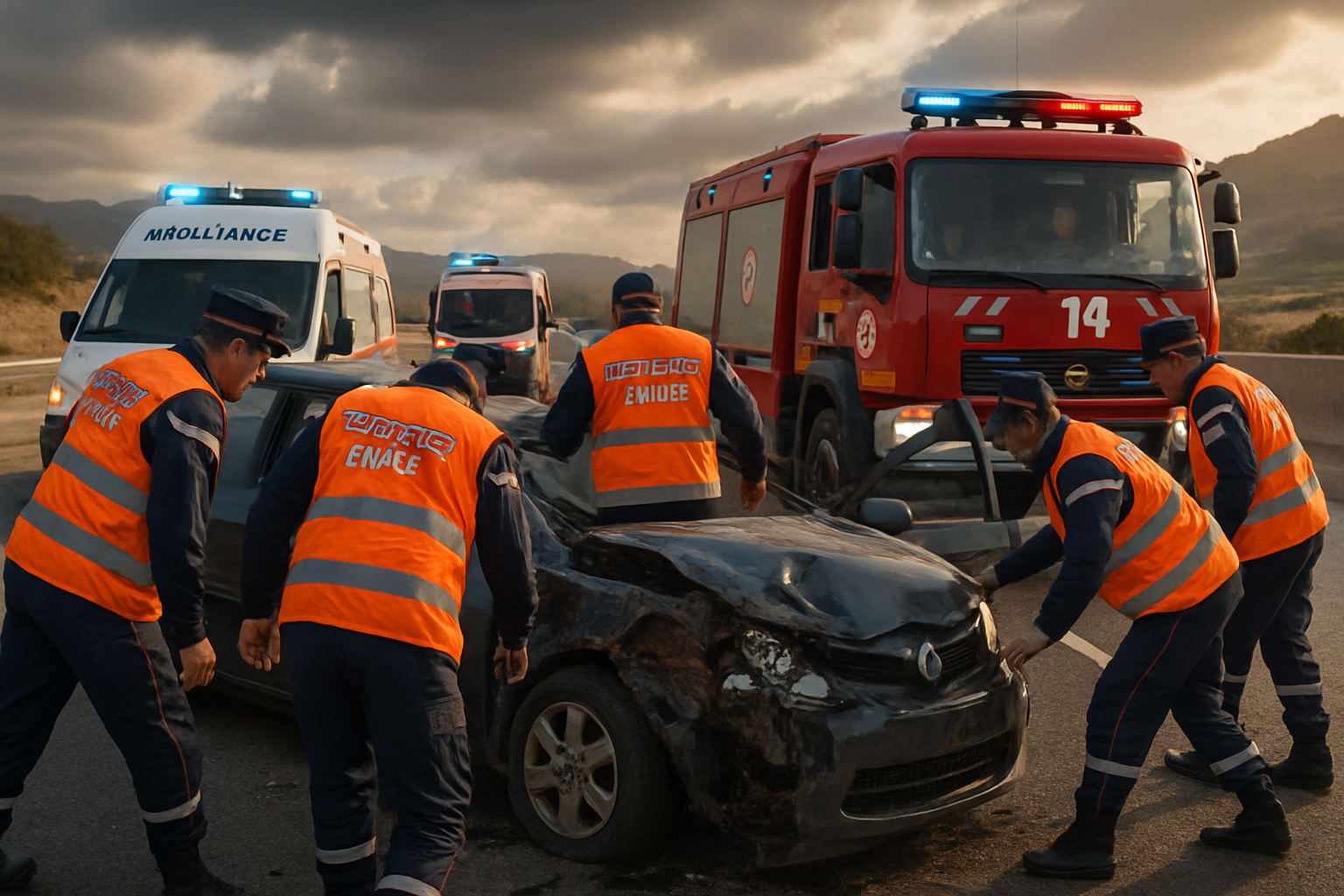
Algeria's General Directorate of Civil Protection reported 21 casualties from traffic accidents and gas incidents across multiple provinces within a 24-hour period on April 18, 2026, reflecting the ongoing domestic safety challenges that have plagued the North African nation throughout 2026.
According to official statements from the civil protection services, the incidents occurred across several provinces including Oum El Bouaghi, Bouira, and Ouargla, resulting in 3 traffic fatalities and 18 gas-related casualties. The emergency response required 2,639 interventions nationwide, averaging one emergency call every 32 seconds.
Traffic Accidents Claim Three Lives
Civil protection services recorded 167 traffic-related interventions during the reporting period, resulting in 3 deaths and 204 injuries across various provinces. The most serious incident occurred in Bouira province, where a passenger bus carrying 11 people veered off the provincial road near Lakhdaria municipality early Saturday morning at approximately 5:40 AM.
The bus accident on Provincial Road 02, heading from Lakhdaria toward Boukram, resulted in 3 injuries when the vehicle deviated from its course. Emergency responders from the Bouderbal sector unit arrived quickly at the scene to provide medical assistance and transport the injured to local medical facilities.
The Bouira incident reflects a concerning pattern of transportation safety challenges that have affected Algeria throughout 2026. Previous investigations by Planet News documented that Algeria suffered some of the heaviest casualties during the global transportation crisis, with 16 deaths and 367 injuries recorded in a 48-hour period in February 2026.
Carbon Monoxide Poisoning Affects Multiple Families
Gas-related incidents dominated the casualty reports, with 6 separate interventions resulting in 18 hospitalizations across the country. No fatalities were reported from gas exposure, though several victims required immediate medical attention for carbon monoxide poisoning symptoms.
"The incidents highlight the persistent dangers of poorly ventilated gas appliances, particularly water heaters, in residential settings."
— General Directorate of Civil Protection
In Oum El Bouaghi province, civil protection services responded to a family emergency in the "194 Housing" district of Oum El Bouaghi municipality Saturday morning. Six family members, ranging in age from 9 to 46 years, suffered carbon monoxide poisoning from a malfunctioning water heater. All victims experienced breathing difficulties and nausea before being transported to the local hospital.
A separate incident in Ouargla province affected three family members - a 45-year-old woman and two children aged 2 and 5 years - who were poisoned by carbon monoxide emissions from their residential water heater on Si Al-Hawas Street. Emergency responders quickly transported the family to medical facilities after they exhibited symptoms of respiratory distress.
Broader Context of Algeria's Safety Crisis
These latest incidents occur within the context of Algeria's ongoing struggle with domestic safety infrastructure, which has been documented extensively throughout 2026. Memory records from Planet News investigations show that Algeria has experienced repeated traffic and gas safety emergencies as part of a broader global transportation and infrastructure crisis.
The country has been particularly affected by what experts describe as the "22nd consecutive month" of global temperatures exceeding 1.5°C above pre-industrial levels, creating operational conditions that transportation networks and domestic infrastructure were never designed to handle. This climate volatility has contributed to infrastructure vulnerabilities across multiple sectors.
Emergency Response Capabilities
Despite the frequency of incidents, Algeria's civil protection services demonstrated effective emergency response coordination. The 2,639 interventions conducted within 24 hours represent a significant operational capacity, with emergency teams maintaining rapid response times across the country's diverse geographic regions.
The civil protection services have developed specialized protocols for both traffic accidents and gas poisoning incidents, including coordination between ambulance services, fire departments, and specialized rescue units. However, prevention remains the critical challenge, particularly in addressing the root causes of both traffic safety and household gas safety issues.
Prevention and Safety Measures
Safety experts emphasize that both traffic accidents and carbon monoxide poisoning incidents are largely preventable through proper safety measures and public education. For gas safety, this includes regular maintenance of heating appliances, proper ventilation systems, and installation of carbon monoxide detectors in homes.
Traffic safety improvements require comprehensive approaches including infrastructure upgrades, enhanced driver education, better vehicle maintenance standards, and improved emergency response coordination. International models such as Sweden's Vision Zero approach and the Netherlands' Safe System methodology have demonstrated significant success in reducing traffic fatalities through systematic safety improvements.
Looking Forward
As Algeria continues to address these domestic safety challenges, the April 18 incidents serve as a reminder of the urgent need for comprehensive prevention strategies. The country's emergency response capabilities remain robust, but addressing the underlying causes of traffic accidents and household gas poisoning requires sustained investment in infrastructure, education, and safety protocols.
The incidents also highlight the importance of international cooperation in addressing global safety challenges. As countries worldwide face similar infrastructure and safety pressures amid climate change and urbanization, sharing best practices and coordinated response strategies becomes increasingly critical for protecting civilian populations.