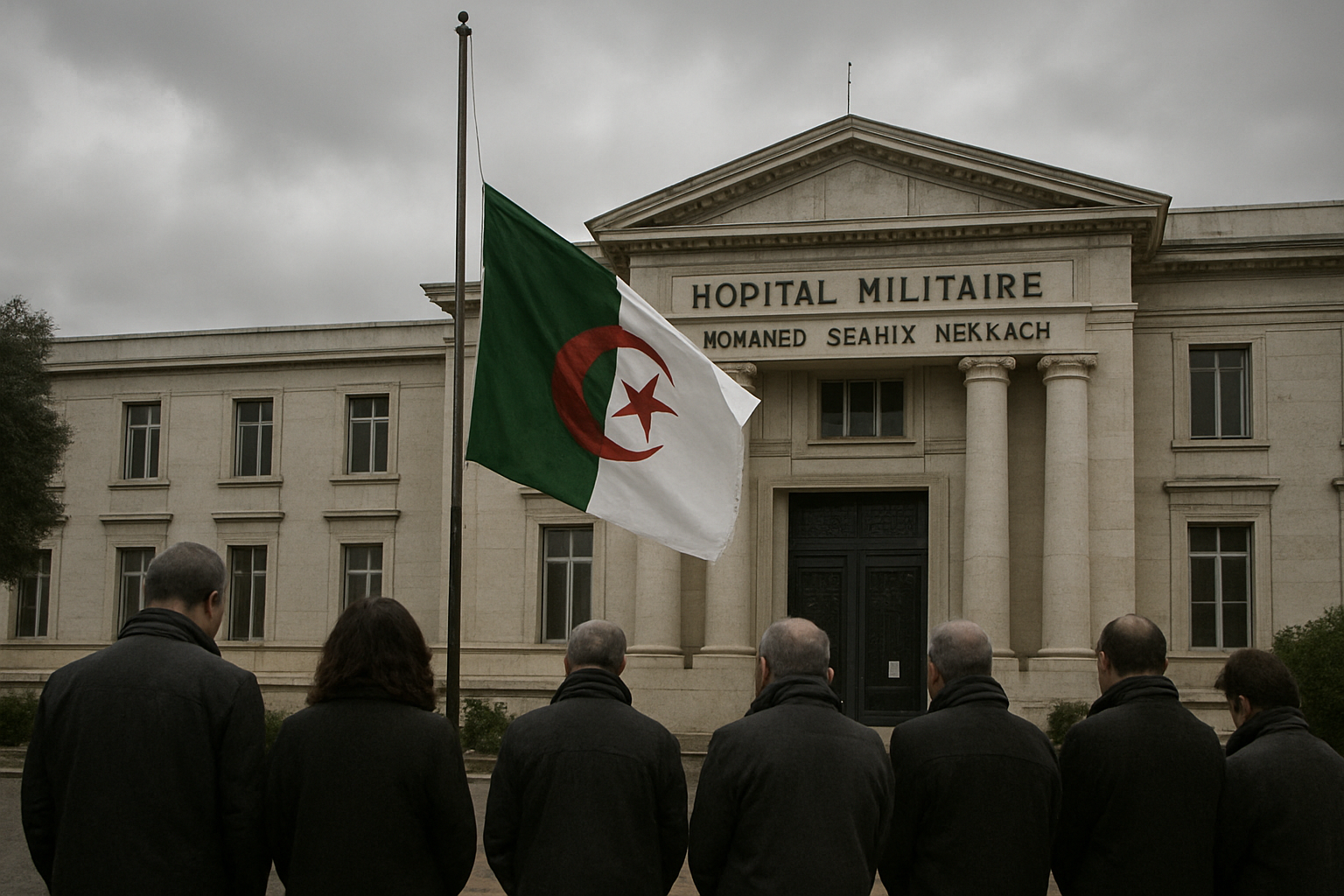
Liamine Zeroual, Algeria's former president who steered the nation through one of its most challenging periods in modern history, died Saturday evening at the age of 85 following a prolonged illness. The Algerian government has declared three days of national mourning with flags flying at half-mast across all territories and diplomatic missions abroad.
The former head of state passed away at the Mohamed Seghir Nekkach Military Hospital in Algiers, where he had been receiving treatment in recent weeks. His death marks the end of an era for Algeria, as Zeroual represented a crucial link between the country's independence struggle generation and its modern state-building efforts.
A Life Shaped by Revolutionary Struggle
Born on July 3, 1941, in Batna in northeastern Algeria, Zeroual's early life was deeply intertwined with his country's fight for independence from French colonial rule. At just 16 years old, he made the momentous decision to leave his studies and join the National Liberation Army (ALN) in 1957, becoming part of the armed resistance that would eventually secure Algeria's freedom in 1962.
His military service during the independence war earned him the revered title of "mujahid" (freedom fighter), a designation that carried profound respect throughout Algerian society and connected him directly to the founding generation of modern Algeria. This background would prove instrumental in establishing his political legitimacy during later turbulent periods.
Following independence, Zeroual pursued advanced military training that took him to the Soviet Union and later to the French Military Academy in 1974. He subsequently served in various positions within the National People's Army, eventually rising to command the military academy, where he helped shape a new generation of Algerian military leaders.
Leadership During the "Décennie Noire"
Zeroual's presidency from 1994 to 1999 coincided with what became known as Algeria's "décennie noire" (black decade), a period marked by devastating civil conflict between government forces and Islamist insurgents. As Le Monde described, he was "a military man propelled to the summit of power by his peers" who "led Algeria through pain during the bloody civil war that opposed the army against Islamist maquis in the 1990s."
The conflict, which began following the military's intervention to cancel the 1991 elections that Islamist parties were poised to win, resulted in an estimated 200,000 deaths and fundamentally altered Algerian society. Zeroual's unique credentials as both an independence war veteran and professional military officer provided him with the authority needed to navigate this unprecedented crisis.
"He served as president during a critical 1990s transition period when the country faced significant political and security challenges. His background as both independence fighter and professional military officer provided unique credentials for navigating complex governance challenges during a turbulent era."
— Political Analysis from Historical Records
During his tenure, Zeroual attempted to balance military necessity with political reconciliation, seeking to restore civilian governance while maintaining security. His administration worked to isolate extremist elements while engaging with moderate opposition groups, though the period remained marked by significant violence and social upheaval.
National and International Tributes
The announcement of Zeroual's death prompted an outpouring of tributes from across Algeria's political spectrum, demonstrating his role as a unifying figure who transcended partisan divisions. The National Liberation Front (FLN) described him as among "Algeria's loyal men" from the first generation who devoted themselves to serving the country, praising his "sincere patriotism and wisdom during a delicate period."
The Future Front Party called his death a "national tragedy affecting the memory of the Algerian nation," highlighting his qualities of "honesty, loyalty, humility, and wisdom" as part of the Liberation War generation. Even opposition parties acknowledged his contribution to national stability during one of Algeria's most challenging periods.
Government officials across various levels paid their respects. Minister of Culture and Arts Malika Bendouda stated that Algeria had "lost one of its faithful men," while the Governor of Blida Province, Jamal Eddine Hossahas, extended condolences "in his own name and on behalf of the citizens, executives, and employees of the province."
Impact on Contemporary Algeria
The immediate response to Zeroual's death reflected its broader significance for Algerian society. The Professional Football League announced the postponement of major matches, including the highly anticipated derby between Mouloudia Alger and Union of the Capital, originally scheduled for Monday. Additional matches involving Atlético Paradou against Chabab Belouizdad and Jeunesse Kabylie against Najm Ben Aknoun were also delayed as a mark of respect.
These sporting postponements, while seemingly minor, illustrate how Zeroual's legacy continued to resonate across all aspects of Algerian life. His death came at a time when Algeria continues to grapple with questions about democratic governance, economic development, and its role in North African regional affairs.
Historical Legacy and Broader Context
Zeroual's passing occurs within a broader North African context that highlights the complex trajectories of post-independence state-building experiences. His career embodied the challenges faced by many African nations in transitioning from liberation movements to functioning modern states while managing internal conflicts and external pressures.
The designation of three days of national mourning with flags at half-mast across all Algerian territory and diplomatic missions abroad reflects official recognition of his dual legacy as both an independence fighter and later political leader. This mourning period acknowledges the special place held by the "mujahid" generation in Algerian society and their role in establishing national sovereignty.
"Zeroual represents the connection between Algeria's founding independence struggle generation and modern state development. His death marks the passing of another prominent member of the independence generation who fought to establish national sovereignty and later worked to build institutions of the modern Algerian state."
— Analysis from Regional Observers
Regional and Continental Implications
The timing of Zeroual's death comes as North Africa continues to navigate complex political transitions and regional security challenges. Algeria's historical experiences during the 1990s, including the approaches taken during Zeroual's presidency, continue to inform contemporary debates about democratic governance, civil-military relations, and conflict resolution across the region.
His death prompts reflection on the revolutionary heritage versus contemporary democratic and economic aspirations that characterize much of North Africa today. The lessons learned from Algeria's experience during the "décennie noire" remain relevant for understanding current regional dynamics and the ongoing challenges of post-colonial state consolidation.
A Legacy of Service and Sacrifice
As Algeria prepares for the funeral arrangements and memorial services expected to draw thousands of mourners, Zeroual's life story serves as a reminder of the complex journey from revolutionary struggle to state-building that has characterized much of Africa's post-independence experience.
His trajectory from a young student who abandoned his education to join the liberation struggle, through military training and service, to ultimately assuming the presidency during one of Algeria's most challenging periods, embodies the dramatic transformations that have shaped modern Algerian history.
The cross-party respect demonstrated in the wake of his death suggests that despite the political divisions that continue to characterize Algerian politics, there remains recognition of those who served during the country's most formative periods. Zeroual's legacy connects the founding independence struggle to modern state institution building, bridging different phases of Algeria's complex historical development.
As the nation observes three days of mourning, Zeroual's death marks not just the loss of a former president, but the passing of another link to the generation that secured Algeria's independence and struggled to build the institutions of modern statehood amid extraordinary challenges. His life and service remain part of the ongoing story of Algeria's evolution as a sovereign nation navigating the complexities of the contemporary world while honoring its revolutionary heritage.