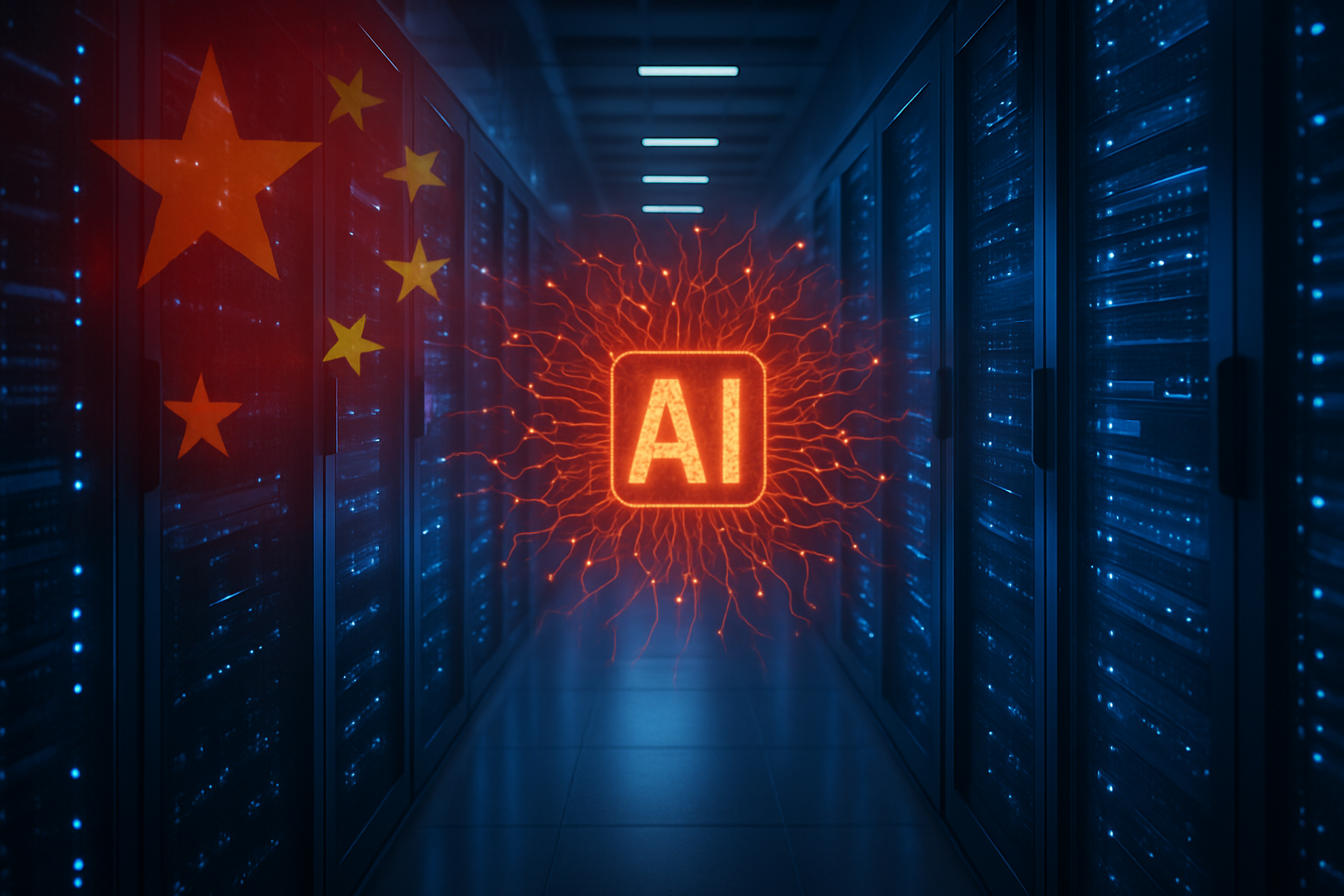
Alibaba Cloud's Qwen family of artificial intelligence models has captured more than 50% of global open-source AI model downloads as of March 2026, reaching nearly 1 billion cumulative downloads following the release of its Qwen 3.5 model series, according to a comprehensive new report that underscores China's dominance in the rapidly evolving AI landscape.
The remarkable achievement positions Alibaba's Qwen models far ahead of major competitors including Meta Platforms' Llama series and China's own DeepSeek platform, marking a pivotal moment in what industry experts are calling the "March 2026 Critical AI Inflection Point" – the transition of artificial intelligence from experimental technology to essential global infrastructure.
Unprecedented Market Leadership
The South China Morning Post report reveals that Qwen's dominance extends beyond mere download numbers, representing a fundamental shift in global AI development patterns. While American companies like OpenAI and Nvidia continue to make significant gains in proprietary AI systems, China's strategic emphasis on open-source models is reshaping how developers worldwide access and deploy advanced AI capabilities.
This success builds on extensive historical context documented throughout 2026, when China's comprehensive AI strategy began demonstrating measurable results. In March, Alibaba Chairman Joe Tsai attributed China's AI competitive edge to three strategic advantages: superior power grid infrastructure providing stable energy for massive AI computational requirements, strategic commitment to open-source AI models enabling collaborative development, and complete domestic manufacturing supply chains reducing vulnerability to geopolitical disruptions.
"In technology, standing still means falling behind. Our success with Qwen demonstrates that open-source approaches can drive innovation faster than proprietary systems."
— Eddie Wu Yongming, Alibaba CEO
Strategic Infrastructure Advantages
China's AI infrastructure advantage has proven crucial during the global semiconductor crisis that has driven memory chip prices sixfold higher, affecting Samsung, SK Hynix, and Micron operations. The crisis, expected to continue until 2027 when new fabrication facilities come online, has paradoxically spurred innovation in memory-efficient algorithms and sustainable deployment strategies that China has effectively leveraged.
The World Bank projects that AI water demand could reach 4.2-6.6 billion cubic meters annually by 2027 for data center cooling – equivalent to four to six times Denmark's annual water consumption. China's proactive electrical grid modernization has positioned it advantageously to meet these massive energy demands while competitors struggle with infrastructure constraints.
This foundational approach contrasts sharply with the massive financial commitments from Western competitors, including Alphabet's $185 billion AI infrastructure investment in 2026 (the largest single-year corporate tech investment in history) and Amazon's $1+ trillion development plans. Despite these enormous investments, China's systematic infrastructure-first strategy appears to be delivering more sustainable competitive advantages.
Global Competition and Market Dynamics
The Qwen family's success comes during what analysts term the "SaaSpocalypse" – the elimination of hundreds of billions in traditional software market capitalization as AI demonstrates direct replacement capabilities for conventional solutions. Microsoft's Chief AI Officer Mustafa Suleyman has predicted that AI could replace the majority of office workers within two years, with lawyers and auditors facing automation within 18 months.
China's approach differs significantly from Western competitors by emphasizing collaborative development through open-source models rather than proprietary systems. This strategy aligns with technological sovereignty goals outlined in China's "AI Plus" 15th Five-Year Plan national priority, which emphasizes "safe and orderly development" while maintaining competitive advantages in global markets.
The demographic drivers behind China's AI push cannot be understated. The country faces the "4-2-1 problem," where single children must support four aging parents and grandparents due to historical population control policies. This demographic pressure has created urgent demand for AI productivity solutions, with China installing more than 50% of the world's robots in 2024 and companies like Unitree Robotics scaling humanoid production from 5,500 to over 20,000 units in 2026.
International Implications and Governance
The success of Chinese AI models has prompted significant international response. The United Nations established an Independent Scientific Panel of 40 experts under Secretary-General António Guterres – the first fully independent international AI assessment body. Spain implemented the world's first criminal executive liability framework for tech platforms, while France has conducted AI cybercrime raids, representing the most sophisticated global technology governance efforts since internet commercialization.
European responses have included Germany's Deutsche Telekom opening an "Industrial AI Cloud" in Munich with NVIDIA partnership for European AI sovereignty, while Switzerland advocates open-source solutions for technological autonomy. These efforts reflect broader concerns about the concentration of AI capabilities and the need for multipolar development to prevent single-entity dominance.
Successful human-centered AI integration models have emerged globally, including Canadian AI teaching assistants that maintain critical thinking standards, Malaysia's world-first AI-integrated Islamic school, and Singapore's WonderBot 2.0 heritage education success. These examples demonstrate that AI implementation can enhance rather than replace human capabilities when deployed thoughtfully.
Future Trajectory and Challenges
The February 2026 AI Impact Summit in New Delhi – the first major AI conference in the Global South – saw 250,000+ delegates from over 100 countries sign the Delhi Declaration, the largest AI diplomatic agreement in history. Prime Minister Modi's "People, Planet, Progress" framework positioned India as a bridge between advanced and developing economies, but China's Qwen success demonstrates how technological leadership can shift rapidly in the AI era.
Industry experts characterize April 2026 as a "civilizational choice point" where decisions about AI governance, infrastructure development, and international cooperation will establish decades-long human-AI relationship patterns. The success of models like Qwen raises critical questions about ensuring AI serves democratic values and human flourishing rather than becoming tools for surveillance or control.
The convergence of supply chain constraints, regulatory intensification, massive investments, and international cooperation requirements creates unprecedented coordination challenges. China's infrastructure-first approach, combined with its open-source strategy and manufacturing capabilities, may provide more sustainable advantages than the purely financial investments characterizing Western responses.
Implications for Global AI Development
The Qwen family's dominance represents more than market success – it signals a fundamental shift toward multipolar AI development that challenges the traditional Silicon Valley-centered narrative of technological innovation. China's comprehensive approach combines infrastructure investment, collaborative development models, and manufacturing capabilities to create systematic competitive advantages during a critical transition period.
As AI transitions from experimental to essential infrastructure across all sectors, the success of open-source models like Qwen suggests that collaborative approaches may outperform proprietary systems in driving global adoption and innovation. This has profound implications for how nations and companies approach AI development, regulation, and international cooperation in an increasingly AI-dependent world.
The window for effective coordinated action is narrowing rapidly as AI development accelerates. The success of Alibaba's Qwen models demonstrates that technological leadership can emerge from systematic, infrastructure-focused strategies rather than isolated breakthroughs, providing a template for sustainable AI development that other nations and companies are likely to study and adapt as the AI revolution continues to reshape the global economy and society.