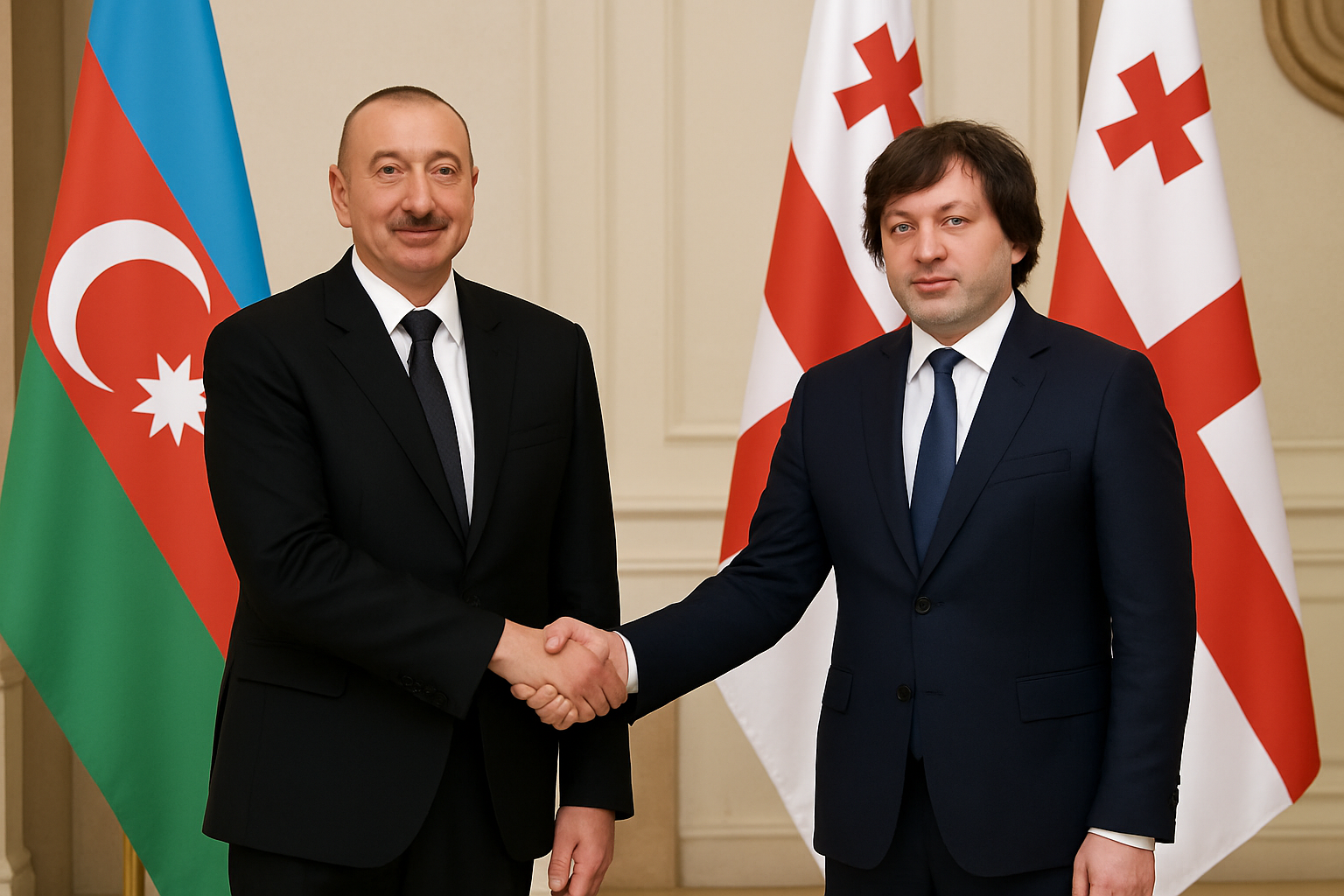
Azerbaijan President Ilham Aliyev's high-level visit to Georgia on April 6, 2026, marked a significant milestone in bilateral relations, with comprehensive meetings reinforcing the strategic partnership between the two South Caucasus neighbors that serves as a crucial bridge between Europe and Asia.
The visit featured extensive discussions between President Aliyev and Georgian Prime Minister Irakli Kobakhidze, including both one-on-one and expanded meetings that addressed key areas of regional cooperation. The diplomatic engagement culminated in joint press statements highlighting the commitment to deepening bilateral ties across multiple sectors.
Strategic Partnership Deepening
Prime Minister Kobakhidze emphasized the personal relationship between the leaders, describing President Aliyev as "a valued friend of Georgia" during the visit. This characterization reflects the evolution of Azerbaijan-Georgia relations from neighboring countries to strategic partners with aligned interests in regional stability and economic development.
The meetings addressed the full spectrum of bilateral cooperation, including energy infrastructure, trade facilitation, cultural exchanges, and regional security coordination. Both leaders reaffirmed their commitment to continued dialogue and practical cooperation that benefits both nations while contributing to broader South Caucasus stability.
"Azerbaijan-Georgia relations will continue to develop confidently"
— President Ilham Aliyev
Regional Significance and European Connection
The Azerbaijan-Georgia partnership represents what diplomatic analysts describe as a "partnership that Europe depends on but rarely notices." This relationship serves as a critical energy corridor and transportation link between the Caspian region and European markets, particularly through projects like the Southern Gas Corridor and emerging Black Sea energy initiatives.
Tbilisi Mayor's statement hailing Azerbaijan ties as signaling "strategic alignment" underscores the broader regional implications of this partnership. The relationship positions both countries as key players in East-West connectivity, serving European energy security interests while maintaining strategic autonomy in their foreign policy approaches.
Cultural Diplomacy and Personal Connections
The visit also featured cultural diplomacy elements, with First Lady Mehriban Aliyeva visiting the Georgian National Museum in Tbilisi. Such cultural exchanges demonstrate the multi-faceted nature of the bilateral relationship, extending beyond government-to-government cooperation to include academic, cultural, and civil society connections.
These cultural dimensions help build sustainable foundations for long-term partnership, creating people-to-people connections that transcend political cycles and contribute to regional stability through deeper mutual understanding.
Historical Context and Strategic Evolution
The April 2026 visit builds upon decades of post-Soviet cooperation between Azerbaijan and Georgia, but occurs within a significantly transformed regional context. Both countries have pursued European integration aspirations while maintaining balanced relationships with various international partners, creating a model for strategic autonomy in the South Caucasus.
Recent developments in the region, including Azerbaijan's strategic partnerships with the United States and ongoing energy cooperation with European partners, position the Azerbaijan-Georgia relationship as increasingly valuable for regional stability. Georgia's role as a transit country and Azerbaijan's position as an energy coordinator create natural complementary interests.
Economic and Energy Cooperation
The partnership encompasses significant economic dimensions, particularly in energy infrastructure and transportation corridors. Azerbaijan's position as a key regional energy coordinator, recognized by the US Chamber of Commerce, aligns with Georgia's role as a crucial transit country for Caspian energy resources reaching European markets.
Current trade relationships, while substantial, have expansion potential as both countries diversify their economic partnerships. The strategic location of both nations creates opportunities for serving as bridges between different economic regions, from Central Asia to Europe and the Middle East.
Multilateral Framework Integration
The bilateral partnership operates within broader multilateral frameworks, including regional cooperation initiatives and international energy projects. The Southern Gas Corridor exemplifies how bilateral cooperation serves broader international interests in energy diversification and regional connectivity.
Both countries participate in various regional initiatives while maintaining their bilateral relationship as a cornerstone of their foreign policy approaches. This demonstrates how effective bilateral partnerships can complement and strengthen multilateral cooperation rather than competing with it.
Future Prospects and Implementation
The success of the April 2026 meetings will be measured by the implementation of agreements reached and the continued deepening of practical cooperation. Both countries face challenges in balancing their European aspirations with regional realities, making their partnership increasingly important for navigating complex geopolitical environments.
The visit establishes frameworks for regular consultations and technical cooperation that should provide continuity across political cycles. The institutionalization of cooperation through various mechanisms ensures that the strategic partnership transcends individual leadership tenures.
As the South Caucasus continues to evolve as a region of strategic importance for multiple global powers, the Azerbaijan-Georgia partnership serves as an anchor of stability and practical cooperation. The April 2026 visit reinforces this partnership while positioning both countries to address future challenges and opportunities through coordinated approaches that serve their national interests and contribute to regional stability.