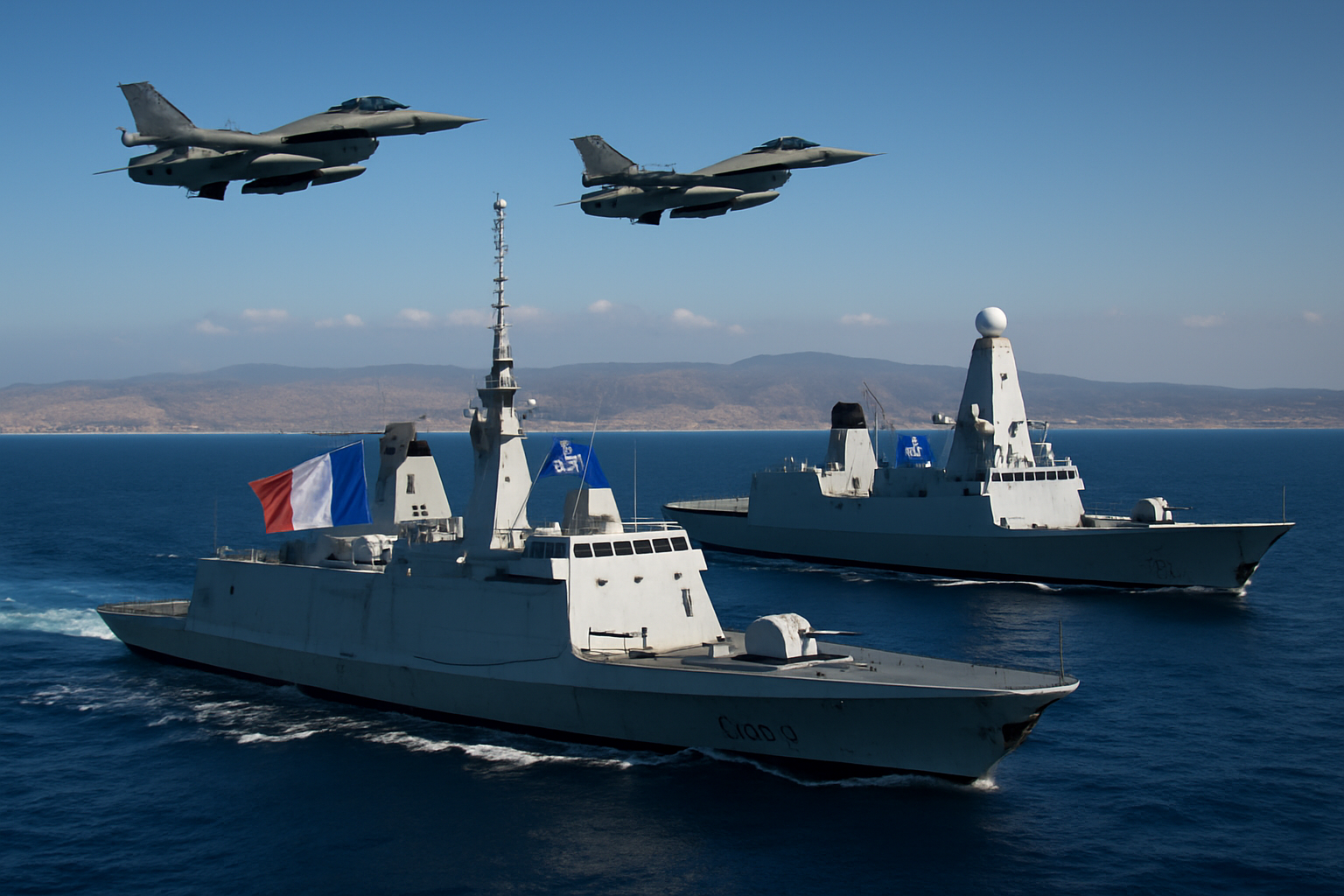
Allied forces from France, Greece, and the United Kingdom have deployed significant military assets to Cyprus following Iranian drone attacks on British sovereign bases, marking the most substantial European military mobilization in the Eastern Mediterranean since the 1974 Turkish invasion.
French President Emmanuel Macron personally communicated the decision to deploy anti-missile and anti-drone systems along with a frigate to Cypriot President Nikos Christodoulides on Tuesday morning, according to government spokesperson Konstantinos Letymbiotis. The deployment comes as part of France's commitment to regional stability under existing defense agreements.
Greek Military Response
Greece has dispatched four F-16 fighter jets and two naval frigates to Cyprus in what defense officials describe as the most significant Greek military support for Cyprus since the 1974 Turkish invasion. The Greek aircraft and vessels are providing additional defensive coverage for the island nation amid escalating regional tensions.
The Greek military deployment demonstrates the gravity of the security crisis, with Athens viewing the Iranian attacks on European territory as a direct threat to regional stability and the sovereignty of its Mediterranean ally.
British Defensive Measures
Prime Minister Sir Keir Starmer announced on Tuesday evening that the United Kingdom will deploy HMS Dragon, a Type 45 destroyer warship, to Cyprus along with two AW159 Wildcat helicopters equipped with counter-drone capabilities. The deployment represents Britain's commitment to defending its sovereign territory and the estimated 3,000 UK military personnel stationed at RAF Akrotiri and Dhekelia bases.
"The UK is fully committed to the security of Cyprus and British military personnel based there," Starmer stated. "We will always act in the interest of the UK and our allies."
The Prime Minister's announcement came after consultation with Cypriot President Christodoulides, emphasizing the coordinated nature of the international response to the Iranian threat.
Iranian Attacks on British Sovereign Territory
The military deployments follow Iranian drone strikes on RAF Akrotiri, marking the first attack on European sovereign territory since World War II during a Middle Eastern conflict. The attacks were part of Iran's broader "Operation True Promise 4" retaliation campaign following the death of Supreme Leader Ali Khamenei in U.S.-Israeli operations.
Cyprus activated its national ESTIA evacuation plan for the first time in history, evacuating Akrotiri village and closing schools in the surrounding areas including Asomatos, Episcopi, and Trachoni. The response exposed inadequacies in the island's civil defense infrastructure, with only 2,200 registered shelters capable of protecting approximately 30% of the population.
Unprecedented European Unity
The coordinated military response from three major European powers represents an unprecedented show of unity in defending European territory from Middle Eastern threats. The deployment of advanced defensive systems, including France's anti-missile technology, Greece's F-16 interceptors, and Britain's Type 45 destroyer with Sea Viper missile systems, creates a comprehensive defensive umbrella over Cyprus.
"This marks a watershed moment in European security, demonstrating that attacks on one European territory will be met with a unified response from our allies."
— European Defense Official
The military assets being deployed represent some of the most advanced defensive capabilities in NATO's arsenal. HMS Dragon's Sea Viper system is specifically designed to counter drone and missile threats, while the French anti-drone systems provide cutting-edge protection against unmanned aerial vehicles. Greece's F-16s add crucial air superiority and interception capabilities to the defensive network.
Strategic Implications
The deployment of allied forces to Cyprus signals a fundamental shift in how European nations respond to threats emanating from Middle Eastern conflicts. The attacks on British sovereign bases demonstrated that traditional geographic boundaries no longer contain regional conflicts, requiring a coordinated European response to protect territorial integrity.
Defense analysts note that the speed and scale of the military response reflects lessons learned from previous regional crises, with European allies moving quickly to demonstrate solidarity and deterrence against further attacks on European territory.
The crisis has also highlighted Cyprus's vulnerable position as a European Union member state hosting Western military assets while maintaining diplomatic independence. The island's strategic location in the Eastern Mediterranean makes it both valuable and exposed during Middle Eastern conflicts.
Regional Context
The military deployments occur against the backdrop of the most dangerous international crisis since the Cold War, following the breakdown of nuclear diplomacy between the U.S. and Iran despite achieving "broad agreement on guiding principles" in Geneva talks. The crisis has resulted in massive aviation disruptions, energy market volatility, and concerns about broader regional war.
Cyprus government officials emphasized that while the attacks targeted British bases specifically, the threat to regional stability required a coordinated international response. The deployment of allied forces serves both defensive and deterrent purposes, signaling to Iran that further attacks on European territory will face enhanced military opposition.
Future Considerations
The military deployments represent more than immediate crisis response - they establish a new template for European security cooperation in an era where Middle Eastern conflicts can directly impact European territory. The success of this coordinated approach may influence future alliance structures and defense planning across the continent.
As the crisis continues to unfold, the allied military presence in Cyprus serves as both a shield against further attacks and a symbol of European resolve in defending the continent's sovereign territory. The coming days will test whether this unprecedented show of unity can help contain the broader regional crisis or marks the beginning of a new phase in European-Middle Eastern security relations.