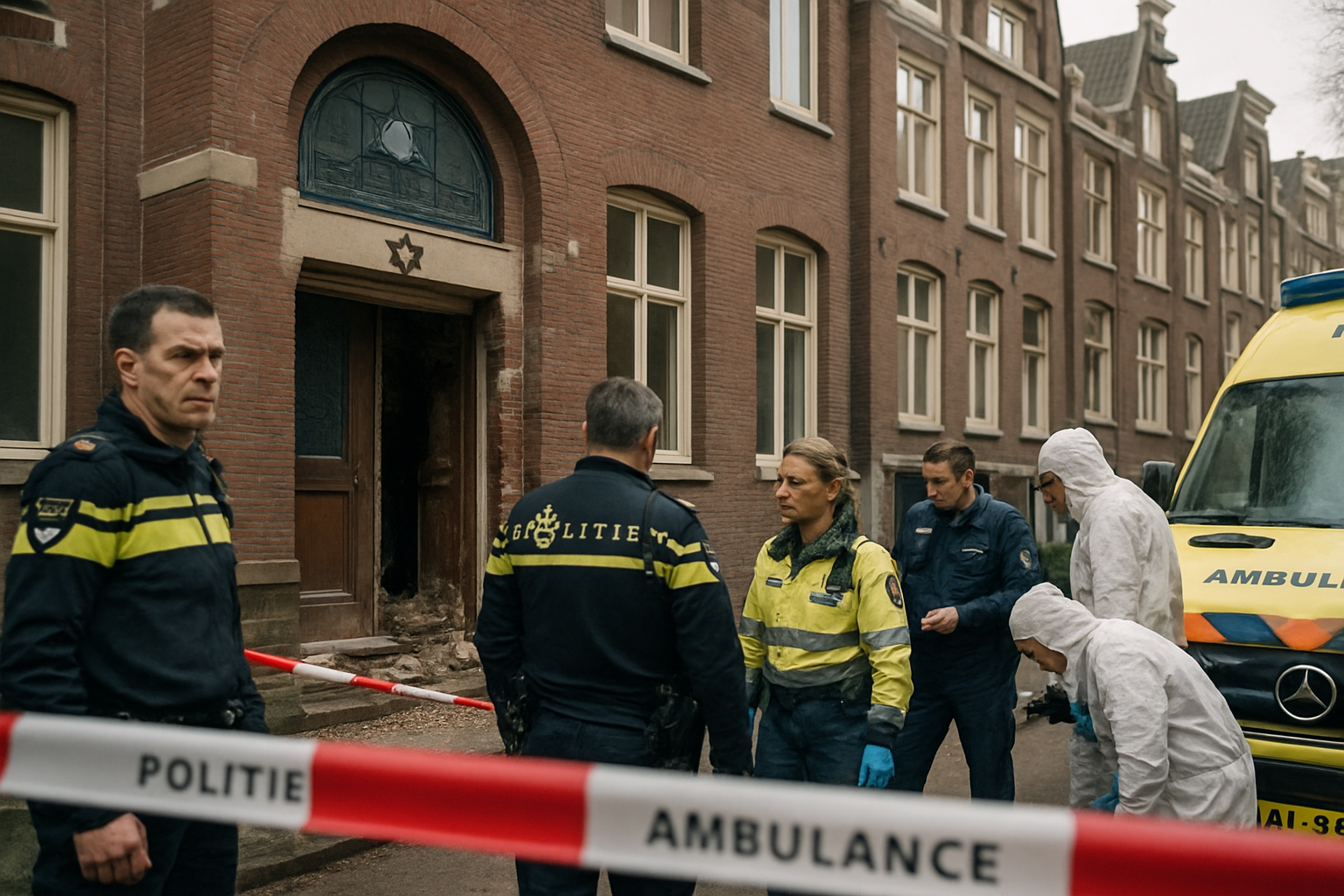
An explosion damaged a Jewish school in Amsterdam early Saturday morning, in what Mayor Femke Halsema described as a deliberate attack against the Jewish community, marking the latest in a concerning wave of antisemitic incidents sweeping across Europe.
The explosion occurred in the early hours of March 14, 2026, causing limited structural damage to the school building but sending shockwaves through Amsterdam's Jewish community and European security officials. Dutch news agency ANP first reported the incident, which has prompted an immediate police investigation and heightened security measures at Jewish institutions throughout the Netherlands.
Mayor Condemns Targeted Attack
Amsterdam Mayor Femke Halsema was unequivocal in her assessment of the explosion, telling ANP that it represented a "targeted attack on the Jewish community." While the physical damage was described as limited, the psychological impact on the community has been profound.
The timing of the attack—during weekend hours when the school was unoccupied—prevented casualties but demonstrated what security experts describe as a calculated attempt to terrorize rather than cause mass harm. This methodology has become increasingly common in antisemitic attacks across Europe, where perpetrators aim to create maximum fear while minimizing their own risk of capture.
Rising European Antisemitic Violence Pattern
The Amsterdam school explosion fits into an alarming pattern of escalating antisemitic violence across Europe that has intensified dramatically since late 2025. Recent memory from security assessments reveals this represents the seventh synagogue or Jewish institution targeted globally this month alone, indicating a coordinated or copycat pattern of attacks.
Just days earlier, on March 13, 2026, Rotterdam experienced a devastating arson attack on a synagogue, where four suspects were arrested after using both explosive devices and accelerants in a coordinated assault. The attack caused significant structural damage to the synagogue facade and doors, and police sources indicated the perpetrators may have planned to target a second Jewish house of worship before being apprehended.
The Rotterdam incident demonstrated concerning tactical sophistication, with attackers employing both explosives and accelerants—a methodology that mirrors tactics seen in other recent European incidents and shows similarities to state-sponsored terrorist training materials, according to intelligence sources.
International Context of Jewish Community Targeting
European security agencies have documented sophisticated Iranian surveillance operations targeting Jewish communities across Denmark, Germany, France, and the Netherlands. These networks employ advanced operational security, encrypted communications, and compartmentalized cells, with operations having intensified following nuclear negotiations collapse.
The wave of violence extends far beyond the Netherlands. In February 2026, a devastating attack on Temple Israel synagogue in West Bloomfield, Michigan, saw a Lebanon-born U.S. citizen crash a truck into the building during preschool hours before being fatally shot by security personnel. Large quantities of explosives found in the suspect's vehicle indicated sophisticated premeditation.
"This represents a serious challenge to religious freedom and community safety across democratic societies. The systematic targeting across multiple countries suggests coordination requiring enhanced international cooperation."
— European Security Assessment, March 2026
Dutch Security Response
Following the Amsterdam explosion, Dutch authorities have implemented enhanced security measures at Jewish institutions nationwide, including increased patrols and intelligence-led monitoring protocols. Prime Minister Mark Rutte previously condemned similar attacks as an "assault on democratic values," while Justice Minister Dilan Yeşilgöz has been treating such incidents as terrorist investigations, enabling enhanced investigative powers.
The investigation into the Amsterdam school explosion is being conducted using terrorism protocols, allowing for extended detention periods, surveillance of suspect networks, and comprehensive background checks. Dutch intelligence is conducting a thorough examination of digital evidence and exploring connections to broader networks operating across Europe.
Community Impact and Resilience
The attack has created a climate of fear within Dutch Jewish communities, with members altering daily routines and avoiding the display of religious symbols. Mental health services have been provided to those affected, while interfaith solidarity has been expressed across Amsterdam's diverse religious communities.
Despite the violence, Jewish community leaders have emphasized their determination not to be intimidated, with religious services continuing under enhanced security measures. The response mirrors that seen in other targeted communities across Europe, where resilience and community solidarity have become defining characteristics of the response to antisemitic terrorism.
Broader European Security Implications
The systematic targeting of Jewish institutions across multiple European countries represents a serious challenge to the tolerance and pluralism principles that underpin European democratic societies. The current wave of attacks may be entering a new phase characterized by greater coordination, technical sophistication, and potential state backing.
Security experts note that the combination of vehicle ramming attacks with explosive devices—as seen in recent incidents—demonstrates advanced extremist tactics requiring extensive planning and training. This evolution in methodology demands enhanced threat assessment capabilities and international cooperation among law enforcement agencies.
European intelligence agencies are working to determine whether these incidents represent isolated acts of extremism or part of a coordinated campaign with foreign backing. The sophistication of recent attacks, combined with evidence of Iranian surveillance networks targeting Jewish communities, has raised concerns about potential state-level coordination.
Investigation and Prevention Efforts
The Amsterdam explosion investigation is expected to take weeks as authorities conduct comprehensive forensic analysis and examine potential connections to other recent incidents. International cooperation protocols have been activated, with European partners sharing intelligence about suspect networks and potential foreign actor support.
The case represents a critical test of European law enforcement capabilities in prosecuting complex antisemitic terrorism while maintaining democratic principles and civil liberties. Success in these investigations will be crucial for maintaining community confidence and preventing further escalation of violence.
Enhanced security measures now in place across Jewish institutions throughout Europe reflect the serious nature of the threat, while community leaders continue to advocate for both protection and the preservation of open, tolerant societies that allow all religious communities to thrive.
As investigations continue, the Amsterdam explosion serves as a stark reminder of the ongoing challenges facing European democracies in protecting religious minorities while preserving the democratic values and freedoms that define European society.