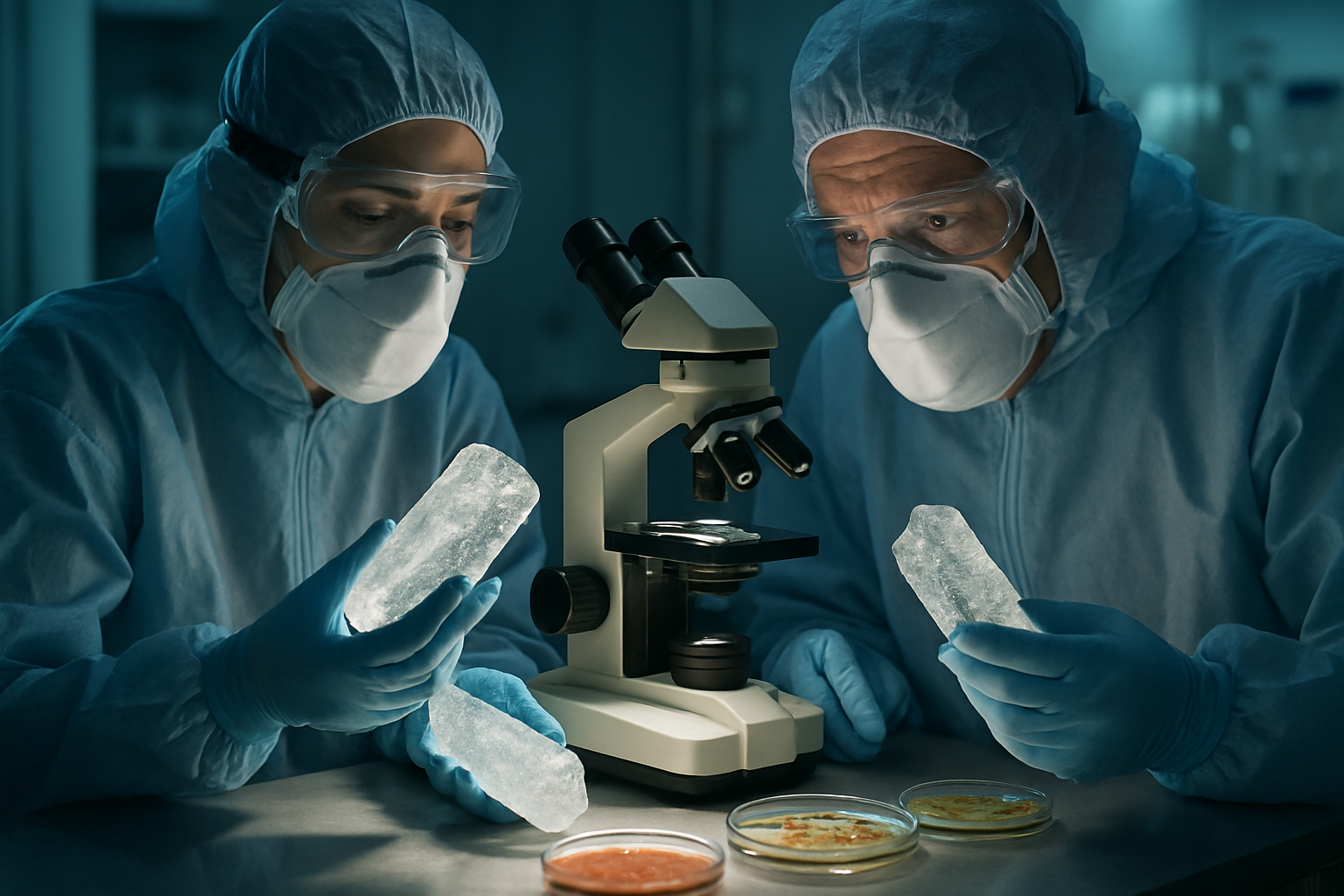
Scientists have discovered a remarkable 5,000-year-old bacterial strain from a Romanian ice cave that demonstrates resistance to multiple modern antibiotics while simultaneously showing promise as a weapon against contemporary superpathogens, according to groundbreaking research published in Frontiers in Microbiology.
The bacterium, designated Psychrobacter SC65A.3, was found buried under meters of ice in a Romanian cave where it had remained frozen for approximately five millennia. Despite its ancient origins, the microorganism displays resistance to a dozen modern antibiotics, challenging conventional understanding of how drug resistance develops and spreads.
A Paradoxical Discovery
What makes this discovery particularly intriguing is the bacterium's dual nature. While it shows resistance to contemporary antibiotics—drugs that didn't exist when it was first frozen—it also demonstrates the ability to inhibit the growth of other dangerous bacteria, including some of the most difficult pathogens to combat in modern medicine.
"This ancient bacterium appears to show resistance to a dozen modern antibiotics, but it also inhibits the growth of other bacteria," the research team noted in their findings. The study delves deep into the microorganism's genetics to explain how a single bacterial strain can simultaneously resist pharmaceutical interventions while serving as a potential antibiotic against other microbes.
Ancient Origins, Modern Implications
The discovery takes on heightened significance given the current global crisis of antibiotic-resistant infections. The bacterial strain's resistance to modern drugs suggests that antibiotic resistance mechanisms may be far older and more complex than previously understood, predating human antibiotic development by thousands of years.
Researchers found the bacterium in pristine condition despite its extended preservation in ice, raising questions about how many other ancient microorganisms with unique properties might be locked away in ice caves, permafrost, and other frozen environments worldwide. Climate change and increased exploration of these previously inaccessible areas could reveal more such discoveries.
Implications for Superpathogen Combat
The research comes at a critical time when healthcare systems worldwide are grappling with increasingly drug-resistant infections. Recent developments in medical research have shown a pivot toward prevention-first healthcare strategies, as evidenced by breakthrough treatments emerging across multiple fields, from preeclampsia management to innovative approaches to drug-resistant bacteria.
The ancient bacterium's ability to inhibit the growth of modern pathogens suggests it may possess unique antimicrobial compounds that evolved independently of current pharmaceutical approaches. This could provide entirely new avenues for developing treatments against superpathogens that have developed resistance to conventional antibiotics.
"The investigation bucea en su genética para explicar cómo una bacteria puede ser a la vez resistente a los fármacos y un potencial antibiótico contra otras."
— Research findings, Frontiers in Microbiology
Scientific and Medical Significance
The discovery adds to a growing body of evidence that antibiotic resistance is not solely a product of modern pharmaceutical overuse, but may be rooted in ancient evolutionary mechanisms. This understanding could fundamentally change how researchers approach the development of new antimicrobial treatments.
The research methodology involved extensive genetic analysis to understand the dual mechanisms that allow the bacterium to resist drugs while producing compounds that inhibit other microorganisms. This genetic insight could prove invaluable for developing new therapeutic approaches that harness these ancient defense mechanisms.
Global Research Context
This discovery builds on recent advances in understanding drug-resistant bacteria and alternative treatment approaches. Earlier this year, high-dose inhaled nitric oxide treatment showed promise in reducing drug-resistant bacteria levels in intensive care unit models, demonstrating that innovative approaches can bypass conventional resistance pathways.
The Romanian ice cave bacterium represents another potential breakthrough in this critical field, offering hope that solutions to modern medical challenges might be found in unexpected places, including the ancient microbial world preserved in ice.
Future Research Directions
Scientists are now focusing on understanding the specific genetic and biochemical mechanisms that allow Psychrobacter SC65A.3 to maintain this dual functionality. The research team plans to conduct further studies to isolate the specific compounds responsible for its antimicrobial properties and evaluate their potential for therapeutic development.
The discovery also highlights the importance of preserving ice cave environments and other ancient repositories of microbial life, as they may contain invaluable resources for combating future health challenges. As climate change threatens to melt these natural libraries of ancient life, the urgency to study and catalog their contents becomes increasingly critical.
This breakthrough represents a convergence of paleomicrobiology, antibiotic research, and climate science, demonstrating how interdisciplinary approaches can yield unexpected solutions to contemporary medical challenges. The 5,000-year-old bacterium may hold keys to fighting 21st-century superpathogens, proving that sometimes the oldest solutions are the most innovative.