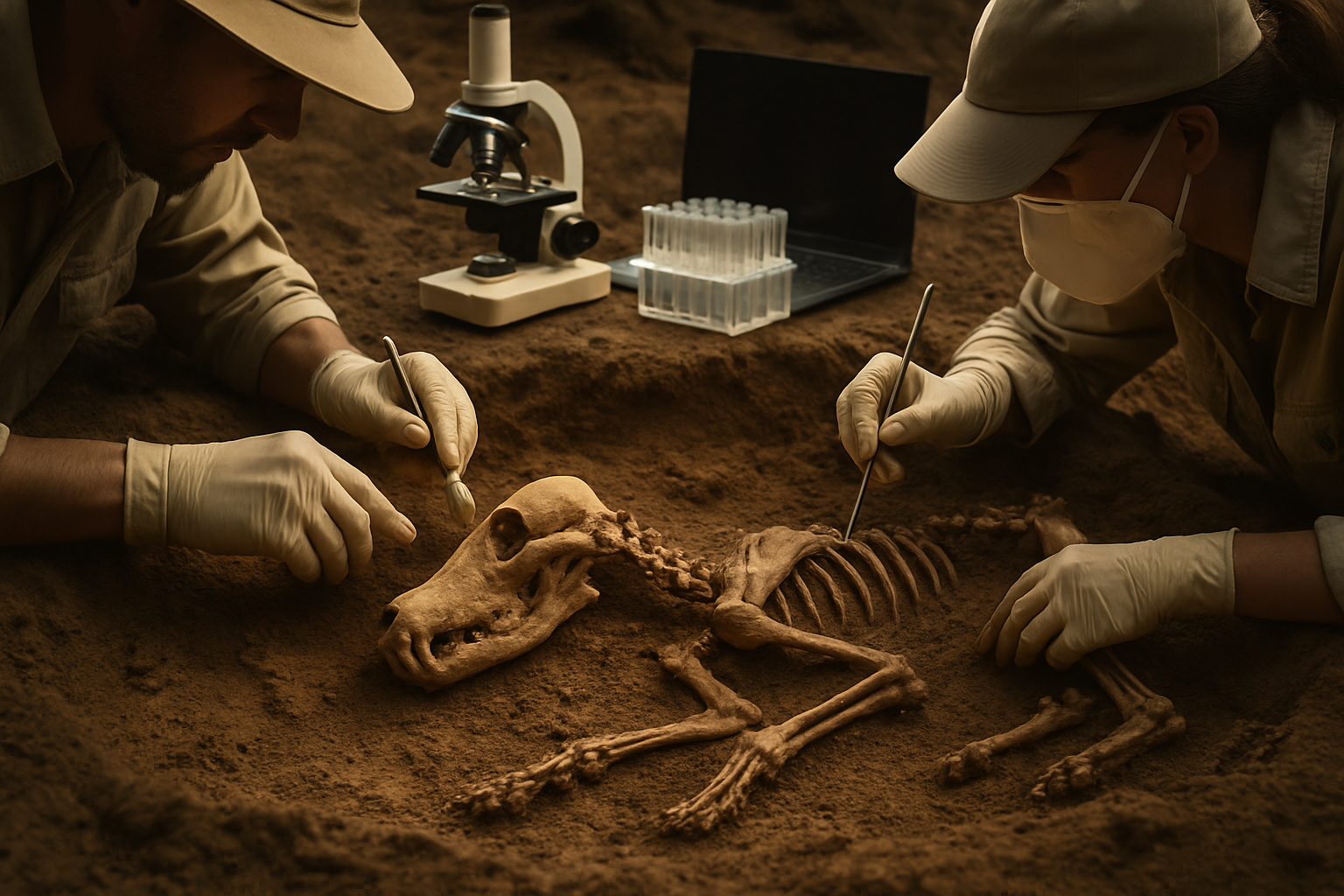
Revolutionary DNA analysis has uncovered the oldest canine genetic material ever discovered, providing compelling evidence that dogs have been humanity's faithful companions for nearly 16,000 years—pushing back the timeline of this ancient bond by an unprecedented 5,000 years and fundamentally transforming our understanding of early human-animal relationships.
The groundbreaking research, conducted through international collaboration between French, British, and Singaporean scientific institutions, represents one of the most significant archaeological discoveries of 2026's ongoing "Archaeological Renaissance." Using cutting-edge genetic sequencing techniques combined with advanced environmental reconstruction methods, researchers have identified DNA evidence that places domestic dogs alongside hunter-gatherer societies during the last Ice Age, millennia before the development of agriculture.
Revolutionary Scientific Findings
The discovery centers on pristine genetic material extracted from ancient canine remains found at multiple archaeological sites across Europe and Asia. Advanced DNA analysis techniques, previously unavailable to earlier generations of researchers, have enabled scientists to identify genetic markers that definitively distinguish early domestic dogs from their wild wolf ancestors.
"This discovery completely rewrites the timeline of human-dog domestication," explains Dr. Marie-Claire Dubois, lead geneticist at the French National Center for Scientific Research. "We're looking at evidence of sophisticated relationships between humans and dogs that predate our previous understanding by thousands of years."
The genetic evidence reveals not just the presence of dogs in ancient human settlements, but sophisticated care patterns that suggest deep emotional and practical bonds. Chemical analysis of ancient hearth sites shows evidence of specialized food preparation for canines, while burial sites indicate that some dogs received ritual interment typically reserved for valued community members.
Hunter-Gatherer Companions During the Ice Age
Perhaps most remarkably, the research demonstrates that hunter-gatherer societies were not only feeding dogs but providing them with complex care during some of Earth's most challenging climatic periods. Archaeological evidence from the Last Glacial Maximum period shows that early humans allocated precious resources to maintain their canine companions even when survival was precarious.
"The evidence suggests that the bond between humans and dogs was so strong that our ancestors were willing to share scarce resources with their canine companions during the harshest periods of the Ice Age."
— Dr. James Harrison, Archaeological Institute, Cambridge University
Environmental reconstruction techniques reveal that these early dog-human partnerships developed sophisticated collaborative strategies for hunting, protection, and survival. Isotope analysis of ancient canine teeth indicates that dogs were consuming a diet supplemented by human provisions, suggesting integrated rather than opportunistic relationships.
Advanced Analytical Techniques Unlock Ancient Secrets
The breakthrough represents a triumph of modern archaeological methodology that exemplifies the 2026 Scientific Renaissance. Researchers employed an unprecedented combination of genetic sequencing, environmental DNA sampling, isotope analysis, and AI-powered data processing to extract information from specimens that previous generations of scientists could not adequately analyze.
Ground-penetrating radar first identified potential burial sites, while sophisticated chemical analysis revealed organic materials preserved in favorable sediment conditions. Advanced dating methodologies, including radiocarbon analysis and stratigraphic correlation, provided precise chronological frameworks for the discoveries.
The international research team utilized laboratories across France, Singapore, and the United Kingdom, demonstrating the collaborative approach that has characterized 2026's remarkable series of archaeological breakthroughs. Digital documentation systems ensure that findings remain accessible to researchers worldwide while preserving original materials for future study.
Implications for Human Evolution and Social Development
The discovery carries profound implications for understanding human social evolution and the development of complex relationships with other species. Evidence suggests that the human capacity for forming deep interspecies bonds emerged far earlier than previously documented, potentially influencing human cognitive and emotional development during crucial evolutionary periods.
Archaeological analysis reveals that early human-dog partnerships involved sophisticated communication systems, coordinated hunting strategies, and complex care networks. These relationships required cognitive abilities including long-term planning, empathy, and social organization that challenge traditional assumptions about hunter-gatherer capabilities.
The research also illuminates the role that dogs may have played in human expansion and survival during challenging climatic periods. Canine companions likely provided early warning systems for predators, assistance in tracking prey, and social companionship that enhanced psychological resilience during harsh environmental conditions.
Global Context and International Cooperation
This discovery occurs within the broader context of 2026's Archaeological Renaissance, a period characterized by unprecedented international cooperation and remarkable archaeological breakthroughs worldwide. Recent discoveries have revealed sophisticated early human capabilities including 350,000-year-old fire control evidence, complex symbolic communication systems dating back 45,000 years, and advanced technological innovations that predate previous timelines by millennia.
The success of the ancient dog DNA research exemplifies the power of international scientific collaboration. French expertise in genetic analysis, British archaeological methodology, and Singaporean environmental reconstruction techniques combined to produce insights impossible through individual national efforts.
Climate Change and Archaeological Preservation
The research occurs during a critical period for archaeological preservation, with January 2026 marking the 18th consecutive month of global temperatures exceeding 1.5°C above pre-industrial levels. Climate change poses unprecedented threats to archaeological sites worldwide, making urgent documentation and preservation efforts essential before invaluable historical evidence is lost to environmental degradation.
Many sites containing ancient treasures face accelerated deterioration from extreme weather, flooding, and changing environmental conditions. The successful extraction and analysis of 16,000-year-old DNA represents a race against time to document human history before climate impacts render such discoveries impossible.
Economic and Cultural Impact
The discovery generates substantial benefits extending far beyond academic research. Enhanced understanding of human-animal relationships provides insights relevant for contemporary animal welfare, veterinary medicine, and conservation efforts. The research attracts international attention to the participating institutions, boosting cultural tourism and educational partnerships.
Archaeological tourism associated with the discovery sites contributes to sustainable economic development while promoting appreciation for cultural heritage. The findings strengthen diplomatic relationships between participating nations, demonstrating how collaborative scientific research serves as a form of cultural diplomacy.
Educational institutions worldwide are incorporating the discoveries into curricula exploring human evolution, animal behavior, and archaeological methodology. The research provides compelling case studies for interdisciplinary approaches combining traditional archaeological techniques with cutting-edge analytical technologies.
Future Research Directions
The discovery opens numerous avenues for continued investigation. Researchers plan expanded excavations at related sites, seeking additional evidence of early human-dog relationships and comparative analysis with other potential domestication sites worldwide.
Advanced genomic techniques may reveal further details about ancient breeding practices, population genetics, and the specific genetic changes that occurred during the domestication process. Environmental DNA sampling could identify additional species present in ancient human settlements, providing broader ecological context for early human-animal relationships.
International cooperation frameworks established through this research provide templates for future collaborative archaeological projects. The success demonstrates that complex historical questions require diverse expertise spanning multiple countries, institutions, and disciplinary approaches.
A Testament to Ancient Human Sophistication
The 16,000-year timeline for human-dog companionship represents more than a chronological revision—it fundamentally alters our understanding of ancient human capabilities and emotional sophistication. Evidence suggests that our ancestors possessed complex social intelligence, empathy, and planning abilities that enabled them to form lasting partnerships with other species during some of history's most challenging periods.
This discovery joins a growing body of evidence from 2026's Archaeological Renaissance that challenges traditional narratives of gradual human development. Rather than a simple progression from primitive to advanced societies, the evidence reveals sophisticated ancient communities capable of complex planning, advanced technical skills, and deep emotional relationships.
As we face contemporary challenges including climate change, social isolation, and environmental degradation, the ancient human-dog bond provides a powerful reminder of humanity's capacity for forming meaningful relationships that transcend species boundaries. The 16,000-year partnership between humans and dogs represents one of history's most successful examples of interspecies cooperation, offering lessons that remain relevant for our modern world.