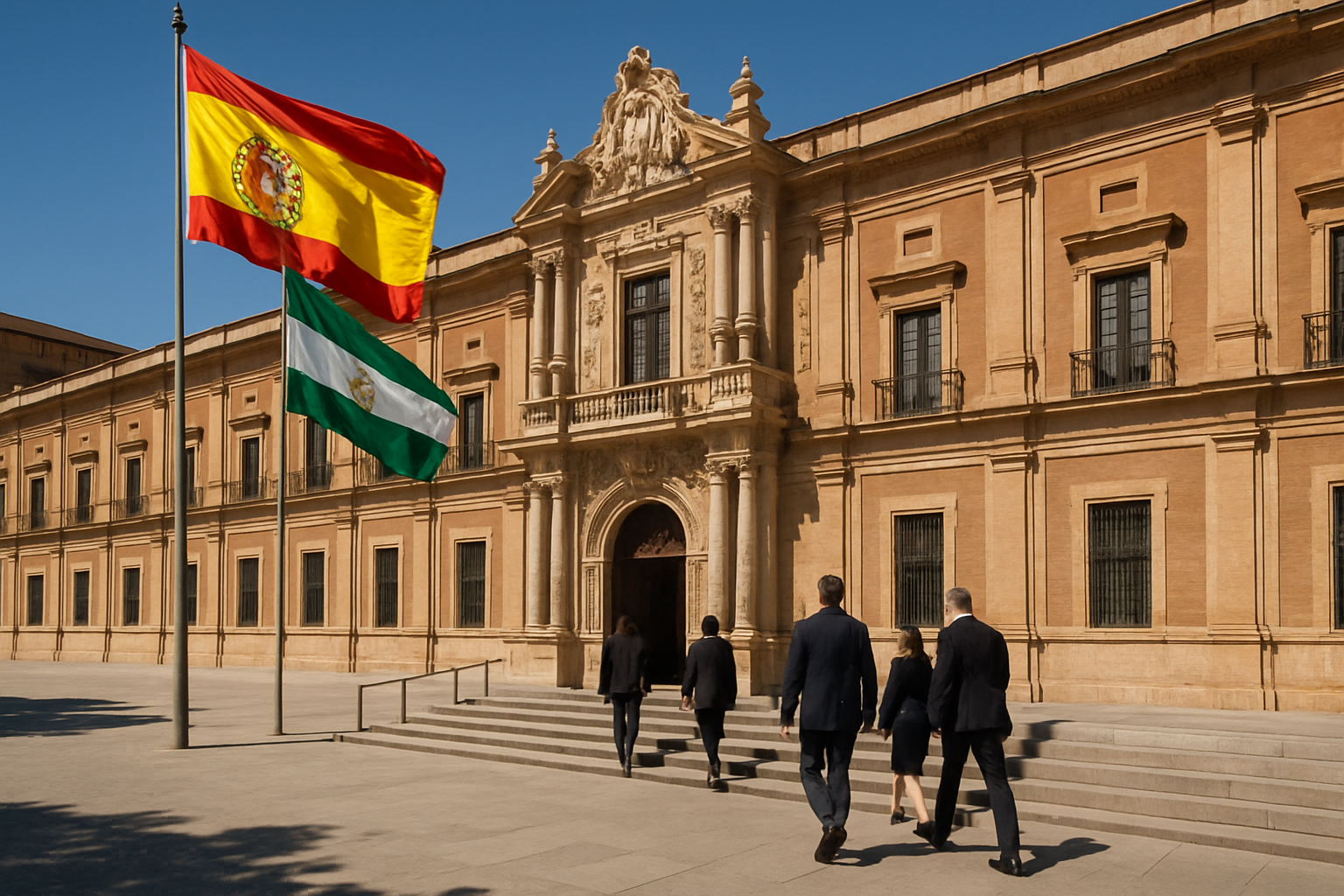
The unexpected announcement of early elections in Andalusia has triggered Spain's most complex government reorganization in years, as President Juan Manuel Moreno's decision to move the vote forward by a month forces Prime Minister Pedro Sánchez to make the painful choice of replacing his trusted deputy María Jesús Montero.
In a televised address from the Palacio de San Telmo on Monday evening, delivered with only 13 minutes' notice via Canal Sur and YouTube, Moreno dissolved the Andalusian Parliament and called for elections on May 17, 2026. "Ha llegado el momento" (The time has come), declared the Popular Party leader, setting in motion a political crisis that extends far beyond Spain's largest autonomous region.
The Deputy Prime Minister Dilemma
The accelerated electoral calendar has forced Sánchez into one of his most difficult personnel decisions as prime minister. María Jesús Montero, who serves as both Deputy Prime Minister and Finance Minister, must choose between her national government role and leading the Socialist (PSOE) campaign in her home region of Andalusia. Political convention and electoral mathematics make her candidacy essential for Socialist hopes in the region.
"Things have moved faster than expected, although Pedro Sánchez has been thinking about this decision for a long time - one of the most difficult of his various government crises," political sources close to La Moncloa revealed. The timing has caught the government off-guard, as the elections were originally expected in June rather than May.
According to senior Socialist officials, Félix Bolaños and María Jesús Cuerpo are expected to increase their influence in any cabinet reshuffle, though the critical question remains whether there will be another female deputy prime minister to maintain gender balance in the executive.
Regional Context and Coalition Dynamics
Moreno's decision comes amid a broader pattern of conservative consolidation across Spanish regions, following recent Popular Party electoral successes in Aragón and Castilla y León. The Andalusian president's move to advance the elections suggests confidence in maintaining power, though it also reflects the complex dynamics of governing with Vox support at the regional level.
The timing coincides with ongoing tensions between the PP and Vox across multiple regions. Recent memory from the archives shows that PP leader Alberto Núñez Feijóo has been pressuring Santiago Abascal's Vox to finalize coalition agreements in Extremadura, Aragón, and Castilla y León, delivering what sources described as a "ya está bien" (enough is enough) ultimatum in March.
In Castilla y León, the PP-Vox coalition holds a comfortable 47-seat majority with 33 and 14 seats respectively, while Aragón has seen Vox more than double its representation, gaining significant leverage in coalition negotiations. These regional dynamics will undoubtedly influence the Andalusian campaign.
National Electoral Implications
The early Andalusian elections carry significance well beyond regional politics. With 6.5 million eligible voters, Andalusia represents Spain's largest electoral prize outside of general elections. The campaign will serve as a crucial test for both Sánchez's socialist government and Feijóo's strategy to present the PP as a moderate alternative capable of governing independently of far-right support.
For the Socialist Party, losing Montero from the national government represents more than a personnel change. As finance minister, she has been instrumental in managing Spain's post-pandemic economic recovery and implementing the government's progressive fiscal policies. Her departure creates both a political and technical challenge for Sánchez's administration.
The campaign, which will officially begin on April 30, comes at a sensitive moment for Spanish politics. Recent polls have shown fluctuating support between the major parties, while the ongoing Ukraine crisis and economic pressures from energy costs have dominated the national political agenda.
Historical Precedent and Political Stakes
Andalusia has traditionally been considered a Socialist stronghold, making Moreno's 2018 victory particularly significant for the Spanish right. His decision to call early elections suggests confidence in his government's record and an opportunity to capitalize on current political momentum before potential economic challenges later in the year.
The region's politics have been shaped by decades of Socialist rule, broken only by Moreno's coalition with Vox support. The upcoming election will test whether this conservative alliance can establish itself as a permanent fixture in Andalusian politics or whether it represents a temporary shift in regional preferences.
From a national perspective, the results will be closely watched as an indicator of public sentiment ahead of the next general elections. A strong PP performance could strengthen Feijóo's position as opposition leader, while a Socialist recovery would provide crucial momentum for Sánchez's national project.
Government Reorganization Challenges
The cabinet reshuffle forced by Montero's likely departure presents both risks and opportunities for the Sánchez government. While losing an experienced minister creates short-term disruption, it also provides an opportunity to refresh the government's image and potentially bring in new talent.
Political observers note that finding a suitable replacement for Montero's dual role will be particularly challenging. The position requires both the political skills necessary for the deputy prime ministership and the technical expertise demanded by the finance portfolio during a period of economic uncertainty.
The reorganization also occurs at a delicate moment for Spain's coalition government, which includes the left-wing Sumar alliance. Any major changes to the cabinet's composition could require renegotiation of coalition agreements and policy priorities.
Campaign Dynamics and National Oversight
As the campaign unfolds over the coming weeks, national attention will focus intensely on Andalusia. The region's size and political significance mean that campaign themes and strategies tested there often influence broader national political discourse.
Key issues likely to dominate the campaign include economic management, healthcare policy, education, and the ongoing challenges of climate adaptation following recent severe weather events across Spain. The handling of European Union funds and regional development projects will also feature prominently in candidate platforms.
The election also provides an opportunity to assess public opinion on coalition governance, as voters evaluate both Moreno's partnership with Vox and the PSOE's alliance with Sumar at the national level.
With the electoral campaign beginning in just over a month and voting scheduled for May 17, Spanish politics has entered a period of intense activity that will test both the government's stability and the opposition's coherence. The stakes extend far beyond Andalusia, with implications for Spain's political trajectory and the delicate balance of power that will shape the country's future governance.