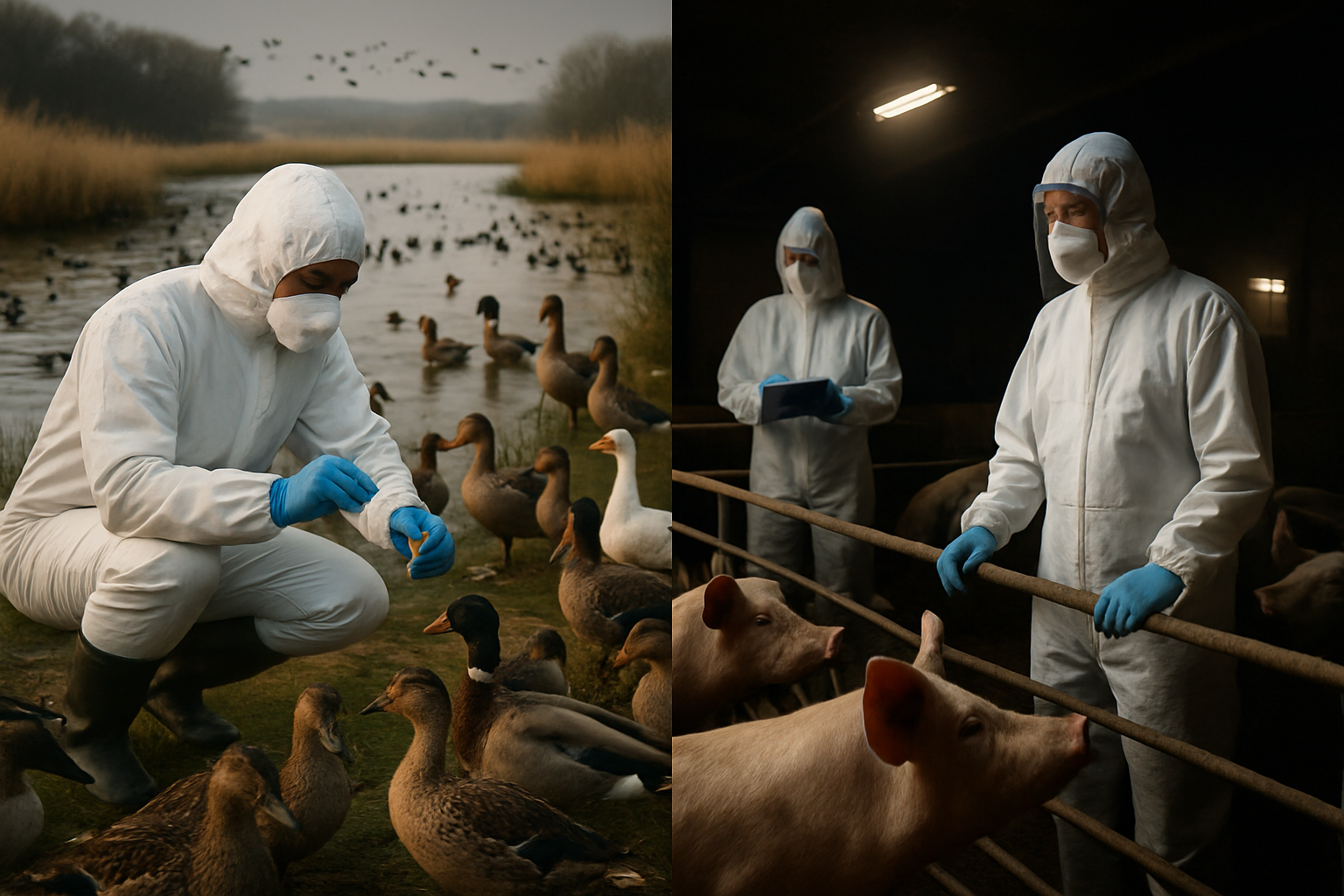
European veterinary authorities are confronting a complex multi-species disease crisis as Denmark confirms avian influenza in wild mammals while Cyprus continues battling a devastating foot-and-mouth disease outbreak that has already claimed thousands of livestock lives and threatens the island's crucial agricultural economy.
The emergence of bird flu in wild mammal populations in Denmark represents a concerning development in the ongoing global struggle against highly pathogenic avian influenza (HPAI), according to Danish health officials. While specific details about the affected mammal species and geographic distribution remain limited, the detection marks a significant escalation in the virus's cross-species transmission capabilities.
Denmark's Expanding Avian Influenza Crisis
Denmark has been grappling with what authorities describe as "extremely high" levels of avian influenza infection across the country. The detection of the virus in wild mammals adds a new dimension to an already challenging public health and agricultural security situation that has required unprecedented coordination between veterinary services, wildlife management authorities, and public health officials.
The expansion of avian influenza into mammalian populations raises particular concerns about the virus's potential for further adaptation and transmission. Historical precedents suggest that mammalian infection can serve as a bridge for viral mutations that may eventually pose greater risks to human populations, though no human cases have been reported in connection with the Danish outbreak.
Denmark's response builds on extensive experience managing avian influenza outbreaks, including previous incidents that required the culling of hundreds of thousands of poultry. The country's sophisticated disease surveillance network and rapid response protocols have been activated to monitor the spread and implement containment measures across affected regions.
Cyprus Foot-and-Mouth Escalation
Meanwhile, Cyprus faces an ongoing foot-and-mouth disease crisis that has evolved into one of the most severe agricultural emergencies in the island's recent history. The outbreak, which began in February 2026 in Oroklini, has spread across multiple districts and now threatens the foundation of Cyprus's agricultural economy.
Veterinary Services have initiated large-scale pig culling operations as the disease continues to spread beyond initial containment zones. The decision to implement culling protocols reflects the severity of the outbreak and the limitations of vaccination strategies in controlling the highly contagious virus.
The Cyprus outbreak has already resulted in the destruction of over 28,000 sheep and goats, along with nearly 2,000 cattle, according to official records compiled throughout the crisis. The expansion into pig farming operations represents a particularly concerning development, as pigs are known to secrete larger quantities of the foot-and-mouth virus and facilitate more intensive transmission compared to other livestock species.
International Cooperation and Response Coordination
Both outbreaks have triggered extensive international cooperation mechanisms, highlighting the interconnected nature of animal disease management in modern Europe. The European Commission has provided emergency support to both countries, including vaccine supplies and technical expertise from specialized veterinary teams.
"The priority is to contain the spread of the virus in pig farming. Pigs are a particular concern because they secrete larger quantities of the virus and spread it more intensely than other animals."
— Veterinary Services Spokeswoman, Cyprus Ministry of Agriculture
The Cyprus outbreak has prompted investigations into potential cross-border transmission routes, with authorities examining suspected illegal animal feed smuggling from northern Cyprus as a possible source. The geographic distribution of infected farms suggests contaminated feed supply chains rather than natural disease transmission patterns, according to ongoing police investigations.
European Union emergency protocols have been activated to coordinate response efforts and prevent further spread across member state boundaries. The crisis demonstrates both the vulnerability of modern agricultural systems to rapid disease transmission and the sophisticated international cooperation mechanisms that have evolved to address such challenges.
Economic and Agricultural Impact
The economic implications of both outbreaks extend far beyond immediate agricultural losses. Cyprus faces threats to its disease-free status, which is crucial for agricultural exports, particularly the island's renowned halloumi cheese industry that depends on healthy livestock populations. The loss of disease-free certification could result in trade restrictions and significant economic disruption for rural communities dependent on agricultural exports.
Denmark's avian influenza crisis poses similar challenges for the country's substantial poultry industry and agricultural export sector. The detection of virus in wild mammals complicates containment efforts and may require expanded surveillance and control measures that could impact agricultural operations across broader geographic areas.
Both countries have implemented comprehensive support packages for affected farmers, recognizing the devastating personal and economic impact of mandatory culling operations. Cyprus has announced multi-million euro compensation programs, while Danish authorities have activated emergency support mechanisms for affected agricultural communities.
Climate Change and Disease Emergence Patterns
The simultaneous occurrence of these outbreaks takes place during an unprecedented period of environmental stress, with global temperatures having exceeded 1.5°C above pre-industrial levels for 21 consecutive months as of April 2026. Climate change is fundamentally altering disease transmission patterns, creating optimal conditions for pathogen survival and facilitating the emergence of new transmission routes.
Veterinary experts note that warmer temperatures extend the survival periods of viruses outside host animals while changing precipitation patterns affect disease vector populations. These environmental changes disrupt traditional seasonal disease patterns and challenge established veterinary response protocols that were designed for more predictable climate conditions.
The expansion of avian influenza into mammalian populations and the cross-border transmission of foot-and-mouth disease both reflect the complex ways climate change amplifies existing disease risks while creating new pathways for viral adaptation and spread.
Preventive Measures and Future Preparedness
Both countries have implemented enhanced biosecurity measures designed to prevent further spread while building long-term resilience against future outbreaks. These include mandatory disinfection protocols, restricted animal movement, enhanced surveillance systems, and comprehensive vaccination programs where applicable.
Cyprus has established disinfection points at strategic locations and implemented strict protocols for farm access, while Denmark has activated comprehensive wildlife monitoring systems to track the extent of mammalian infections and prevent spillover into domestic animal populations.
The crisis has prompted calls for fundamental shifts from reactive disease management to prevention-focused approaches that integrate traditional veterinary knowledge with modern scientific capabilities. Success in containing both outbreaks will require sustained political commitment, adequate funding, and unprecedented international cooperation during a critical period for global agricultural security.
As European veterinary authorities continue monitoring both situations, the outcomes will likely influence animal disease management protocols across the continent and provide valuable lessons for addressing the intersection of climate change, agricultural vulnerability, and infectious disease control in an increasingly interconnected world.