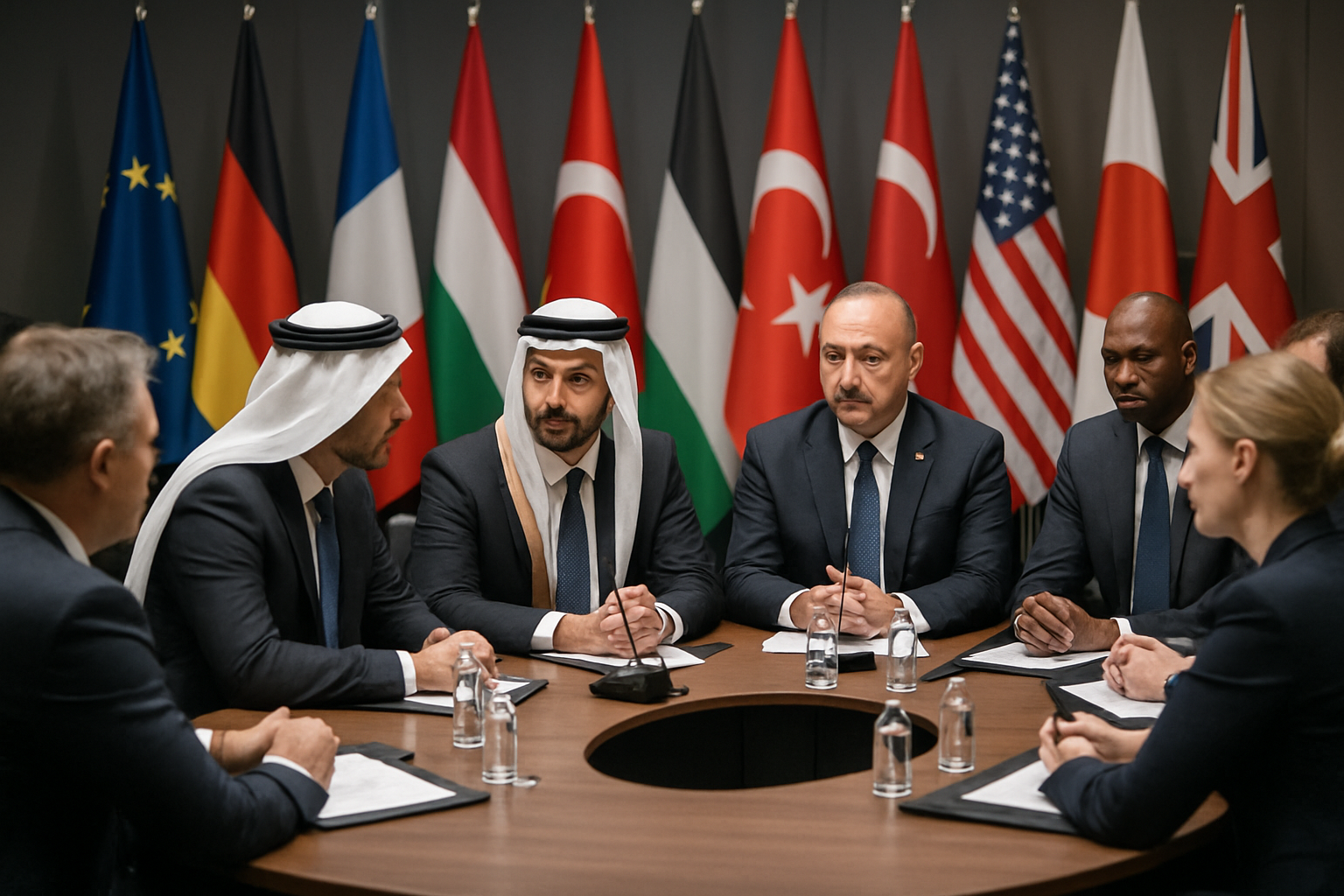
The fifth annual Antalya Diplomacy Forum has emerged as a crucial diplomatic platform, hosting high-level discussions on critical regional challenges including the ongoing Yemen crisis, strengthening Algeria-Azerbaijan partnerships, and Afghanistan's ambitious regional integration initiatives amid complex global tensions.
Meeting at the NEST Congress Center in Belek, the forum has evolved into a genuinely global diplomatic platform, attracting representatives from over 50 countries during a period when traditional multilateral mechanisms face unprecedented strain. This year's theme, "Shaping Tomorrow, Confronting Volatility," reflects the challenging international environment that includes ongoing regional conflicts and shifting global power dynamics.
Yemen Crisis Takes Center Stage
A major focus of the forum centered on developments regarding the Yemen crisis, with Algeria's Foreign Minister Ahmed Attaf conducting crucial discussions with Yemeni officials. Attaf met with Yemen's Prime Minister and Foreign Minister Shayea Mohsen Al-Zindani on the margins of the forum's second day, addressing evolving dynamics in one of the world's most complex humanitarian crises.
The Algeria-Yemen dialogue represents part of broader international efforts to find sustainable solutions to the eight-year conflict that has devastated the Arabian Peninsula's poorest nation. The talks come at a particularly significant time, as regional powers seek new approaches to peace-building in Yemen following years of military stalemate.
"These discussions on the sidelines of the Antalya Diplomacy Forum demonstrate the vital role of sustained diplomatic engagement in addressing complex regional challenges."
— Regional diplomatic source
Algeria-Azerbaijan Strategic Partnership Advances
The forum also witnessed significant progress in Algeria-Azerbaijan bilateral relations, with Foreign Minister Attaf engaging in comprehensive discussions with his Azerbaijani counterpart Jeyhun Bayramov. The talks focused on evaluating the progress made since the official visit of Azerbaijan's Foreign Minister to Algeria in November 2025, building on a foundation of strengthening cooperation.
This partnership reflects both countries' strategic positioning as energy coordinators and regional diplomatic bridges. Azerbaijan has emerged as a crucial energy coordinator connecting Caspian resources to European markets, while Algeria maintains significant influence across North Africa and the broader Arab world.
Afghanistan's Regional Integration Vision
In a notable development, Afghanistan's Minister Nooruddin Azizi participated in forum discussions, emphasizing trust in trade and peaceful coexistence principles. The Taliban delegation's presence underscores Afghanistan's ongoing efforts to rebuild international relationships following their 2021 return to power.
Afghanistan has secured over $814 million in bilateral cooperation agreements with Central Asian partners in 2026, building on substantial infrastructure and connectivity frameworks. The country is pursuing an ambitious $10 billion trade target with Central Asian neighbors within 3-4 years, representing a dramatic increase from current $2.7 billion levels.
Algeria-Russia Strategic Consultations
The forum provided an opportunity for high-level Algeria-Russia consultations, with Minister Attaf holding bilateral talks with Russian Foreign Minister Sergei Lavrov. The meeting allowed for a comprehensive review of the strategic partnership between Algeria and Russia, with both sides emphasizing the importance of elevating their cooperation to higher levels across multiple sectors.
This dialogue occurs against the backdrop of shifting global alliances and demonstrates Algeria's continued commitment to maintaining diverse international partnerships while navigating complex geopolitical currents.
Qatar's Mediation Leadership
Qatar's participation, led by Minister of State Mohammed bin Abdulaziz Al-Khulaifi, highlighted Doha's established role as a regional mediator. Al-Khulaifi outlined Qatar's mediation strategy, emphasizing dialogue, trust-building, and peaceful conflict resolution as core principles of Qatari diplomacy.
Qatar's approach reflects broader trends toward innovative diplomatic frameworks that leverage middle-power capabilities to bridge divides between major adversaries, a approach that has proven effective in various regional conflicts.
Turkey's Diplomatic Innovation
As host nation, Turkey continued to demonstrate its sophisticated diplomatic capabilities in bringing together diverse global representation under one roof. The forum represents Turkey's evolution into a genuinely global diplomatic platform, moving beyond regional scope to address 21st-century challenges through inclusive and innovative diplomacy.
Turkish officials have emphasized their country's unique position in maintaining dialogue with all major powers, including NATO allies, Russia, Iran, and emerging economies, making Antalya an ideal venue for breakthrough negotiations during periods of international tension.
Addressing Contemporary Challenges
The forum's discussions took place amid multiple ongoing international crises, including the complex Middle East situation and various regional conflicts. Participants emphasized the need for diplomatic solutions over military action, with the forum providing a platform for innovative diplomatic approaches as traditional alliance structures face unprecedented strain.
The gathering demonstrated the evolution of new partnership models emerging to address contemporary challenges, with success in bringing diverse global representation together highlighting the forum's development into a crucial diplomatic platform for international cooperation.
Economic Cooperation and Development
Beyond political and security discussions, the forum featured extensive economic cooperation sessions addressing energy diversification, supply chain resilience, and investment opportunities. Turkey's strategic location connecting Europe, Asia, and Africa makes it an important logistics and trade hub, particularly amid global trade disruptions.
Participants discussed various bilateral partnership models that have shown success in 2026, including Afghanistan's regional integration achievements and innovative cooperation frameworks that emphasize technology transfer, institutional capability building, and transparent governance.
Future Diplomatic Framework
The fifth Antalya Diplomacy Forum positioned Turkey as a crucial diplomatic bridge in an increasingly fragmented world. The forum's outcomes are expected to influence international approaches to conflict resolution and multilateral cooperation for years to come, demonstrating Turkey's diplomatic sophistication in addressing 21st-century challenges.
As traditional diplomatic mechanisms face challenges adapting to contemporary realities, platforms like the Antalya Forum provide essential venues for innovative diplomatic approaches that can bring together diverse stakeholders to address shared challenges through constructive dialogue and practical cooperation.