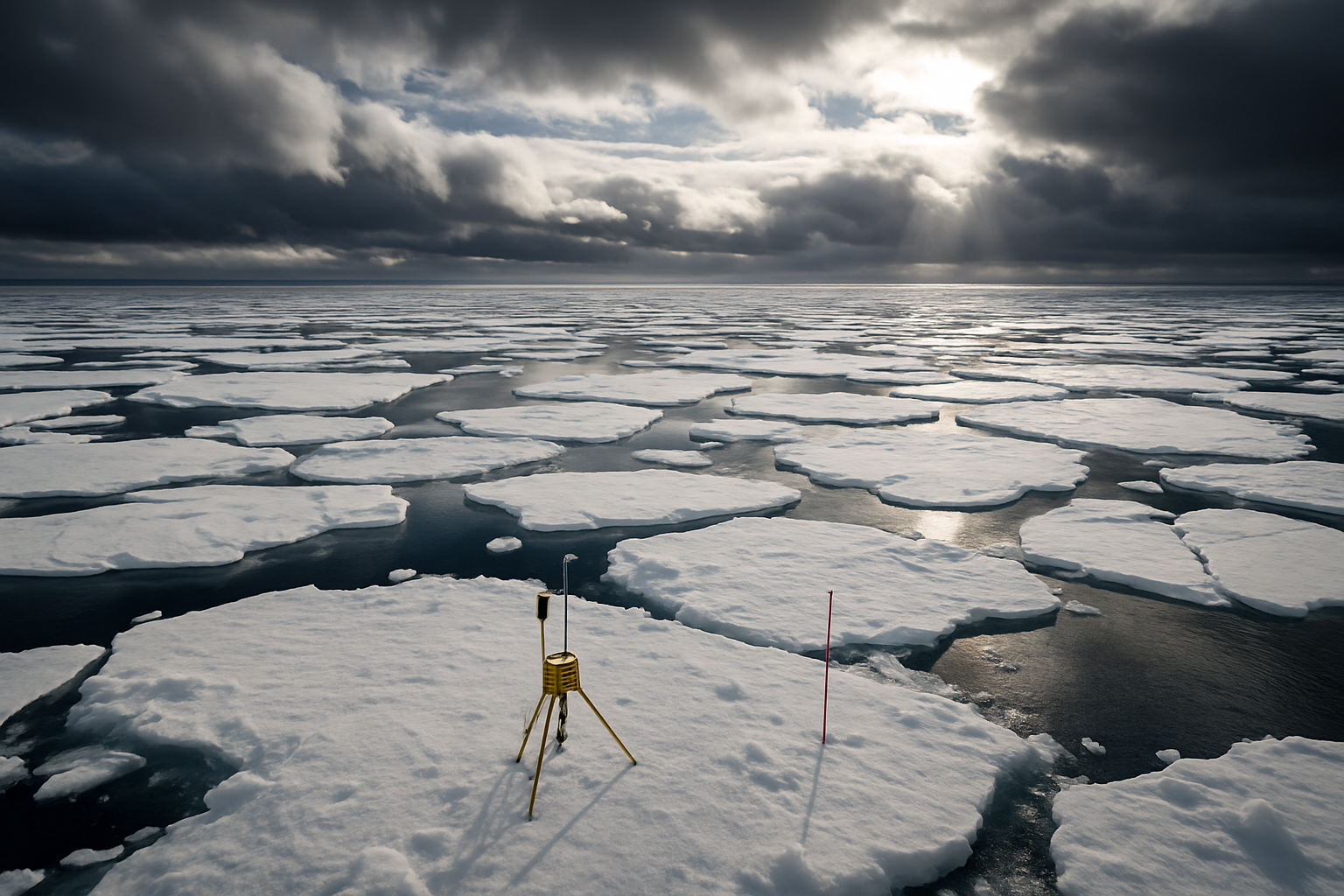
Antarctic sea ice experienced a partial recovery in 2026 after several years of sharp decline, approaching its long-term average according to scientists at the National Snow and Ice Data Center (NSIDC) at the University of Colorado at Boulder, marking a significant development in polar climate research during the 19th consecutive month of global temperatures exceeding 1.5°C above pre-industrial levels.
The recovery represents a crucial data point for climate scientists working to understand the complex dynamics of polar ice systems amid unprecedented global warming. January 2026 was confirmed as the hottest month in recorded history, yet Antarctic sea ice showed signs of resilience that challenge some assumptions about immediate climate responses in polar regions.
Understanding the Recovery
The partial recovery comes after years of concerning declines that had alarmed researchers studying Antarctic climate systems. Unlike Arctic sea ice, which has shown consistent decreasing trends, Antarctic sea ice exhibits more complex patterns influenced by Southern Ocean currents, atmospheric circulation, and regional climate variations.
Dr. Walt Meier, a senior research scientist at NSIDC, noted that Antarctic sea ice variability differs significantly from Arctic patterns. "The Antarctic system is influenced by unique oceanographic conditions and atmospheric patterns that can create temporary recovery periods even during overall warming trends," he explained.
"Antarctic sea ice recovery provides valuable insights into regional climate variations and the complex interactions between ocean, atmosphere, and ice systems in the Southern Ocean."
— Dr. Walt Meier, National Snow and Ice Data Center
Broader Climate Context
The recovery occurs against a backdrop of unprecedented global climate conditions. Research published in Geophysical Research Letters reveals Earth has warmed 0.35°C in the past decade (2015-2025), representing a 75% acceleration from the previous average of 0.2°C per decade (1970-2015). This acceleration has fundamentally altered atmospheric systems beyond natural recovery mechanisms.
Human-induced climate change has now completely overridden natural climate variability, including La Niña cooling cycles that historically moderated global temperatures. The sustained warming creates compound environmental effects across multiple systems simultaneously, making the Antarctic recovery particularly noteworthy.
Historical Antarctic Research
Argentina's Antarctic research program, spanning 122 years of continuous observation since establishing the world's first permanent meteorological station on Laurie Island in 1904, provides invaluable historical context for current observations. This uninterrupted scientific presence has created the longest continuous climate record from Antarctica, documenting natural variability patterns essential for understanding current changes.
The Argentine Antarctic research network has evolved from simple meteorological observations to comprehensive climate research operations involving glaciology, oceanography, atmospheric physics, and environmental monitoring. Contemporary research priorities focus on climate change impacts, documenting accelerating ice sheet dynamics, changing precipitation patterns, and ecosystem responses to warming temperatures.
Advanced Research Technologies
Modern Antarctic research employs sophisticated technology including autonomous weather monitoring systems, satellite communication networks, and real-time data transmission capabilities. Recent breakthroughs include successful drilling operations that extracted 523 meters of ice at Crary Ice Rise, recovering 228 meters of sediment core containing 23 million years of climate records.
International collaboration through the Scientific Committee on Antarctic Research (SCAR) coordinates global research efforts. Advanced monitoring systems include Dutch climate equipment designed for extreme conditions (-70°C temperatures, 200+ km/h winds), providing real-time data transmission capabilities that enhance global climate system understanding.
Marine Ecosystem Implications
The sea ice recovery has significant implications for Southern Ocean marine ecosystems. Recent discoveries, including the first-ever footage of an Antarctic sleeper shark captured in 2025, demonstrate the complex marine biodiversity that depends on sea ice conditions. The massive 3-4 meter specimen cruising in deep Antarctic waters challenges previous assumptions about marine life limits in polar environments.
Research reveals concerning trends in marine ecosystems globally, with every 0.1°C of ocean warming per decade reducing fish populations by 7.2%. Antarctic marine systems serve as crucial indicators of broader oceanic health, making the sea ice recovery particularly important for understanding ecosystem resilience.
Climate Modeling Challenges
Antarctic sea ice recovery complicates climate modeling efforts, demonstrating the complexity of polar responses to global warming. While Arctic sea ice shows consistent declining trends correlating with temperature increases, Antarctic patterns exhibit greater variability influenced by regional factors including wind patterns, ocean currents, and atmospheric circulation changes.
Scientists emphasize that temporary recovery periods do not negate long-term warming trends but provide crucial data for refining climate models. The recovery offers insights into system resilience and natural variability that must be incorporated into accurate climate projections.
International Cooperation Framework
Antarctic research represents one of humanity's most successful examples of international scientific cooperation through the Antarctic Treaty System. The 1959 Antarctic Treaty established the continent as a "natural reserve devoted to peace and science," creating frameworks for collaborative research transcending national boundaries and geopolitical tensions.
Recent international partnerships demonstrate enhanced cooperation, including Bulgaria's establishment of meteorological and seismological laboratories through partnership with the UAE, and Netherlands deployment of advanced polar monitoring networks. These collaborations maximize scientific return while minimizing environmental impacts and operational costs.
Future Research Priorities
Priority research areas include understanding Antarctic contributions to sea level rise, documenting ecosystem responses to climate change, and improving long-term climate projections. Educational partnerships between universities and research institutions are training new generations of Antarctic researchers through student exchange programs and international collaborations.
The integration of traditional meteorological observations with contemporary climate science creates comprehensive understanding of Antarctic environmental systems. Scientists emphasize that continued research is essential for predicting how Antarctic systems will respond to sustained global warming in coming decades.
Global Implications
Antarctic research findings have profound implications beyond polar science. The continent contains enough ice to raise global sea levels by approximately 60 meters if completely melted, making accurate understanding of ice dynamics crucial for coastal communities worldwide.
Climate data collected since 1904 supports global weather prediction, climate modeling, and environmental monitoring systems benefiting all nations. As climate change accelerates, Antarctic expertise becomes increasingly valuable for international climate policy, adaptation strategies, and scientific understanding of Earth's changing environmental systems.
The partial recovery of Antarctic sea ice in 2026 provides hope that natural systems retain some resilience even under unprecedented warming conditions. However, scientists emphasize the need for continued monitoring and research to understand whether this recovery represents temporary fluctuation or indicates longer-term system stability amid accelerating global climate change.